For a better illustration, would it be possible to have some screenshots showing all of this? Thank you very much.
and for “Fine time alignment” ?
For a better illustration, would it be possible to have some screenshots showing all of this? Thank you very much.
and for “Fine time alignment” ?
Yes it sounds controversial compared to the description in the manual. But it’s a matter of preference and only way to know is to test it yourself. Luckily it’s very easy and quick to make different versions of the filters in FF.
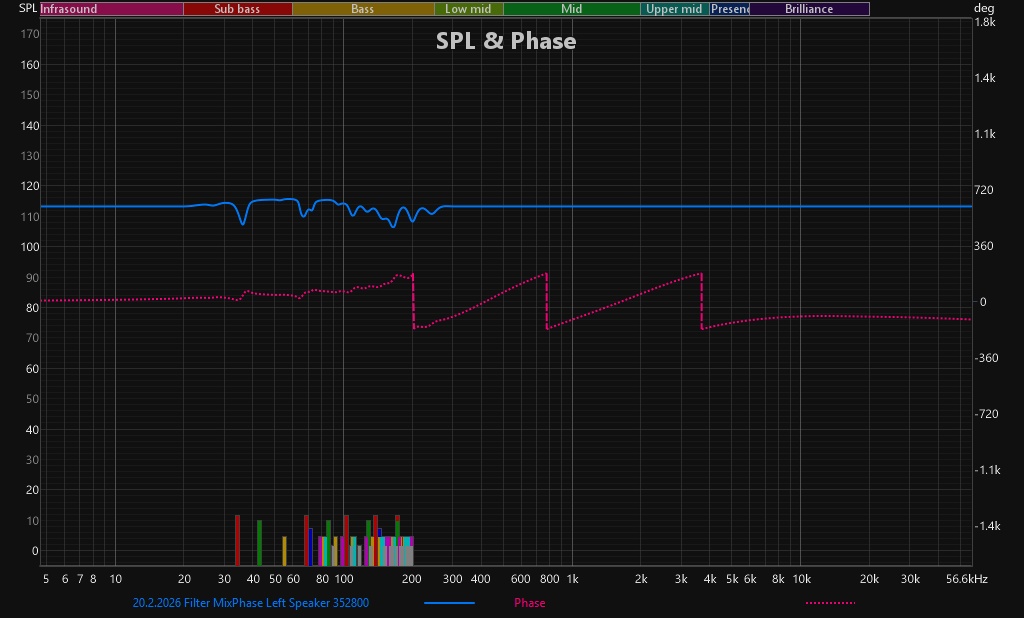
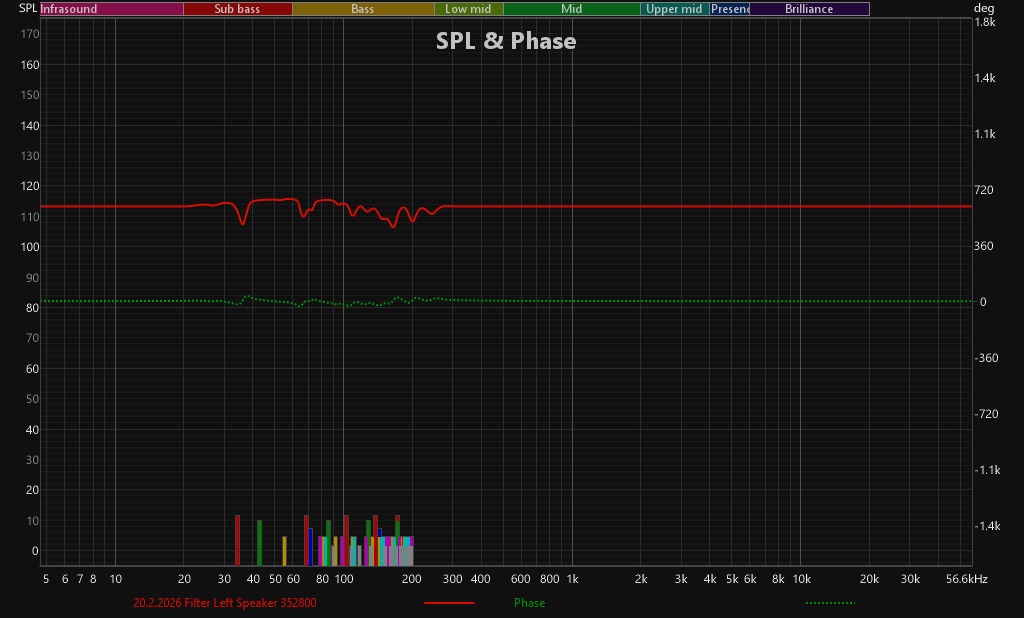
Here’s screenshots of a Mixed Phase filter and Mixed Phase turned off filter of my left channel correction imported to REW for inspection. Filter magnitudes are identical but phase behavior is obviously very different. Blue and purple = mixed phase, Red and green = no mixed phase.
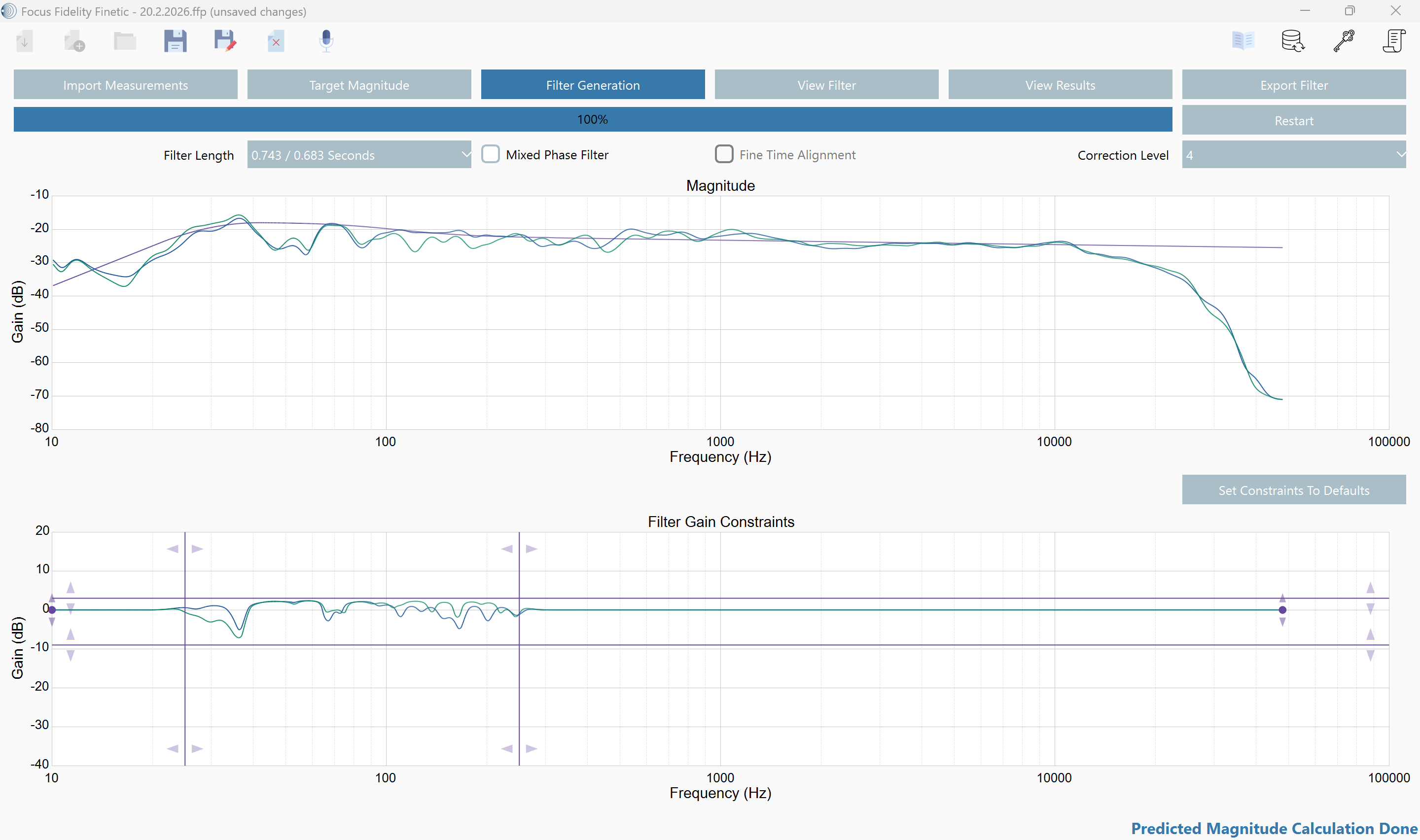
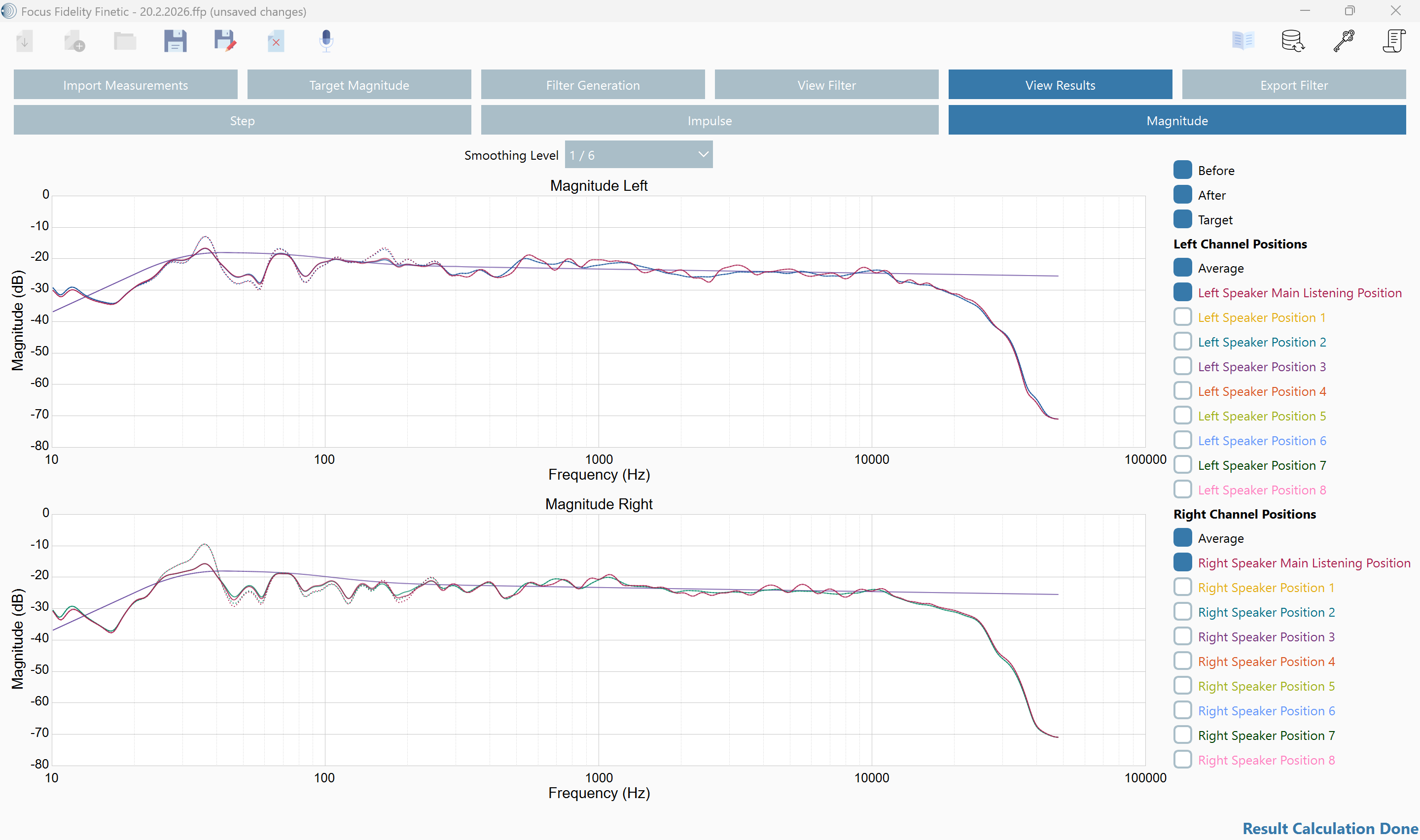
Here’s Target Magnitude, Filter Generation and Results windows.
I continued testing and target here is Harman +4dB (default Harman is +6dB) imported to FF and slightly elevated to match to my preferences. This works better than Toole’s curve in the end. Default Harman is very good also but cuts slightly too much between 100-200hz in my case.
Correction window is 25-250hz and max boost is set to +3dB and max cut is -9dB.
Very clear!
And what parameters did you use for the target curve? My target curve is close, but I don’t have that slight bump in the bass; I’ve stayed on the same slope.
I’m going back to the Fine Time Alignment setting, and how important is it?
It’s Harman curve but instead of the default +6dB at low end, it’s +4dB. I just dragged it slightly higher (about 2dB), which works better in my case. I also used the 0,4dB slope from midrange which is the default setting for Focus Fidelity’s Harman curve. The HPF starts from 30hz and with 12dB slope.
I haven’t tried the fine time alignment setting but I will at some point.