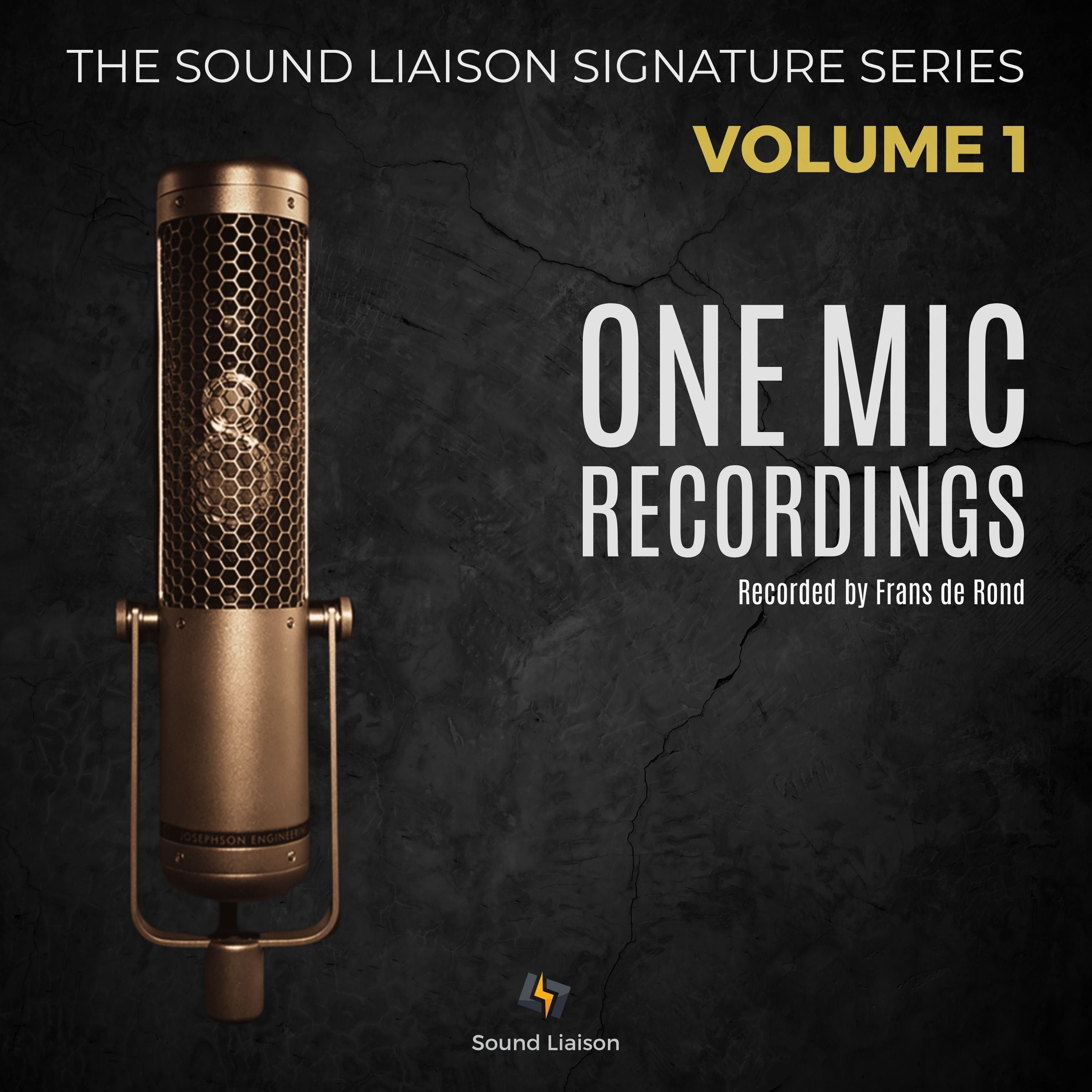
I find it quite remarkable that one review of the Sound Liaison One Mic Sampler described it as “challenging the possibilities of current recording technology.”
Especially when you consider that the whole idea is basically going back to basics. One stereo microphone, recorded in DXD or directly to DSD. No overdubs, no fixing it in the mix, no AI. Just musicians playing together in a room.
Of course, the equipment is top quality, but there’s actually very little of it involved. Which makes me think that perhaps the most important ingredient is the recording engineer.
It’s a bit like a chef in a Michelin-starred restaurant. You can give two chefs exactly the same ingredients, but what comes out of the kitchen can be worlds apart. It’s knowing how things work together, how much of one ingredient you need, what to leave out, and when to stop adding things.
From what I understand from reading about the recording process on the Sound Liaison website, the positioning of the musicians around the Josephson C700S microphone is absolutely crucial :
At Sound Liaison, our One-Mic Recordings are created with a single Josephson C700S stereo microphone, capturing music with exceptional purity, realism, and natural depth. Because this technique relies entirely on one microphone, the complete soundstage must be shaped on the spot. Each instrument is positioned with precision—slightly left or right, closer or farther from the microphone—to achieve perfect balance and a naturally immersive stereo image. Microphone height also plays a crucial role, especially in shaping the low-frequency response through its interaction with the studio floor.
So there’s no going back afterwards to turn up the bass or move the piano a little to the left. The balance has to be right before the recording even starts.
And the remarkable thing is that these recordings really do challenge just about everything else out there, at least to my ears.
But a word of warning: once you’ve been exposed to these gorgeous, lifelike recordings, there’s a real danger that other recordings will start to sound a little artificial.
I rather like the irony of it. In an age when recording technology can do almost anything, one way of pushing the boundaries seems to be to use as little of it as possible.
I’d be genuinely interested to hear what other recordings you think can stand comparison with these. Suggestions are very welcome!