Dash caught again 
1 Like
That is amateur hour. A real connoisseur has separate runs of both 48K and 44.1K gold for both use cases.
AJ
4 Likes
I wasn’t going to mention it but My new 3 metre solid platinum power cables are so transparent that even connecting them presents major challenges….
2 Likes
There has been a lot of discussion of this in various fora, so I thought I might find out for myself. I was in custom AV for decades and so I have seen and tested a few systems of varying quality, some pretty good. In more than 20 years no client ever asked for improved AC performance.
I purchased some local well made cables (Rich 55 on CAM, hundreds and not Ks) and experimented with two current systems. Devices with well engineered power supplies (amps) did not seem different, but my tuner was obviously better (shielding perhaps ?) and my wife noticed the diff after coming home from work, unprompted. I lent a couple cables to my son in law and he reported an obvious change to his dac.
They also fit tight, stay in place and are easy to track (differing jackets on request) within a busy rack unlike generic black plastic.
In my case worth couple hundred.
1 Like
I have often found it’s worth trying reversing the plug if it’s a 2-pin style. Just pull it out and plug it back the other way. Inconsistently reversed Neutral/Live wiring back to the circuit breaker is more common than it should be, even in new build houses. But if you do hear a worthwhile difference its a bit of a rabbit hole I am afraid especially if the plugs are 3-pin style in your country. I have always thought that the improvements many claim to hear by changing a power cord is just the effect of accidently aligning the neutral/live wiring with a new cord.
Cables are a component like any other piece of equipment in your system. Cables are the last thing I do to a system. Usually spend about 10 to 15% of the cost of the equipment on cables. I don’t find that cables make your system sound better but with bad cables they certainly put a haze on the system and don’t let your equipments true sound come through
2 Likes
I would think that if the cord is not polarized, the internal PSU doesn’t care about polarity, otherwise you’d have a 50% chance of getting it wrong every time you plug it in. And if the cable is polarized or it is 3-prong, you’ll get it wrong every time, and if it did matter, no audiophile cable could fix that.
Now that gives me a marketing idea: reversed polarity power adapters.
4 Likes
Despite me be MSEE, I decided to look this up…there may be occasional issues:
Why is the wife always the arbiter of sound quality? Current science says human auditory memory (echoic memory) is on the order of 3 to 4 seconds. If she comes home from work and says “What have you done to your system? It sounds so much better.” it’s because she has seen or knows you are tweaking and it pleases her to encourage you. She can’t possibly detect a sound quality difference.
7 Likes
Naw. Copper is copper and the conductivity doesn’t diminish to any audible level. I used to watch PS Audio too until it became apparent he wants to SELL stuff through his influence.
3 Likes
Hi the most content pretending that there is a significant improvement of sound by using a „Highend“ power cable is fantasy. But one thing regarding power is important: When connecting the devices, always ensure that the phase is connected to the correct pole. This means that the plug is connected correctly. Good multiple sockets have an LED for this purpose. This is more important for security (if phase is connected correctly the item will be fully switched off, otherwise only the return path is cutter) but is also reduces humming and distortion. Sound improvement is not recognisable in the most cases. In total: a solid power connection which is installed correctly helps to avoid distortion and that’s it. No need to buy gold cables and other stuff.
Needless to say really.
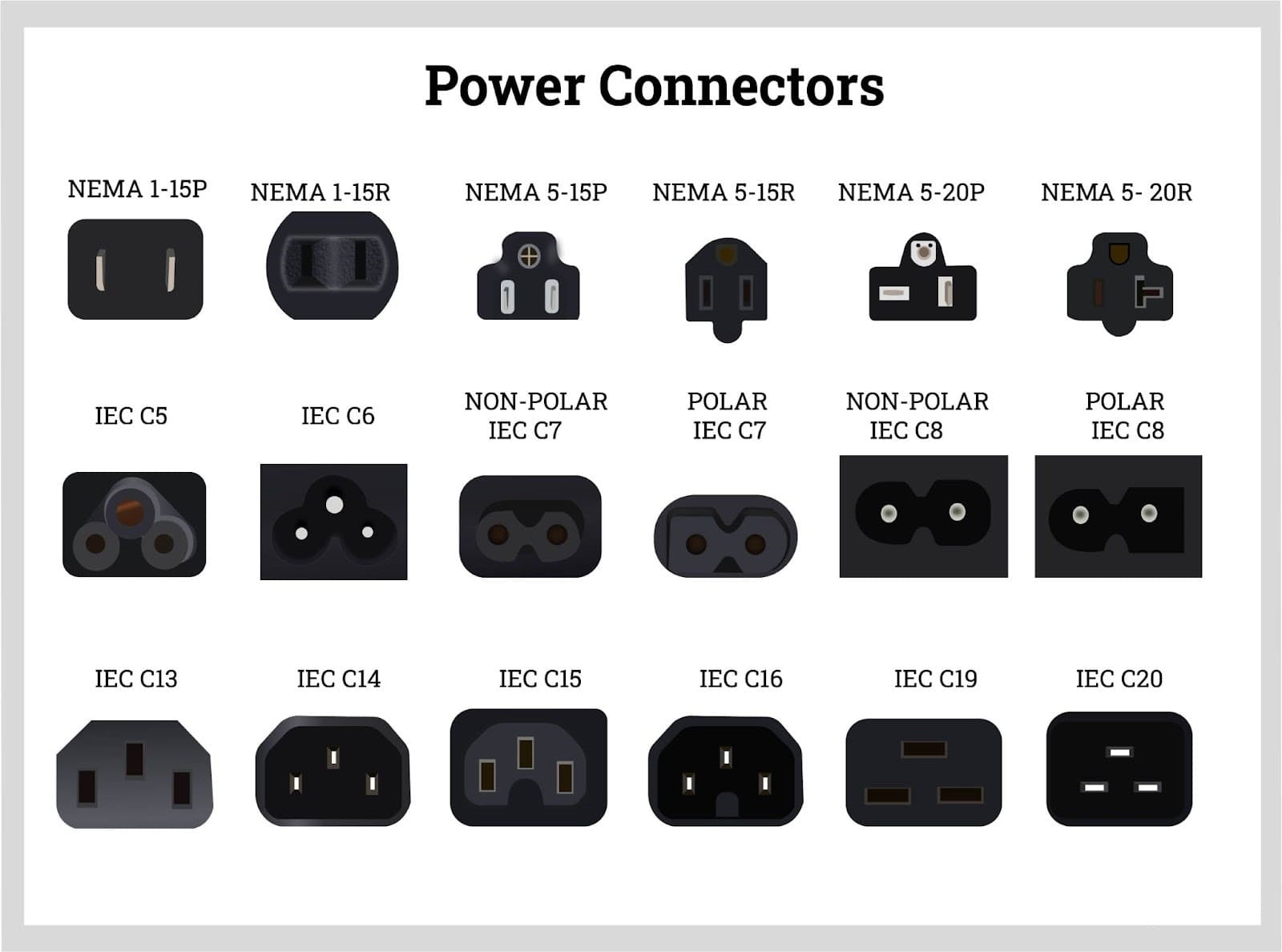
Only one (that I know off) non-polar plugs out there really.
1 Like
Just try one and listen. I did to draw my own conclusion.
I did, but I couldn’t hear anything. I even plugged it in and still no sound. What am I doing wrong???
3 Likes
Guess you don‘t get me. What I meant was that you should take care that the incoming „live“ line is connected to live in your gear and not to „Neutral“. Means have a look if your plug is connected right. Otherwise your gear is not fully disconnected and this can cause distortion especially on Amp‘s.
1 Like
I bought 12awg Iconoclast power cables from Blue Jeans Cables. My purchase was inspired by the fact that I could get the exact length I wanted which cleaned up the rear side of my audio rack immensely. Now my power cords are actually hanging above the floor, not touching each other and all looks so much neater. And BTW, I ordered them made with blue Techflex covers and they look really beautiful. If such can be said of power cables 
I did not do A/B testing so I can’t answer honestly whether they actually sound better, though I think they do
2 Likes
excellent answer
2 Likes
I thought you said they were on the rear side of your cabinet.
Yes. I would say most electricians don’t see the point which is why despite standards and clear markings on adaptors reversed polarity is common in household wiring and probably relatively so with cottage industry audiophile power cords. Personally I am an audiophile power cord sceptic but will on occasion notice differences with the orientation of inexpensive power cords. I have used Audioplan power cords and power strips for more than 30 years. I don’t know if they still exist. Audioplan mark the live wire with a red dot, so it is an easy way of ruling out wiring misalignment as a factor. After many house moves, power cords got mislaid but by trial and error I found that standard power cords oriented correctly worked just as well.
Interesting. I’ll check my wiring, to see if I have the issue. Genuinely curious though: have you tried to see if switching polarity results in a measurable difference? I would think that most devices should not depend on one wire being neutral and another hot. It would be much more important for the ground to be correctly wired.
1 Like