I speak for myself. But it is interesting that those who bought Silent Angel and English Electric also do not hear data packets.
They need to have devices to assemble the data stream and convert it into sound, typically; a streamer → DAC → amplifier → loudspeakers.
The switches are just a transient medium for the data to go from source to destination…
3 Likes
Thank you, a great way to approach this topic. This is how I evaluate new gear also, especially if it’s something that doesn’t instantly make ”night and day” difference. I had good results with English Electric 8Switch so it stayed in my system. I also kept it in the system several weeks and actually switched back and forth between it and Netgear GS105 few times during that time.
2 Likes
Interesting to see that the switch made a difference for you. I wonder why that is, given that for me there was no discernible difference. But by trusting our ears, we’re both happy campers. You because you have a device that does something for you, and me because I can return it. There’s very little obvious truth in our audiophile pursuits. Thank heavens that we’ve got ears.
3 Likes
Yes and I was extremely skeptic about possible differences since as all of us know, switches definitely shouldn’t have any effect. IMO it must have something to do with better PSU on 8Switch but who knows. When I got the demo unit I also got few boutique ethernet cables but based on my subjective evaluation, they all sounded worse than the regular bulk unshielded cat6a so back they went. Now I use BJC ethernet cables but I must admit, bulk unshielded cable is all you need.
1 Like
This. It’s no blind ABX, but it is sure as hell obvious when a component that made a difference one way or another is removed after a period of familiarity. Very underrated approach.
1 Like
To be fair - and this is kind of a little vignette into my professional world - if one is looking for frame interaction on potentially SOME ethernet connected audio devices - you need to look at the inter frame timing on transfer bursts which caused different EM noise signatures within the streamer.
Wireshark has some useful macros to show inter frame timing variation taking advantage of its time stamping feature… Obviously you need to be careful how you measure and ideally use a SPAN port on a switch connected to a dedicated monitoring ethernet interface used for Wireshark.
On earlier (first gen) streaming products from Naim for example I used this method to explore why rendered audio sounded subtly different from different upnp servers transferring the same content - since from a data perspective there should be no difference.
I am pleased to say on later Naim products that were architected differently in the front end and differently internally decoupled I could not detect any such sonic changes from inter frame timing variation.
But yes ethernet cables have no effect in this regard - just potentially devices that have queued switch ports and end hosts, and I suspect like Naim many newer products are better designed and decoupled from spurious noise and interactions from the TCP/IP stack.
1 Like
This brings up my entire point about best practices. I have 10GBe that can, on various hardware, deliver anything from 332 to 800MB/s.
The faster the XFer the less time any interframe has to do with it. Interpolate this out to 40 or 100GBe. You can literally now buffer entire albums of even 24/192 in fractions of a second.
EM noise due to interframe timing is a fault. It’s poorly designed product. All this is why I’m quite happy with JRiver and rolling my own end points.
1 Like
Thanks for such a basic, understandable assertion; Simon’s latest contributions, while undoubtedly well-informed, have left me in the COVID brain-fog dust.
My own BJC Cat6A cables connect my Ubiquiti router with a used Cisco 2960 switch, now using an external 12v power supply from China that may be an affordable <$100 sonic discovery for others: 50W lps
1 Like
Well especially in the audio world there is no absolute statement like this. Sure, depending on your requirements, expectations and goals this is to fair say on a personal basis.
But other people definitely have different experiences and goals.
When you get the chance to lend an Audioquest Diamond cable to compare in your individual setup, take the chance and hear for yourself.
1 Like
Or, perhaps, “only in the audio world” 
1 Like
The Zyxel GS-108B v3 has just arrived. Whipped out my #1 JIS PH screwdriver - many Far East fasteners are actually JIS headed rather than Phillips. If you use a Phillips on a JIS, you run the risk of damaging the screw head. Anyhoo, I’m digressing.
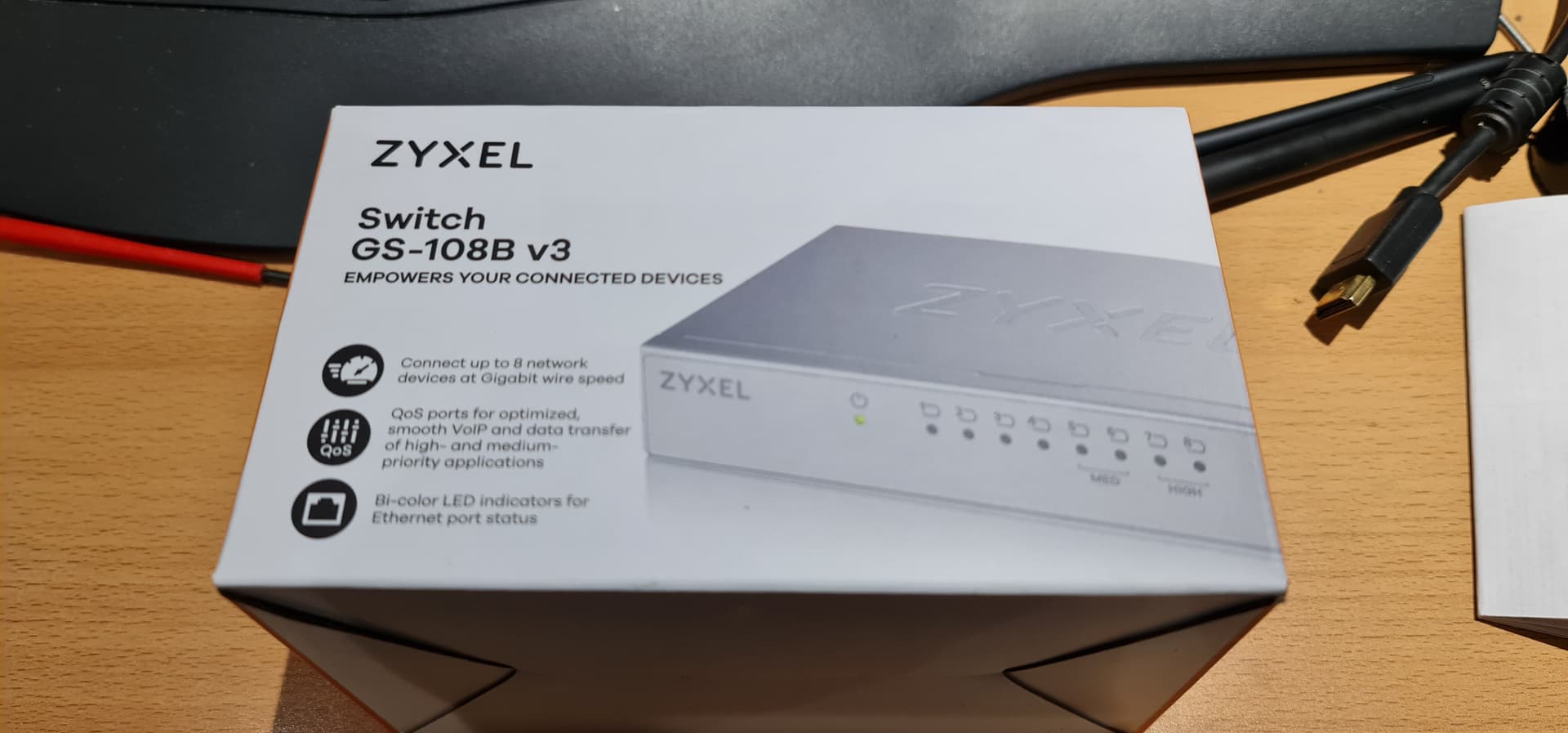
The switch is relatively unremarkable looking (as most switches are), though it does have a couple of ports marked ‘high priority’ and and a couple marked ‘medium priority’ (apparently the switch has QoS enabled, even though it’s a ‘dumb’ unmanaged switch). It also comes with a lifetime warranty!
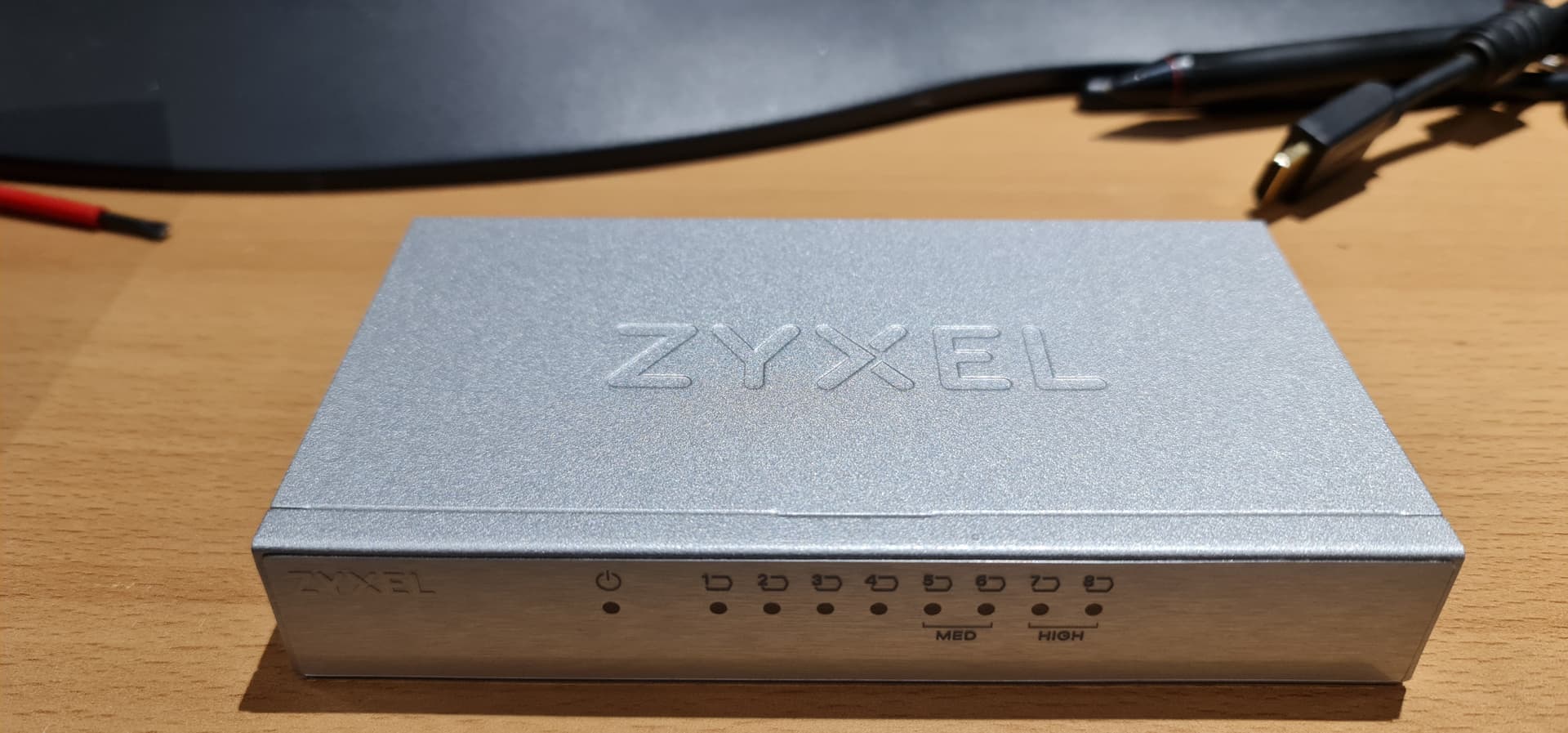
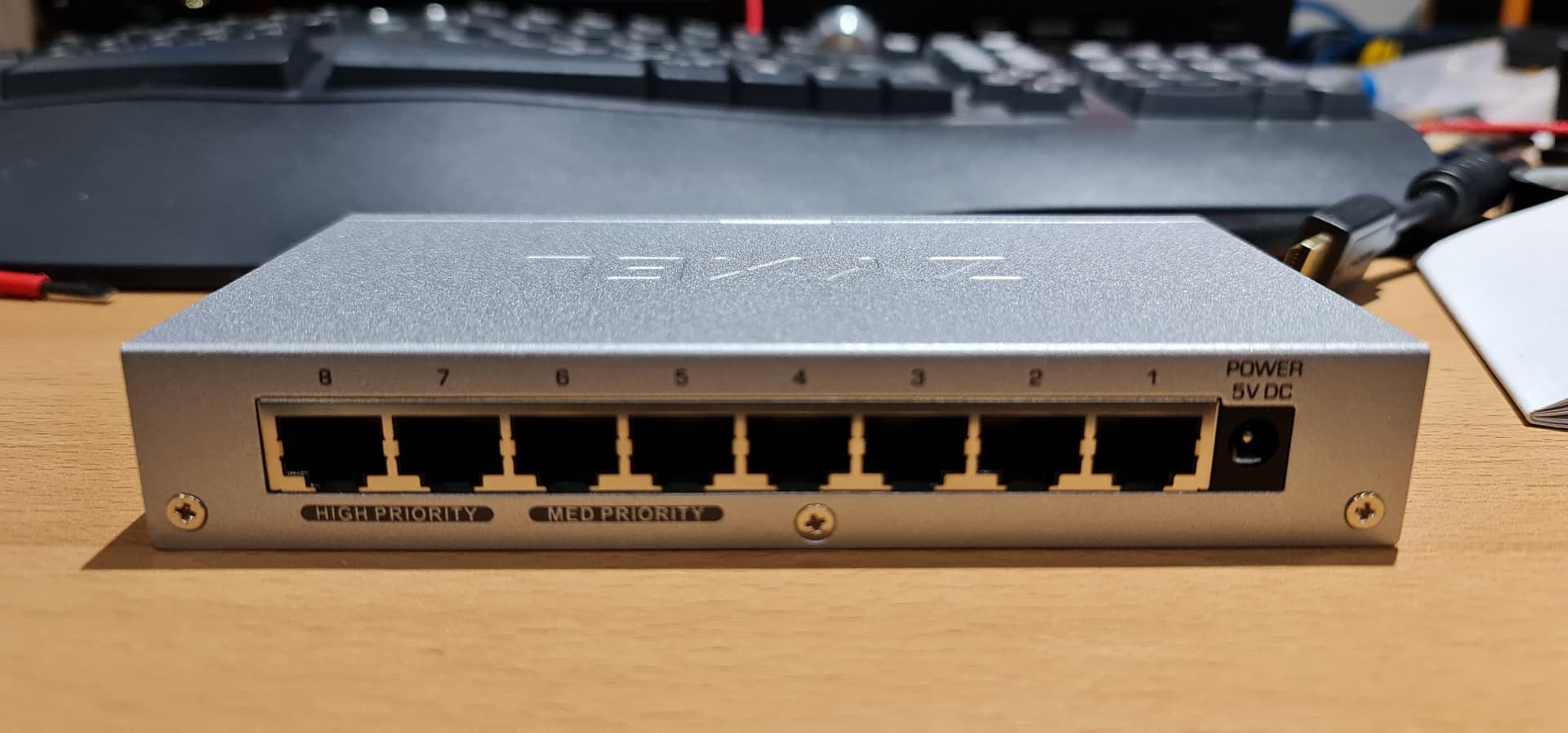
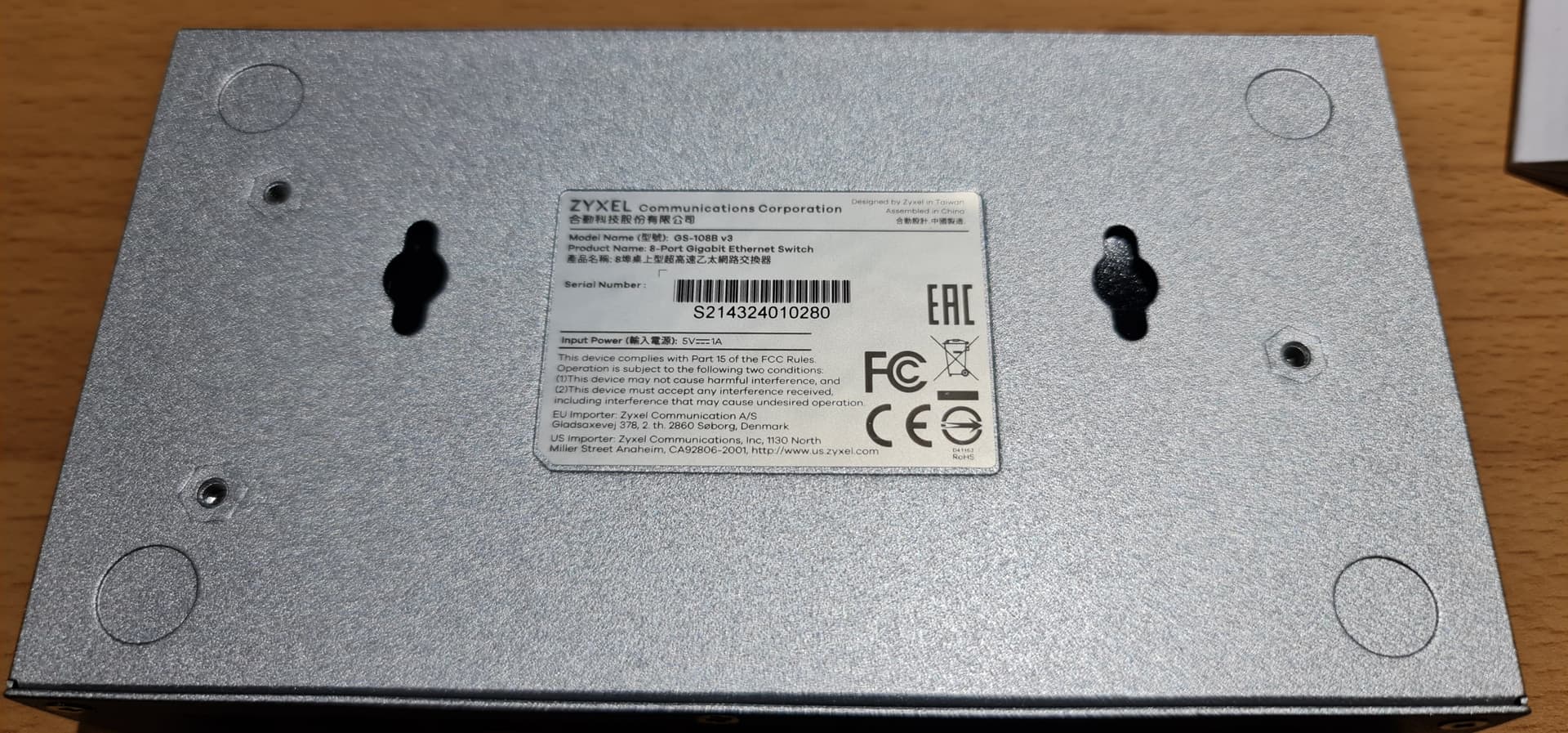
It’s supplied with a fairly standard 5V SMPS:
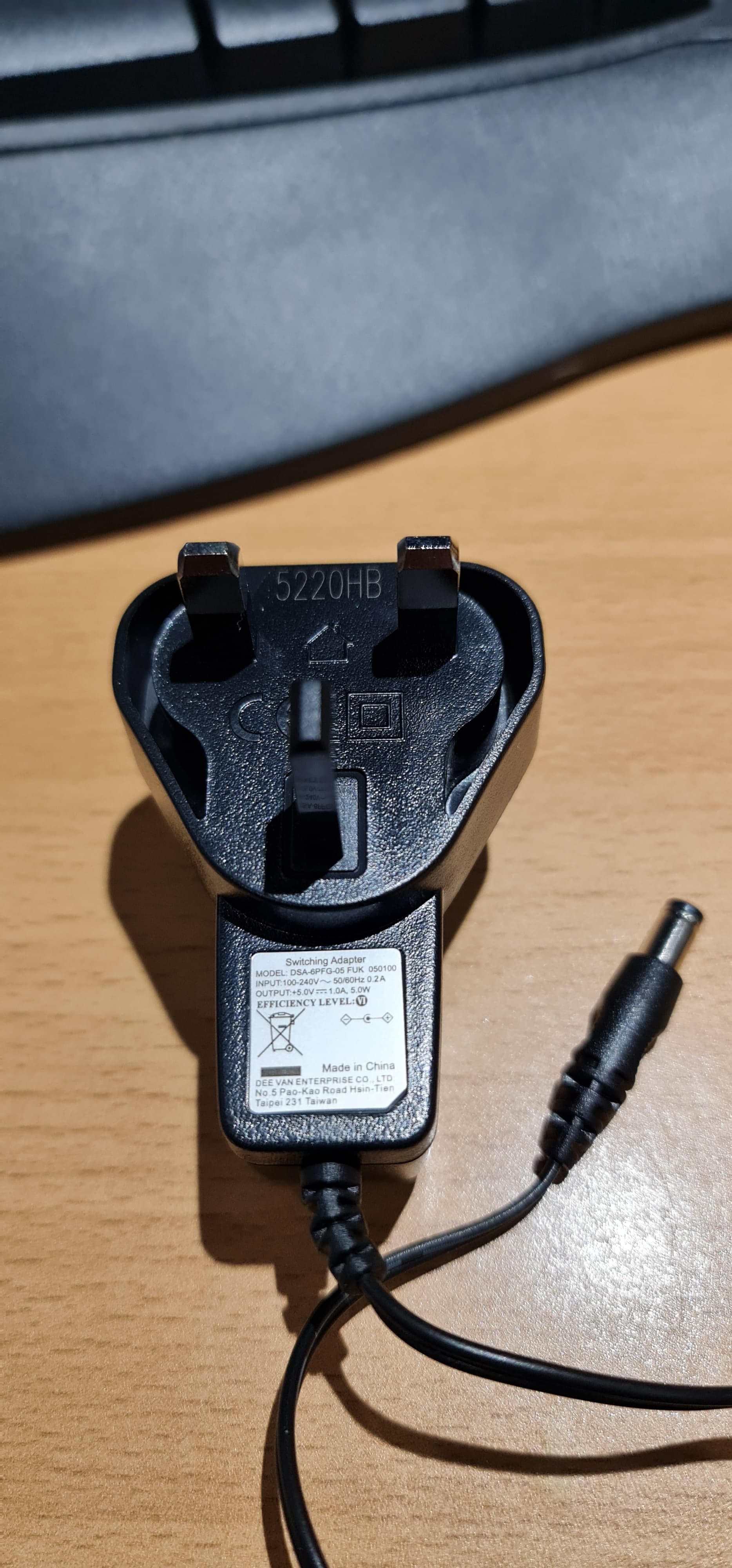
3 #1 JIS screws hold the lid on.
Let’s have a look inside:
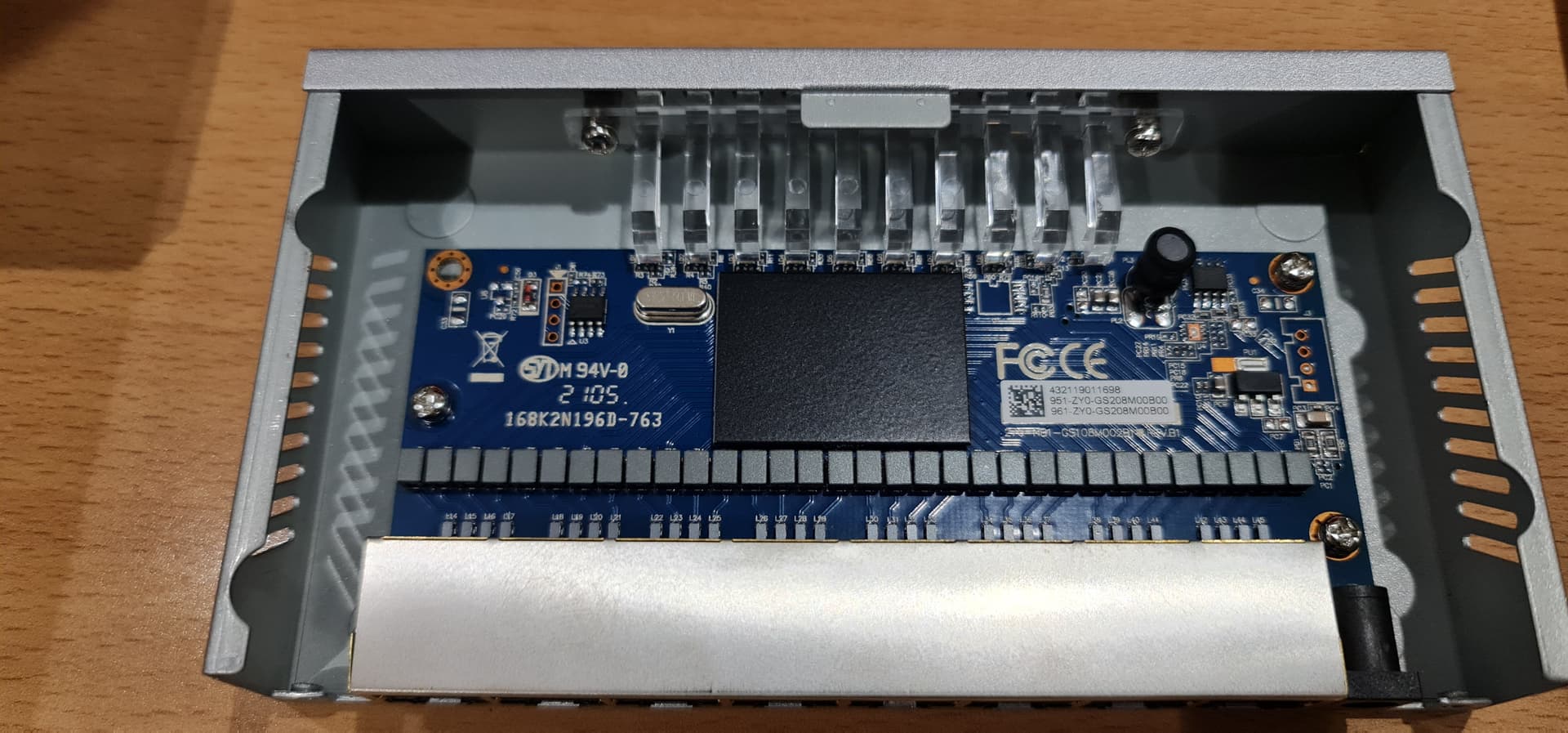
Look familiar? Yup, it’s exactly the same main board as the English Electric 8switch and the Silent Angel Bonn N8 “audiophile” ethernet switches, right down to the version number.
Hans Beekhuyzen very kindly gives us a look at the internals of both switches (about 3:40 onwards) here:
The layout is interesting - rather than IC packaged chokes and transformers common to many other switches, you can see 4 discrete chokes and 4 discrete transformers for each RJ45 socket. Pretty neat for a £20 switch.
At the power socket end of the board, there’s a RS1117A voltage regulator dropping the 5V supply to 3.3V. No point adding a fancy Voodoo external LPS here when there’s an industry bog-standard regulator doing the 5V to 3.3V conversion.
So, what’s the difference between this switch at £20 and the English Electric 8 Switch (£450)/Silent Angel Bonn N8 (£395)?
The English Electric has a chunky metal case vs the Silent Angel’s stamped steel case which probably accounts for its higher price, however the only functional difference between these switches and the stock Zyxel is an additional daughter board carrying the 0.1ppm 25MHz temperature compensated crystal oscillator.
Ethernet clocks need to meet + or - 100ppm to be compliant with spec. A 0.1ppm clock doesn’t do ethernet any better. Claims are made about improved jitter, but jitter doesn’t matter over TCP/IP where data is buffered at either end.
I pity anyone who ponied up the asking price for either of these switches and even more so anyone who went the extra pounds/euros/dollhairs for the optional LPS. If you did, you’ve been well and truly had…
Credit to @Mark_Brown for giving me the idea to do this.
Anyone need a cheap but good 8-port Gbit switch with QoS? One careful owner…
9 Likes
My apologies, I forgot to add ”IMO” in the end of my message. Even I wouldn’t pay that kind of money for an ethernet cable. It would be an interesting demo though. If the cable is shielded and shield connected on both ends, the Audioquest cable might do something to the sound. When it comes to cables, being analog or digital, I’ve learned that price has little to do with the performance.
2 Likes
Thanks for your effort Graeme. I’m still happy with my 8Switch and it stays in my system because it improves its sound quality. When I evaluate any piece of equipment in my own system, the problem with all the scientific proof against the possible differences in sound quality unfortunately goes down the toilet when my subjective experience tells otherwise.
Anyway, as I’ve said dozens of times, it’s most probably the better PSU both Silent Angel and English Electric uses which causes the difference in sq. This is my theory and I can’t back it up with measurements unfortunately. I do know that some crappy smps’s have higher ripple noise than well designed and better built alternatives.
2 Likes
At least you’ll be able to save quite a bit of money if you ever need a new switch - just get the Zyxel and upgrade the PSU.
1 Like
I beg to differ about which one goes down the toilet.
1 Like
I just hold on to my Cisco switches and Mikrotik routers, it simply works, always!
1 Like
This(!) cannot be repeated too often.
So the additional clock is meaningless.
A LPS might improve sound (which I don’t want to question) as long we are in the audio part of the chain. But not bit will ever care or improve its quality for being powered by a linear power brick. It’s just not real.
Yes I know, you choose the worse sounding gear if it just measures better. This makes absolutely zero sense to me but to each their own I guess.
1 Like
I must admit that I had iFi psu on Netgear GS105, which in theory should be a very good SMPS. Still I preferred 8Switch with its own psu. I would’ve compared the switches with same psu but they operate in different voltage.
1 Like