All of these arguments about how music sounds better under the influence ,in complete darkness, etc actually make the argument that ASR is really more important in making audio buying decisions than some subjective reason.
The ears are easily fooled. Room structure,humidity, nasal congestion,lighting buzzing,etc. You could probably list a hundred things that can alter the listening experience.
Like the stress / fatigue doing an abx tests. I experience it myself that after switching a few times I lose concentration. Maybe I just prefer to listen to music too much.
What is just plain silly to me is people who stop reading the measurements after the very first measurement (1kHz SINAD) and keep repeating this single figure nonsense.
Do you notice there is a comprehensive set of measurements performed for DACs, amps , headphones, speakers ?
To me it reads like you don’t actually understand any of the measurements at all.
Which is totally fine, BTW. I have learned a huge amount about measurements from Amir/ASR. It is one of the best things about the site, besides the reviews themselves.
The problem more that ASR had not reviewed any of the R2R DACs I was interested in, from Holo, Denafrips and Aqua, but most were reviewed by Goldensound.
You remind me of a day in Court, a long time ago, when a barrister was cross-examining a gentleman whom, as had become clear during the day, had gone to the pub, got drunk, went home to a rather annoyed wife, threw a claw hammer at her and murdered her on the kitchen floor. The barrister started speaking foreign and was interrupted with the classic putdown from the judge: “Mr Smith, we don’t speak Latin in Slough”.
The attacks on Paul McGowan and anyone connected to him were visceral and sustained.
I don’t object to being rude about people. Many fine writers from Wilde to Marx made a good living out of it. What I find objectionable, and from what I saw prevails at ASR, are the vulgar insults from the pitchfork-bearing mob. You don’t get that on ANY forum I’ve visited. The funny thing is that these folk think outsiders are paying attention. It’s a bit like being insulted by the Orange One, there is a certain cachet attached to it.
Whether you do an ABX test or try to figure out which piece of hardware sounds better for you, you need to do “critical listening”, and that’s arguably more fatiguing than just “listening to music”.
I dont think there is a count on this. But lots of members on ASR have posted such experiences.
ASR has a massive reach. Items that measure well and demonstrate solid engineering have a bump in sales after being reviewed. Often see them going out of stock from suppliers, particularly the down right bargain gear. Like $50 IEMs that measure essenially perfect. I remember one speaker manufacturer organising another production run due to ASR generated demand.
Lots of consumers are looking for well priced solid engineered products.
So you haven’t read any reviews on ASR or tried to understand the wide range of measurements presented in reviews (including listening tests), but you still object to the reviews? Partly this is because they don’t agree with some designers’ goals of introducing distortion, and partly because you read some negative comments related to a PS Audio product (but didn’t read the review itself)?
Well, the person who kindly loaned me your Bridge II product bought such a replacement, not from China but from US (Schiit) and is happier for it. The person who loaned me $30,000 worth of Chord DACs, processor, and fancy cables, did replace it with a Chinese company as well and said he could not hear a difference.
We have a 700+ post thread on what items people have bought because of ASR reviews:
To be fair, i have heard of people saying on other forums they bought a Topping, SMSL DAC, found to sound “sterile” and went to buy some other market driven DAC and are happier for it. When I asked them to run controlled tests, they refused. One person sent his $2,500 DAC to me and told me exactly what headphone and content he used to compare them. I replicated his exact test down to the headphone (Stax) and there was zero difference in level matched listening tests.
Speaking of that, someone performed an ABX test of Hegel h390 internal DAC vs Mytek Manhattan II DAC:
"Bass extension, linearity, and output: Royals by Lorde, Ballad of the Runaway Horse by Wasserman, Gentle Rain by Houston Person
Soundstage placement: Pink Panther theme by Christophe Beck
Center imaging: Little Room by Nora Jones
Soundstage depth: Jack Sparrow, Royal Philharmonic Film Classics album
Soundstage width: Robot Rock/Oh Yeah by Daft Punk, Motherboard by Daft Punk
RESULTS: I could hear NO discernible difference at all between DACs, neither could my girlfriend. We both felt we were just guessing when picking the X and the results verified it. I got 3 of 6 right, she got 2, but we might as well have been flipping a coin. It was literal blind luck.
Afterward I would say the most common factors causing people to hear discernible differences between modern DACs is placebo, consumer bias, or not level-matching. These high priced DACs often have silly hi output voltages which would make them noticeably louder at the same volume level on your amp."
Seems whatever magic signature your DAC has, was not evident when the listener didn’t know what they were listening to. This of course matches what science would predict.
Have you conducted any such controlled test? Ever?
11 Likes
AceRimmer
("I’m not just a hero; I’m a legend!")
279
Obviously setting slomo to an hour is NOT enough to ensure a civil discourse here!
If you cannot stick to discussing the topic and instead descend into personal ad homenium attacks then we may as well close it down.
This may be a bit off topic, but has anybody actually tried tuning a speaker by ear? Beyond futzing with the tweeter padding a little? I’d strongly recommend that you try your hand at building a simple 2-way speaker and tuning the crossover by ear. Then measure it. I’ve done it a bunch of times and it’s a complete train wreck.
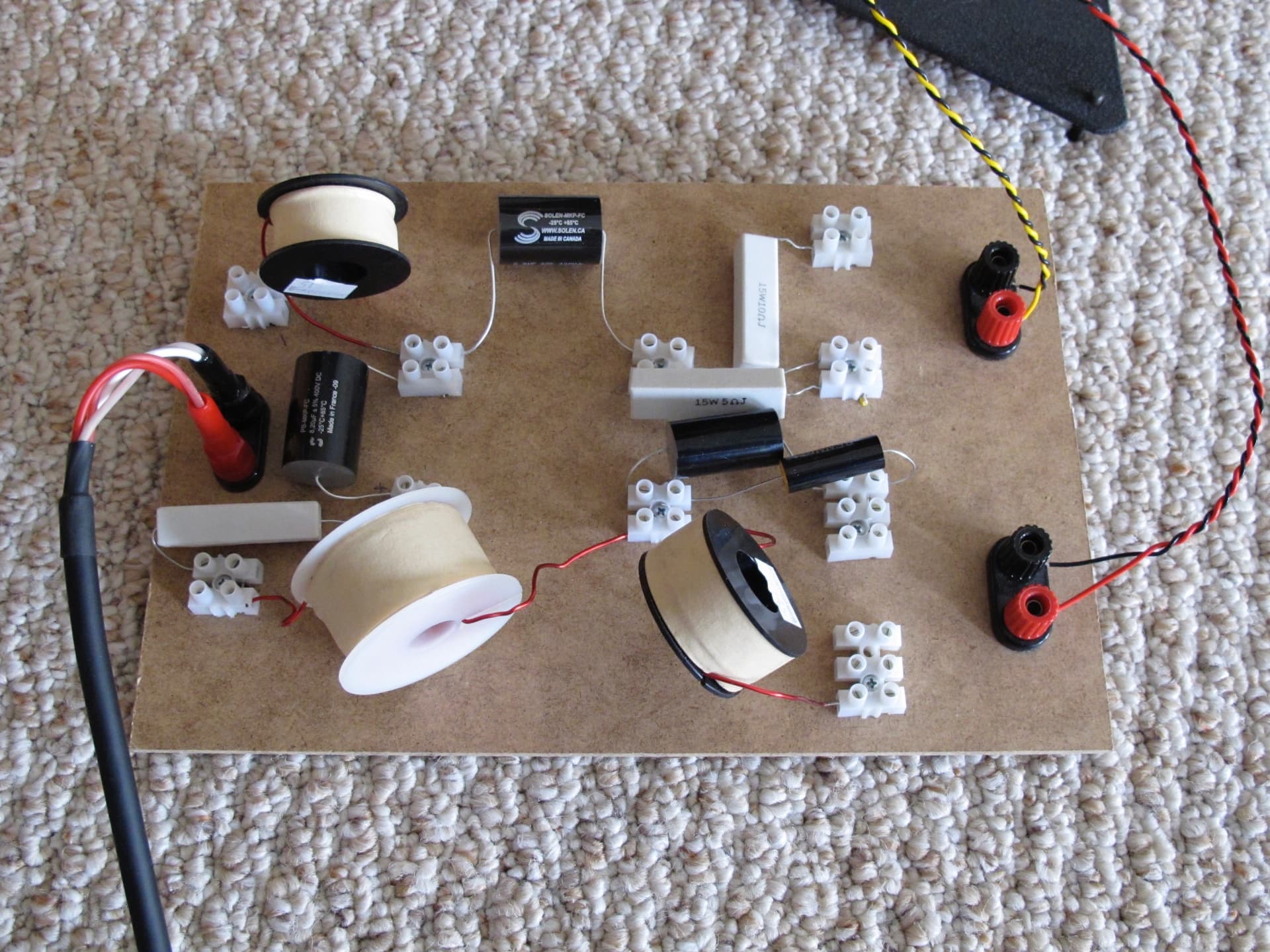
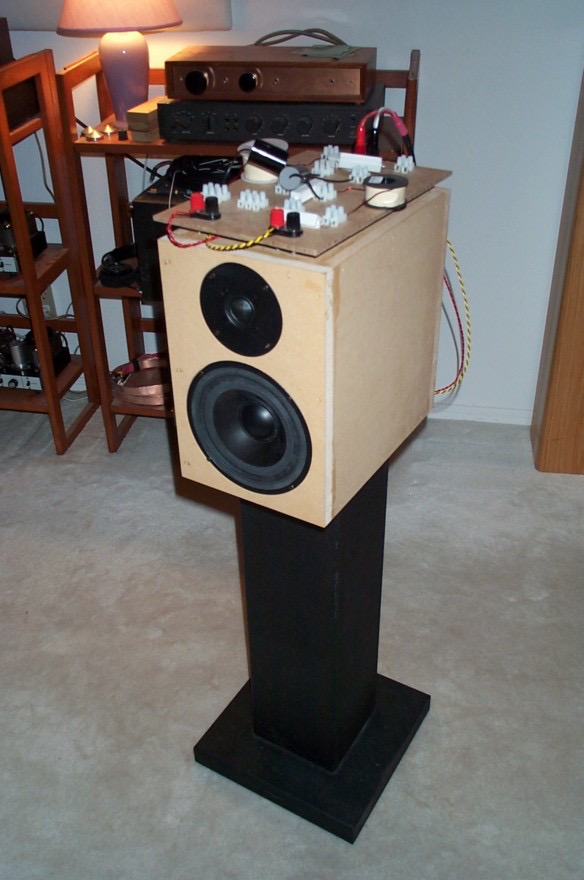
I have simple plates that I built about 25 years ago to “lego” crossover topologies together before I etched a PCB and put the crossover inside. Here’s what the plates look like and it allows me some degree of easy crossover modification. I generally use them alongside a measurement system but occasionally I’ve tried my hand at doing it by ear.
I keep a range of capacitors, cheap power resistors and air and iron core inductors around to swap out and build just about any 2 or 3 way crossover as needed.
The problem with tuning by ear, is that from an objective standpoint our ears and acoustic memories are awful. We didn’t evolve over Millenia to be able to tell how sharp the claws on the rocks are, just where and how far away.
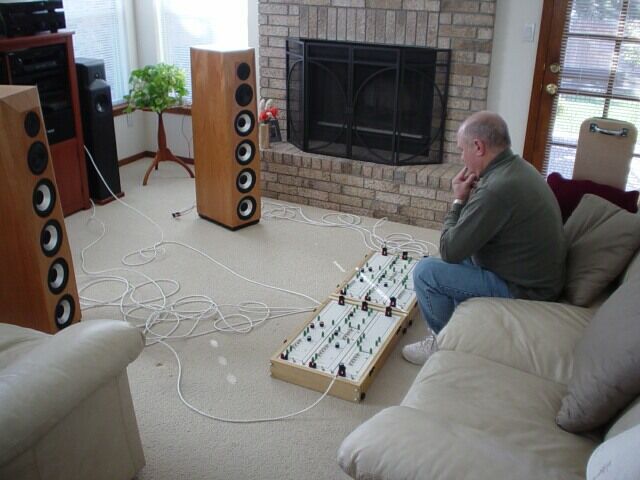
My friend who is even more insane than myself built a complete stand-alone 3-way stereo crossover box about 20 years ago that has zobels and all sorts of things you can do with it. You effectively can dial in just about anything (within reason) from crossover points, and slopes and such, padding, and notches, etc. It was a thing of beauty. You can sit and listen to music and futz to your hearts content. Then when you are done, pull out the measurement mic and see how you did. His tool was much like my simple plates that allow you to play and design the crossover easily before realizing it with high quality parts internal to the speaker enclosure.
Here’s a friend trying it out on a set of budget 3-ways another friend was tinkering with:
At the end of the day, your mood, and the type of music you are using for testing radically changes what you think is a good crossover, and anything that any of a bunch of us could design by ear measured really poorly. It was comical. I’ve tried it a lot and the only conclusion that is satisfying is that I don’t trust my ears for anything objective, and nobody else should either.
One almost might think this escalation is intended just as it could be seen with other controversial but highly interesting threads that got closed. Is it so hard to remain civil and fair? I would love to see this discussion to go on. Of course ASR is a red flag to some, but why not be open to discussion in general? On the other hand I know a multitude of threads and topics I could get literally mad about, so I stay away rather than grinding those down.
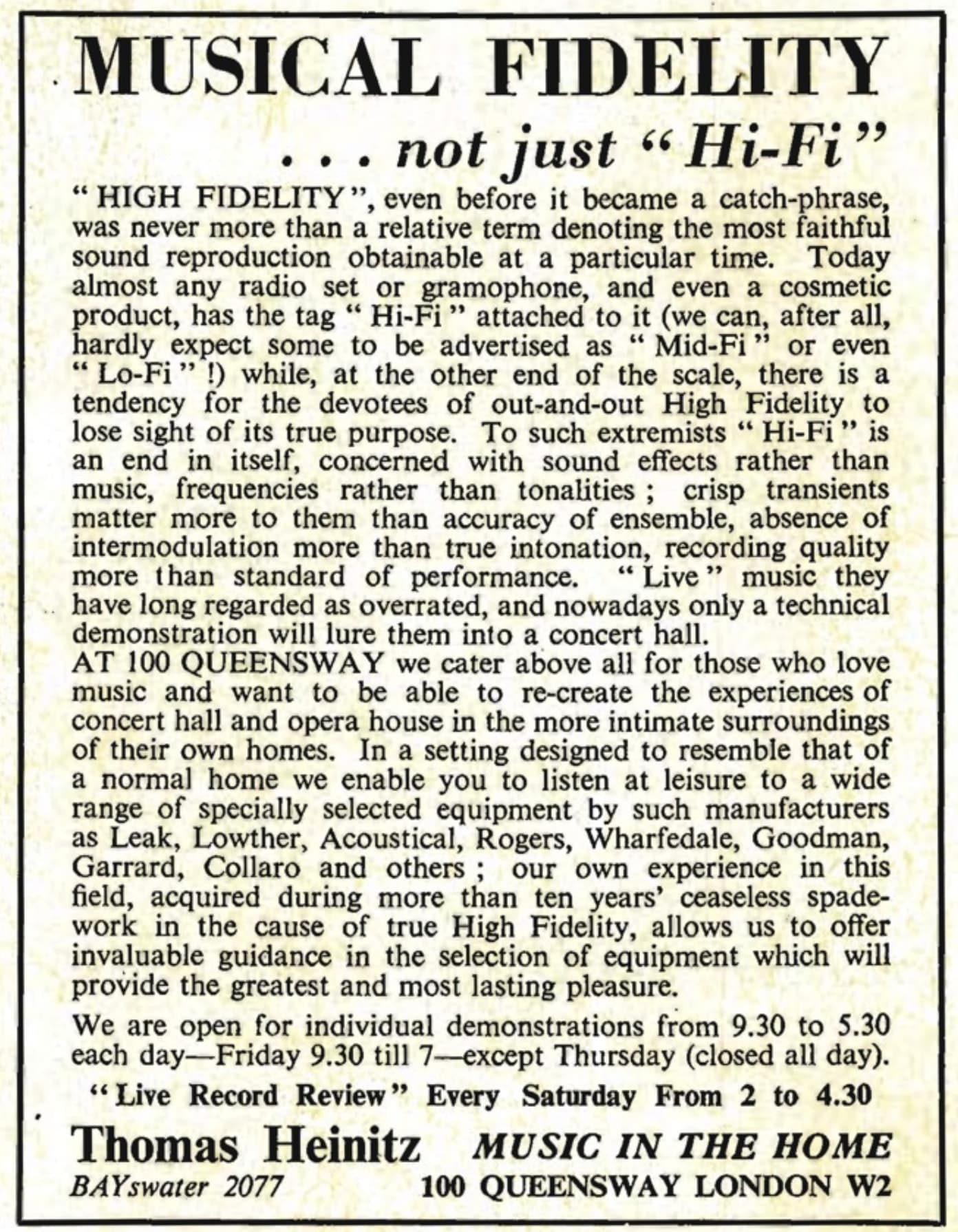
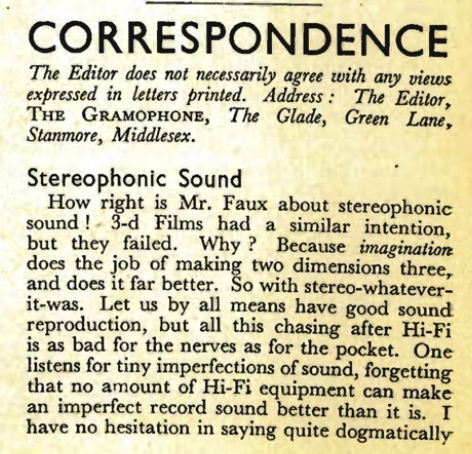
I suspect this has run its course. I don’t subscribe to any audio magazines, rather two music magazines, Gramophone and Jazzwise, the former for over 40 years. The back issues are much more fun. Here’s an advertisement from 1957 - this was a leading London dealer for over 50 years and the first ever stockist of Harbeth speakers. " … devotees of out-and-out High Fidelity to lose sight of its true purpose …". And that was 67 years ago. Not much changes.
According to Mr J P Jackson of South Croydon, Surrey, “it is impossible to be a true music-lover and a Hi-Fi man at the same time”. Well said, Mr Jackson!
We have excellent coverage of DACs from Holo and Denafrips.
I reviewed the Holo Cyan:
Holo May was reviewed by Professor “Wolf” who follows my protocols:
He also measured Holo Audio Spring:
Holo has good commitment to excellent measured performance and that is what you see reflected in above reviews.
I reviewed and measured Denafrips ARES II:
Alas, all of these attempts at reinventing the wheel (DAC) results in much higher expense and slightly to fairly worse performance instead of using off-the-shelf DAC silicon from likes of ESS/AKM. There is no evidence of them sounding better either. So you pay a lot more but get nothing more in return.
I have always been professional and only focusing on PS audio products and not Paul himself. Sadly, he has not replicated and has often used unkind notes to describe me, what I do etc.
As for membership, yes, they are quite annoyed with his videos where he routinely promotes folklore instead of proper audio science and engineering. So you see them expressing that frustration.
Fortunately there is a bright light in the form of Chris Brunhaver, their chief speaker designer. He is a member of ASR and follows proper research in speaker design. Hopefully this type of approach bleeds into the rest of PS audio products and with it, we get proper high fidelity as opposed to stories.