If you go read the Cyan 2 impression’s thread on Head-Fi, there is such an inconsistency in people’s impressions comparing against Spring 3 for example, how they describe differences
So I don’t see any point in reading or writing subjective impressions - they vary wildly between people
For impressions, as I wrote here already (but perhaps you missed it?) best to demo at home and listen for yourself, with own ears exactly as I have done this week
That is also my opinion.
I am never able to verify others discriptions what they perceived when they were listening to DACs or Amps. With headphones it is different, there I can relate to subject impressions when I know (not personally) the person quite well.
My main intention to buy a Cyan 2 is two make one box out of two boxes (Soekris and SMSL). At the moment the SMSL D6 DSD Dac is connected only to my Cayin iHA6 amp and the Soekris only to my Cayin HA-3A tube amp. So I usually only hear DSD direct (DS Dac) with the solid state amp and PCM (R2R Dac) only with the tube amp. With the Cyan 2 I can combine both. A the real main reason for the Cyan 2 is that it has the right size for my listing area. Spring 3 is not of interest for me because it is simply to big.
I am pretty sure I am not able to hear the difference between Soekris 2541 and Cyan 2 (both with PCM to tube amp) but at least I know the Cyan 2 measures good to very good and it will be fun to see/hear if I can perceive a difference between PCM and DSD direct within the same amp (either solid state or tube).
There’s not that many impressions around yet to form an opinion on Cyan2. You can’t say much from a single listening impression, but when there are many from different sources, you can pick many useful things between the lines.
Also when comparing to something I’m personally familiar with (like Spring 3), I can instantly form some kind of opinion to how it compares.
Measurements give pretty much zero information on how something might sound. Perfectly measuring, transparent gear can sound cold and sterile or it can sound smooth and relaxed. You simply can’t tell from looking at SINAD etc.
So you might not see any point in subjective listening impressions, but I see plenty of point in them. Obviously listening to gear by yourself is the final step, but I only order gear which has picked up my interest. This usually takes multiple reviews, measurements and user impressions online.
I’m not attacking anyone? But yeah, this is kind of offtopic anyway. Sorry for asking if anyone had heard Spring 3 vs Cyan2 and would be kind enough to share their findings. This was clearly too much asked Let’s move on.
The question really is, should I replace my Topping D90 with a Cyan 2? I am still ruminating on that one…can’t decide. I like measurements, and ideally a trusted reviewer and finally a chance to home audition, the trouble is, in the UK, this is not likely!
Just my guess but the flagship product shouldn’t be on the same release cycle as the cheaper models, its supposed to be a statement product and last a little longer- only guessing though !
May 2 may indeed come first (with network input !? )
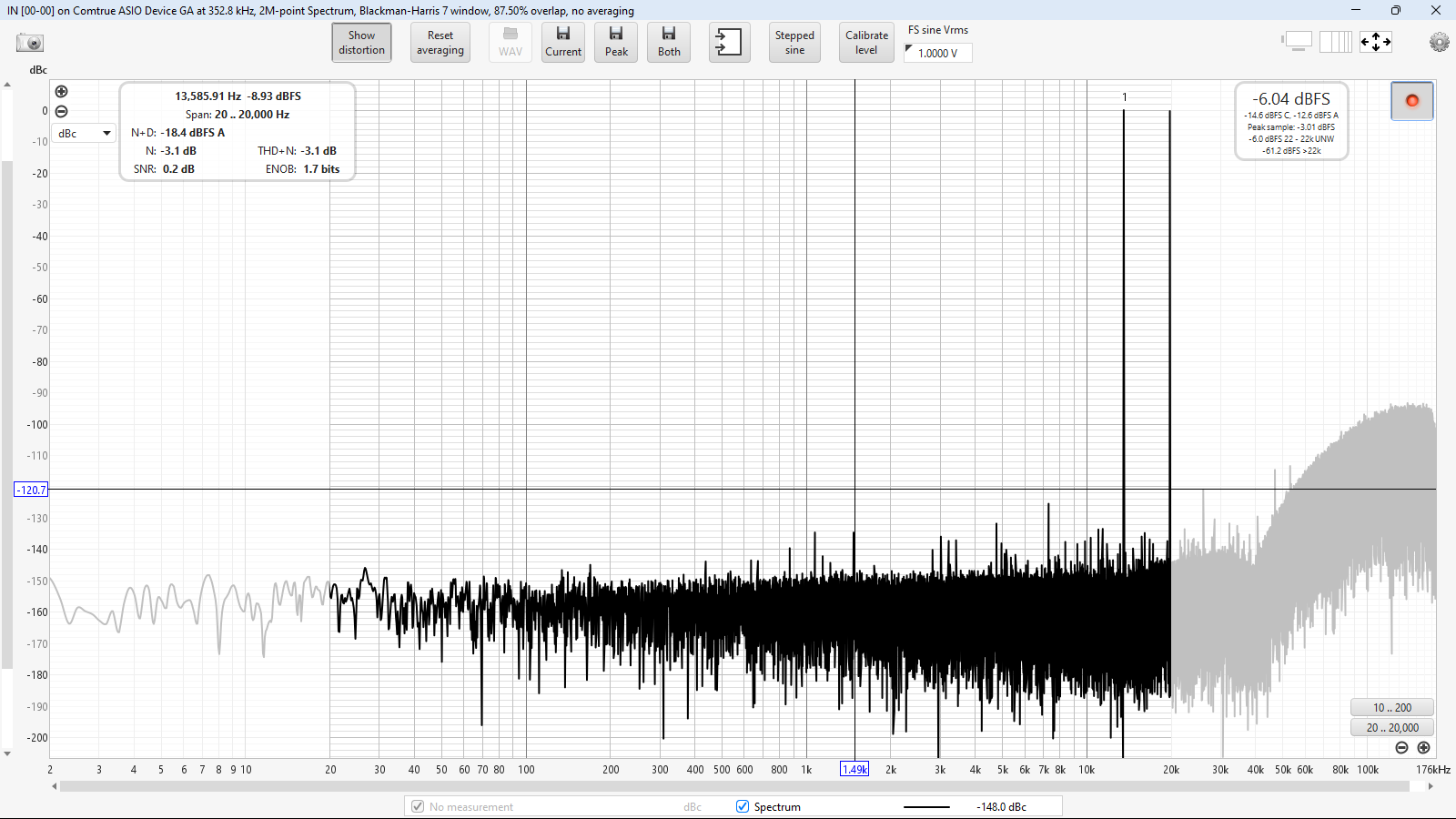
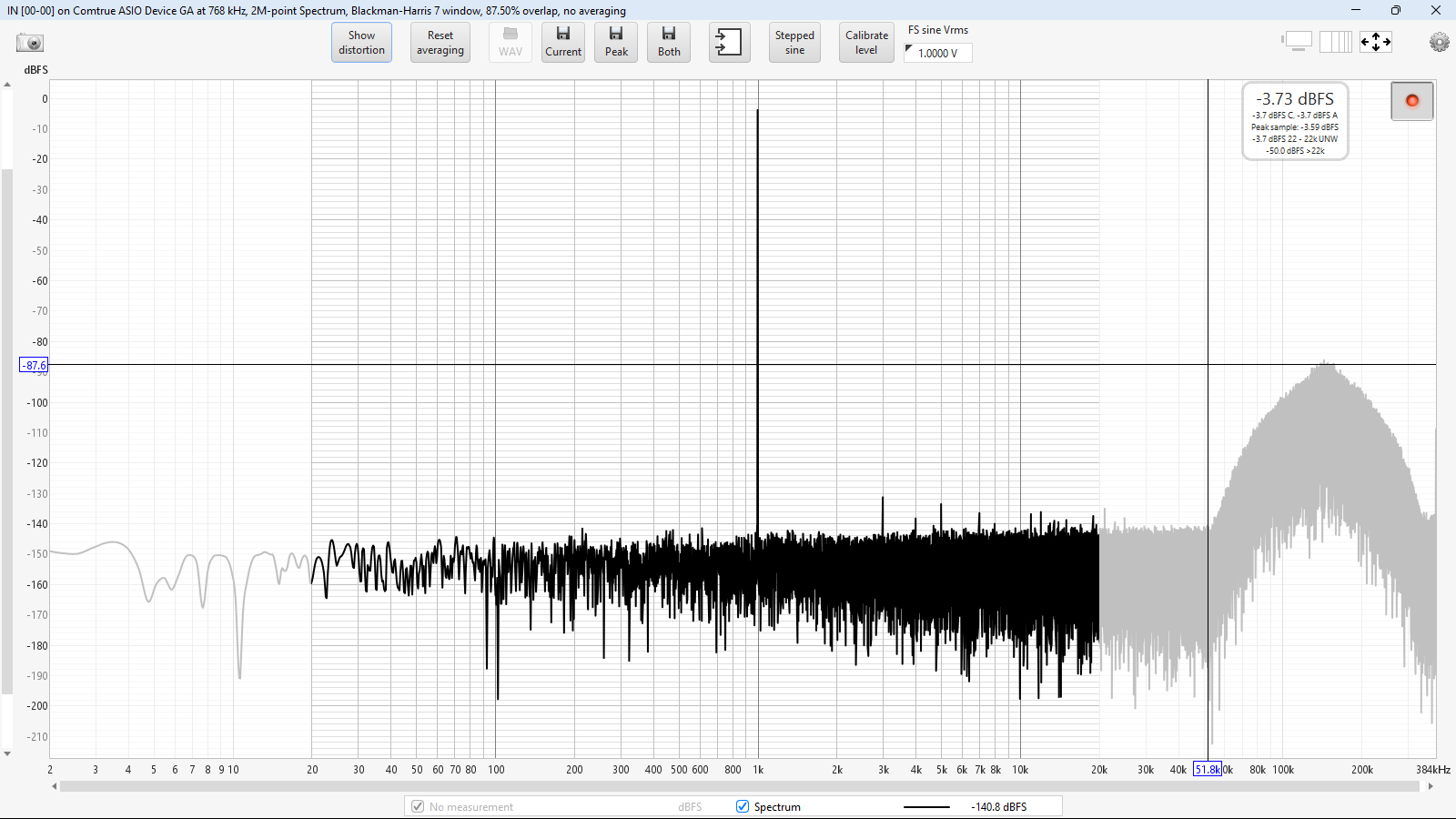
For those interested (ignore if you don’t care ) : those of you following Jussi’s posts over the past decade about one of the key benefits of DSD256 (or higher) to analogue conversion, is about no images PLUS pushing this DSD noise hump further out and importantly how this DSD noise hump is not correlated to the input signal.
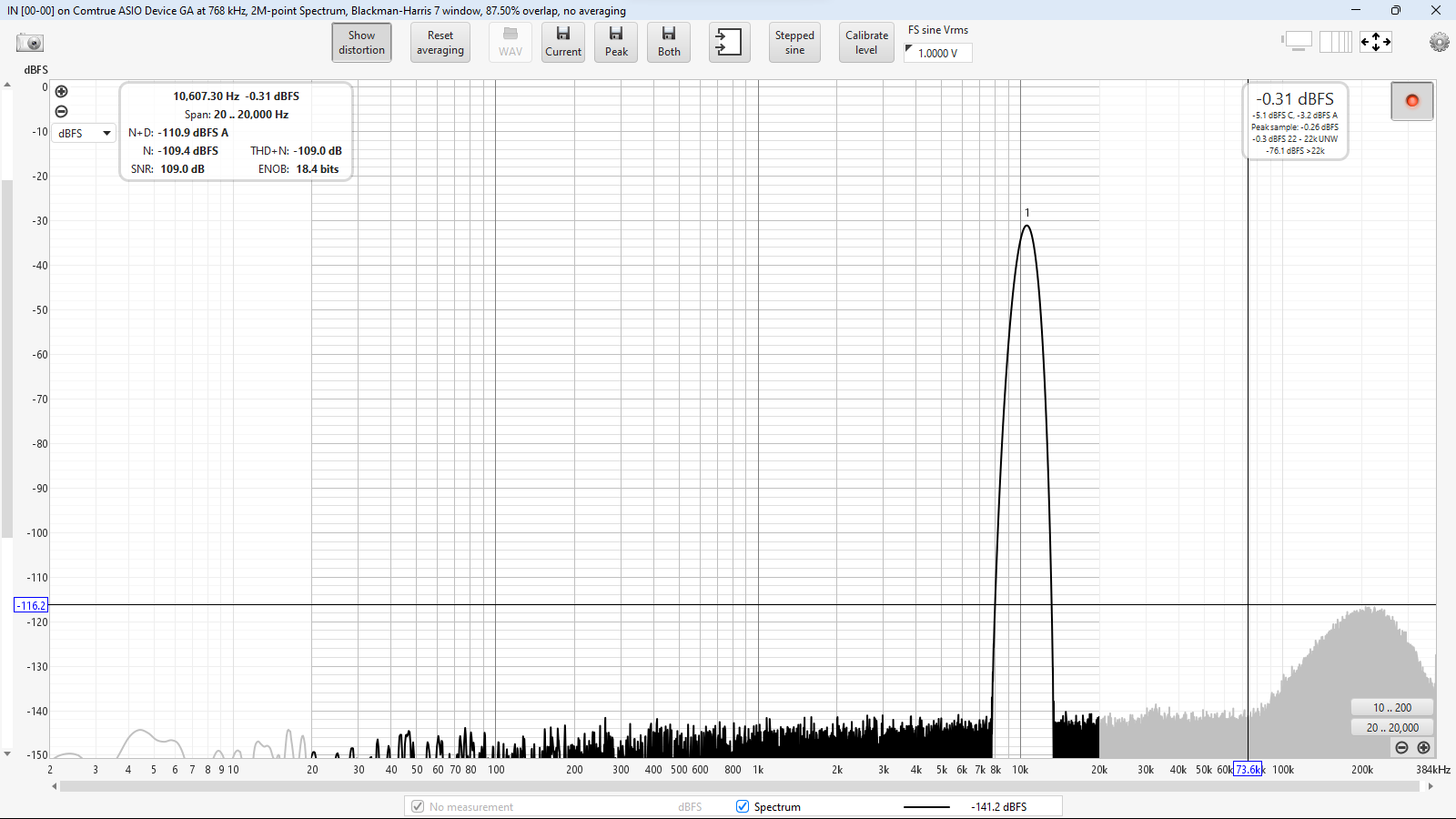
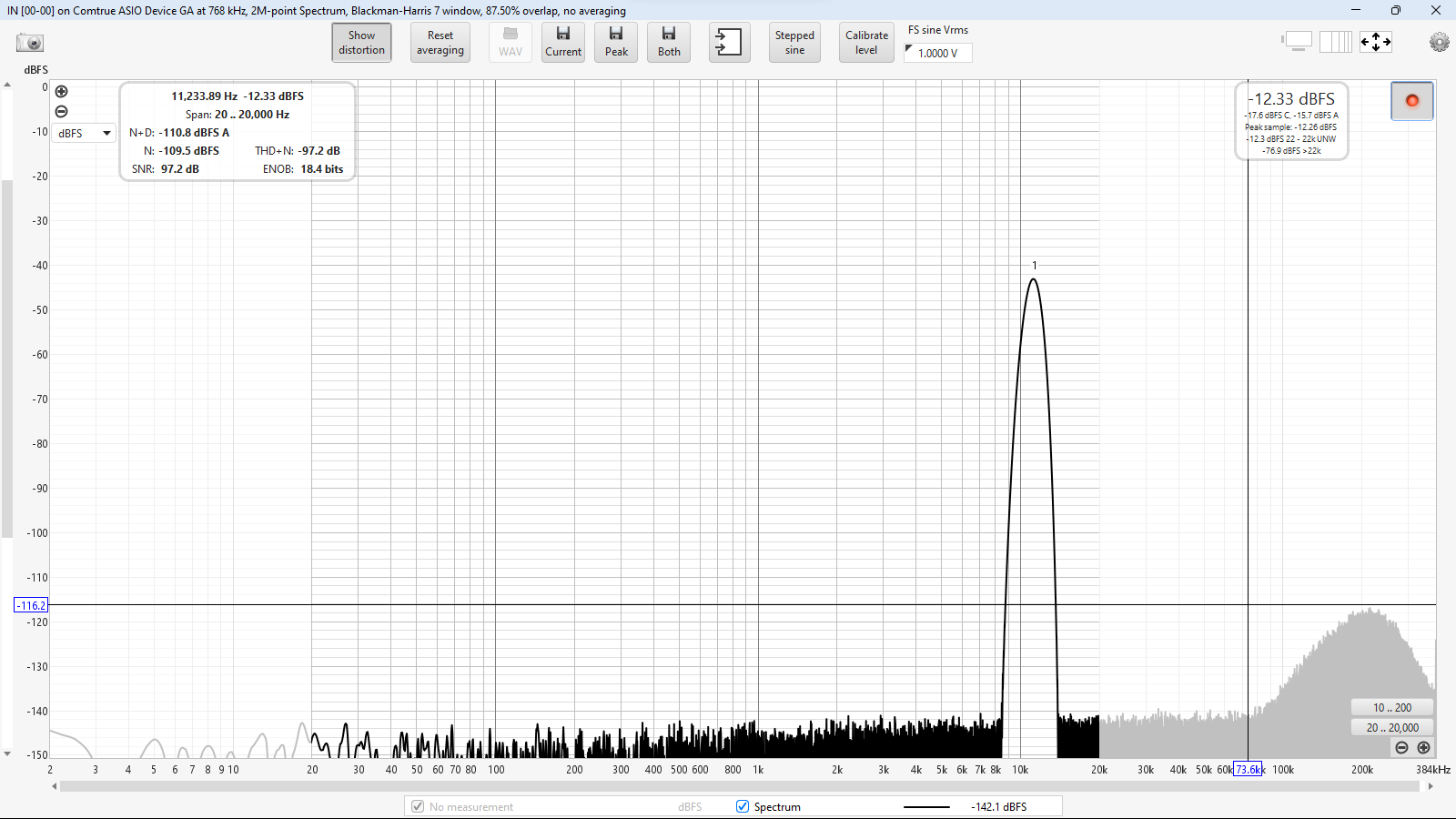
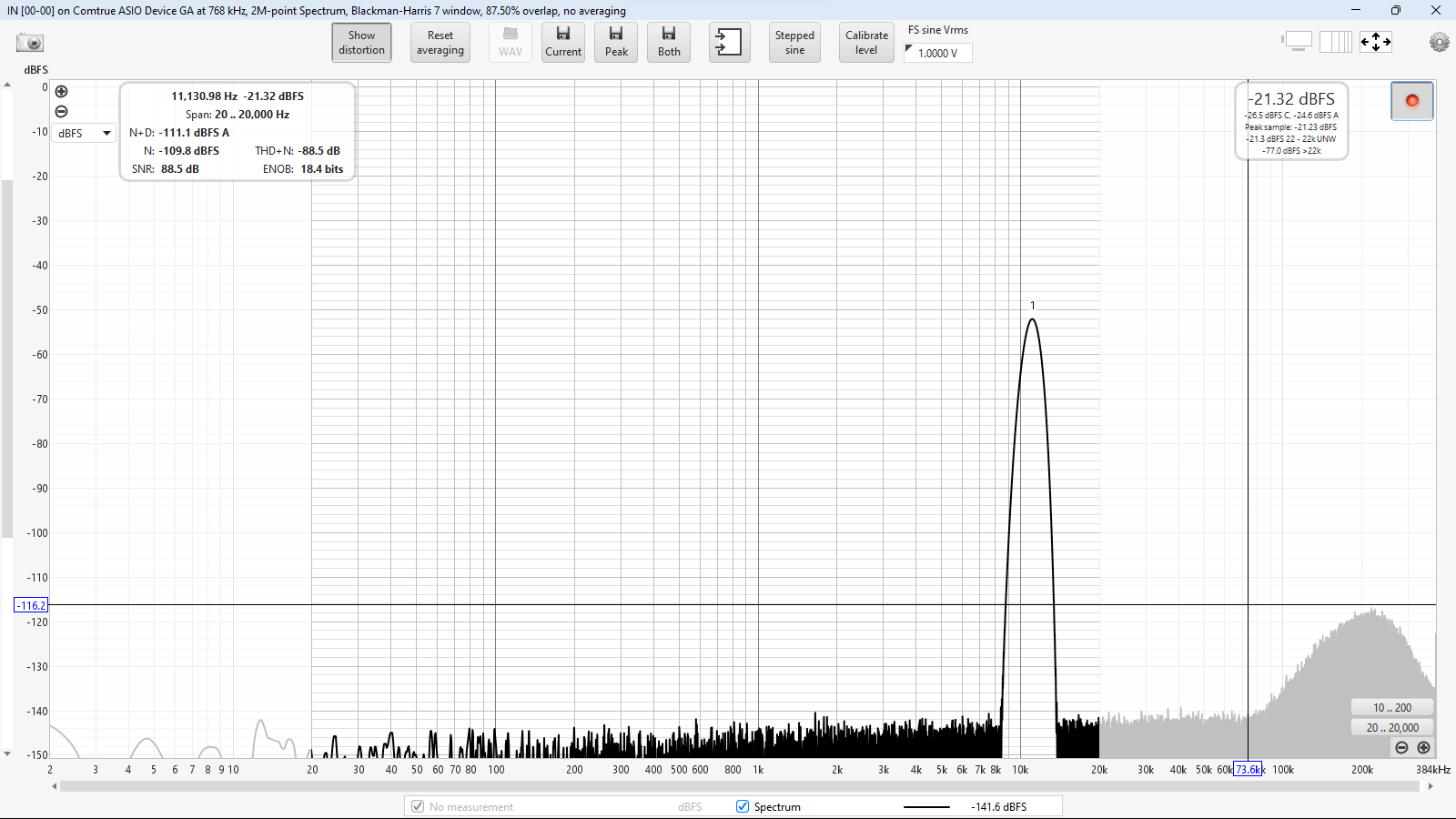
Well with a cheap Cosmos ADC running at PCM705kHz measurement, you can see this in real time for yourself.
This is Cyan2 USB input.
I’m not going to show videos of these sweeps. But here you have 3 snapshots of a linear sweep - one sweep at 0dBFS, one sweep at -12dBFS and one at -21 dBFS.
So you have PCM44.1kHz input signals at 3 quite different levels and when HQPlayer outputs DSD256, you can see the DSD noise hump stays at the same level - and it is low enough in level and far from audio band.
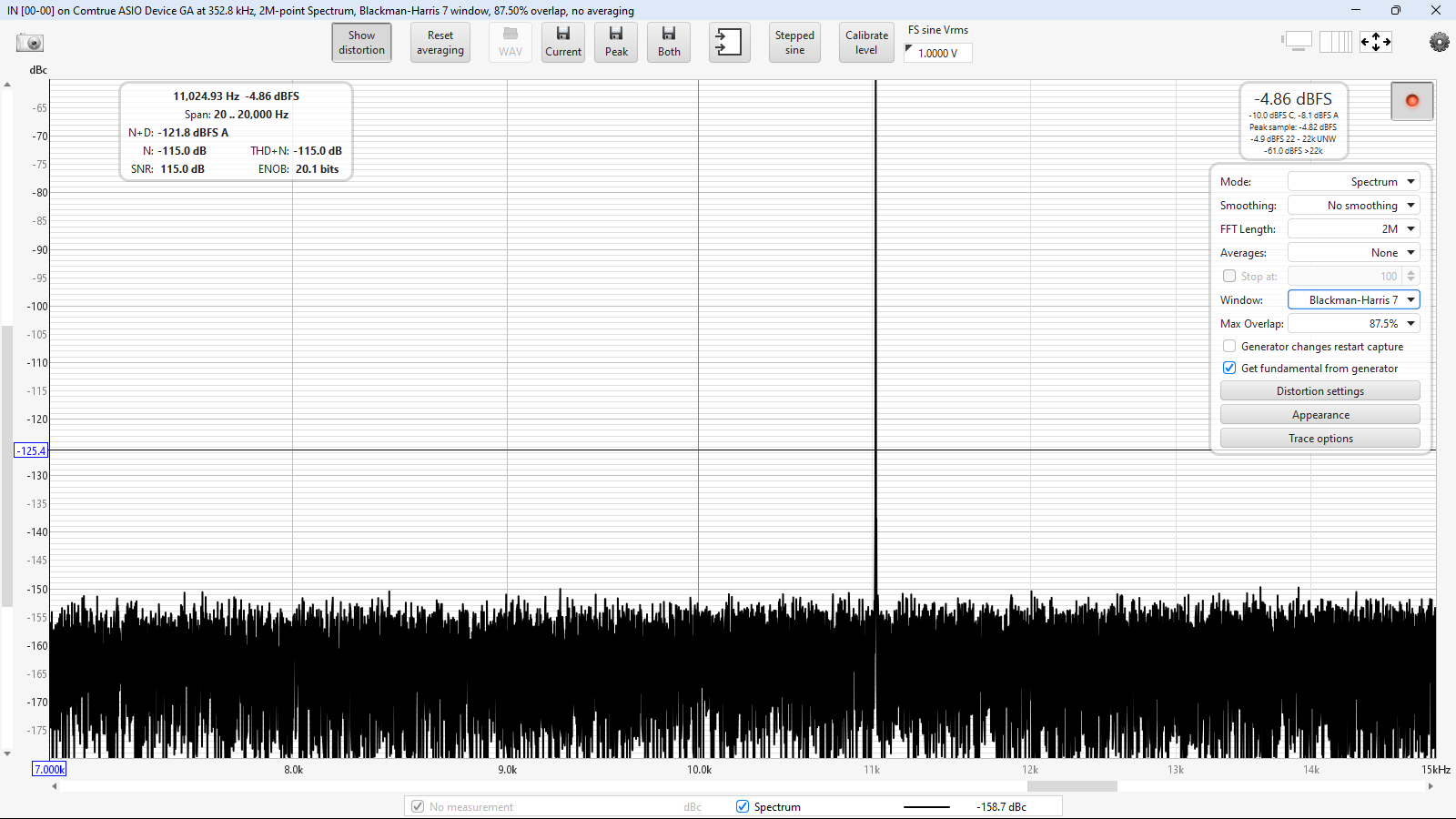
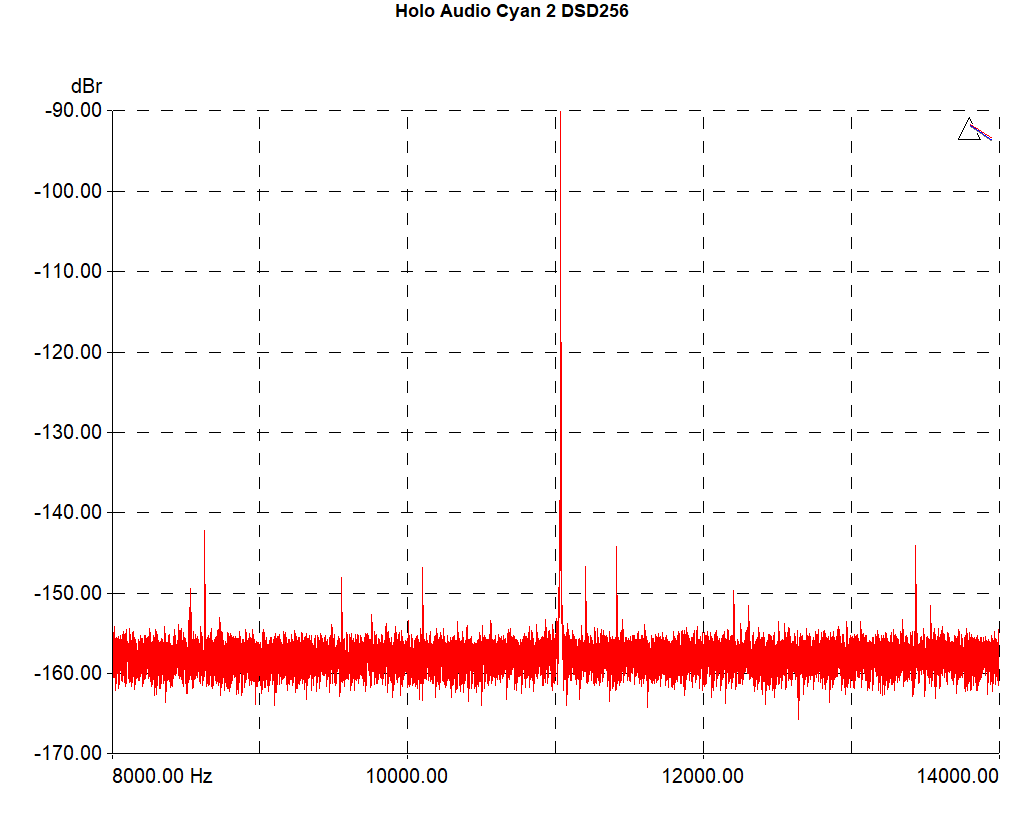
I also show jitter with PCM44.1kHz and PCM48kHz for those worried about jitter with Cyan2’s cheaper and inferior clocks. With USB input, there is basically no jitter to worry about.
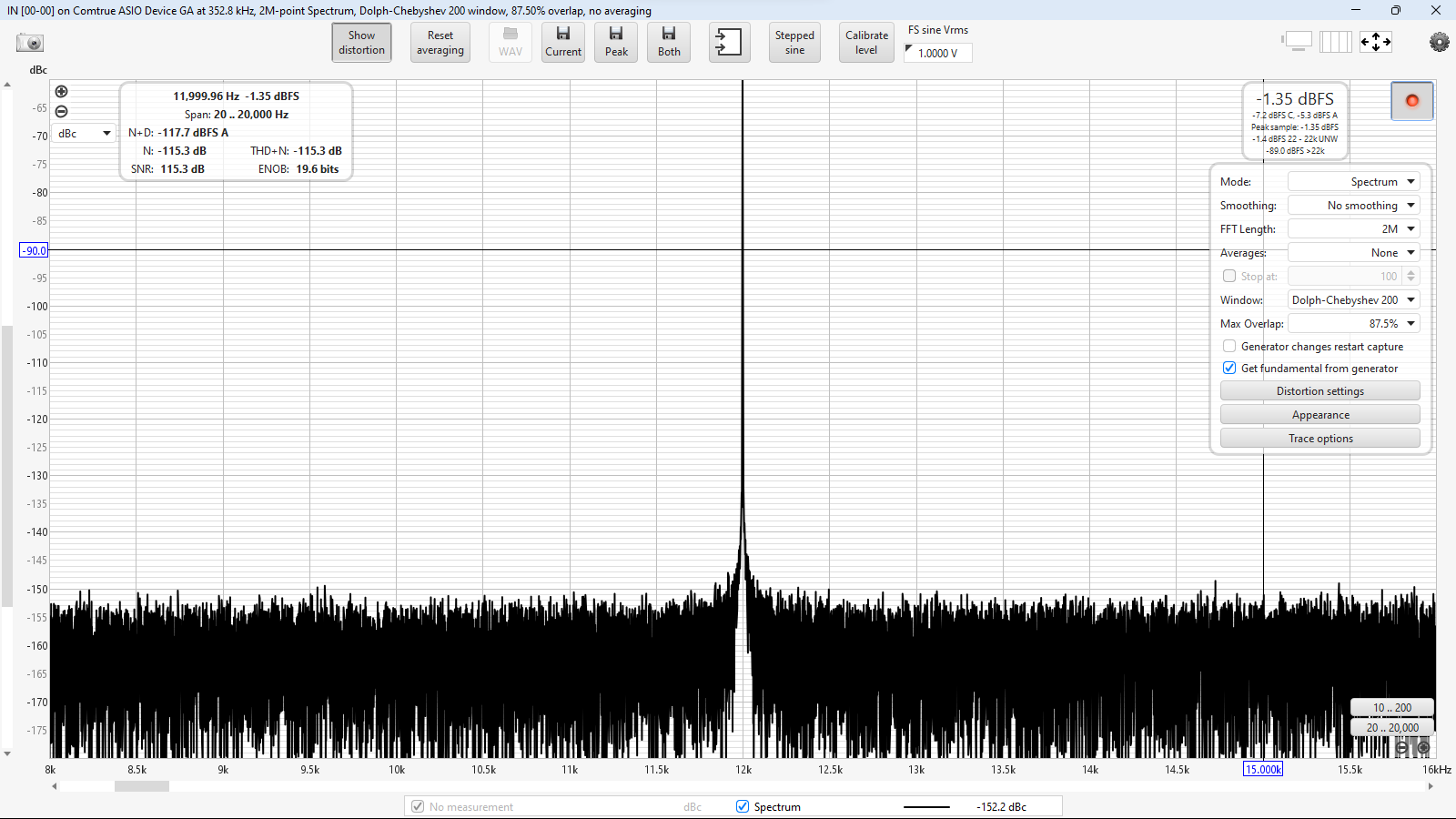
Under 100kHz, all DSD256 measurements I did (more than just SINAD…) are better than DSD512.
I just did DSD128 measurements and under 40 kHz, all my measurements are better than DSD256…
I wonder if Holo spec page mentions DSD128 for a reason.
There’s only 1 measurement that DSD256 is better and that is the DSD noise hump… but as Jussi has said for over a decade, if you don’t hear any hiss, there is no worries with the DSD noise hump, since it is uncorrelated to the input signal.
For Cyan 2 at least it seems this old Andreas Koch article is still true! Where he says sweet spot is somewhere between DSD128 and DSD256.
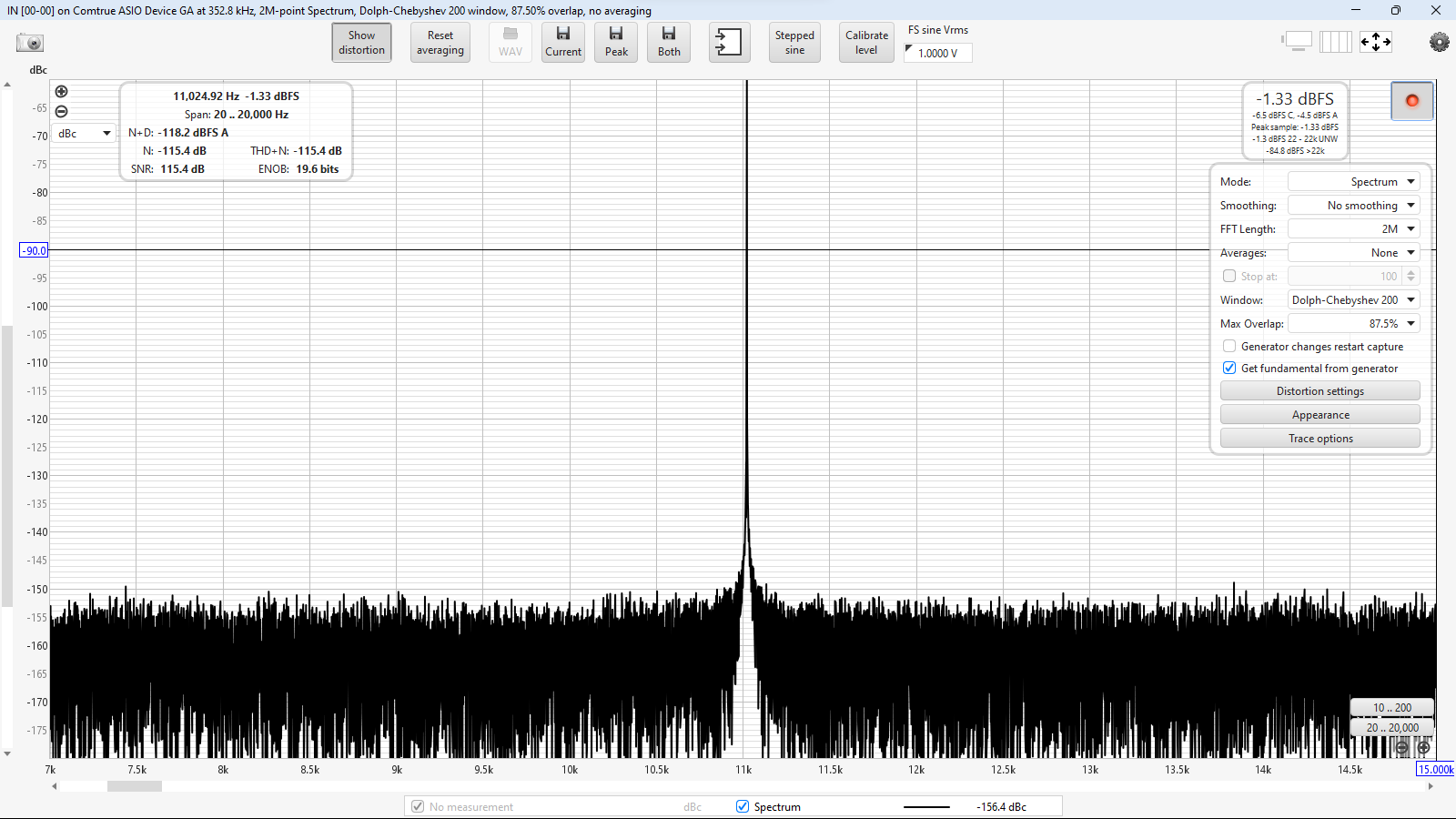
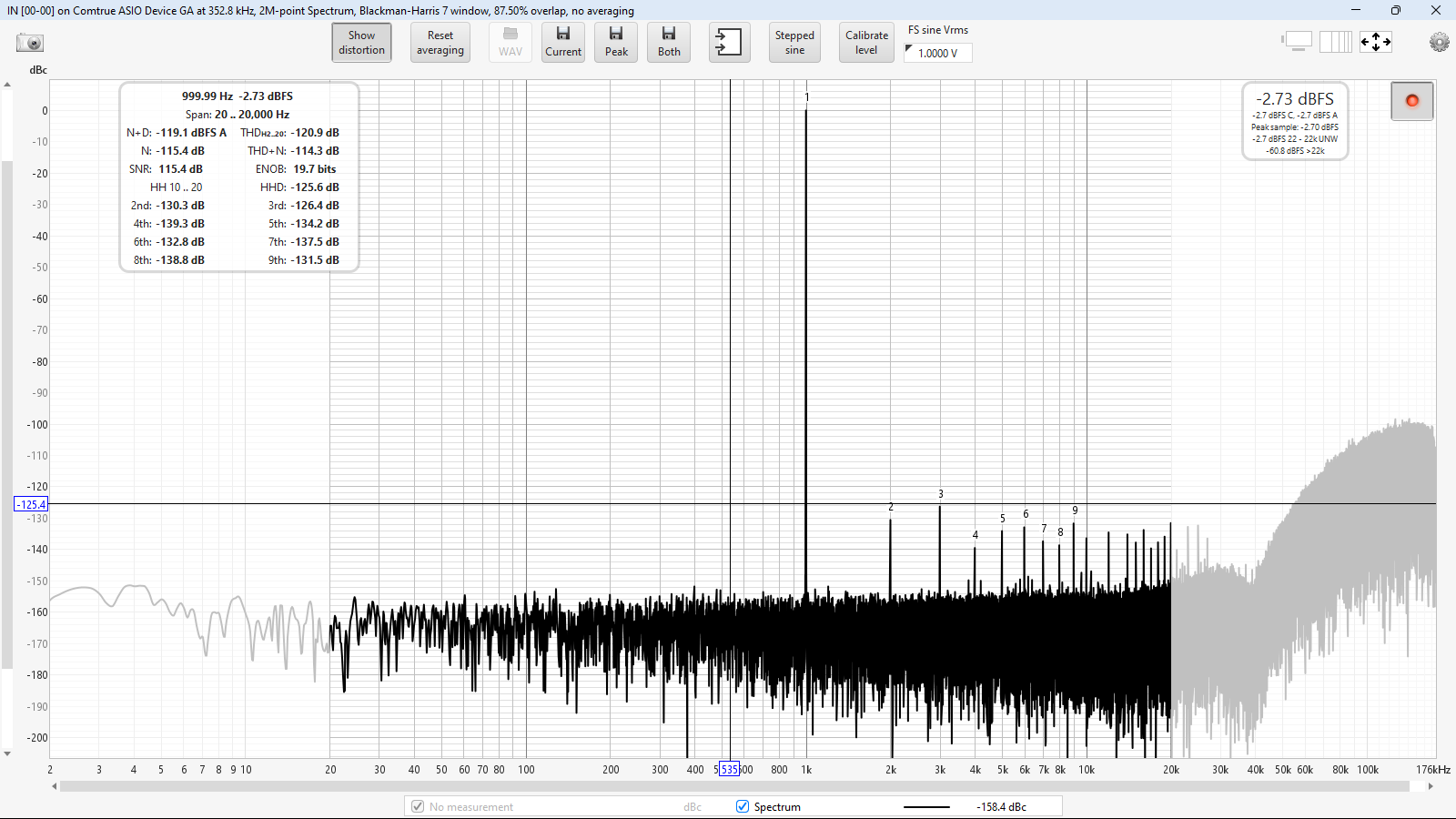
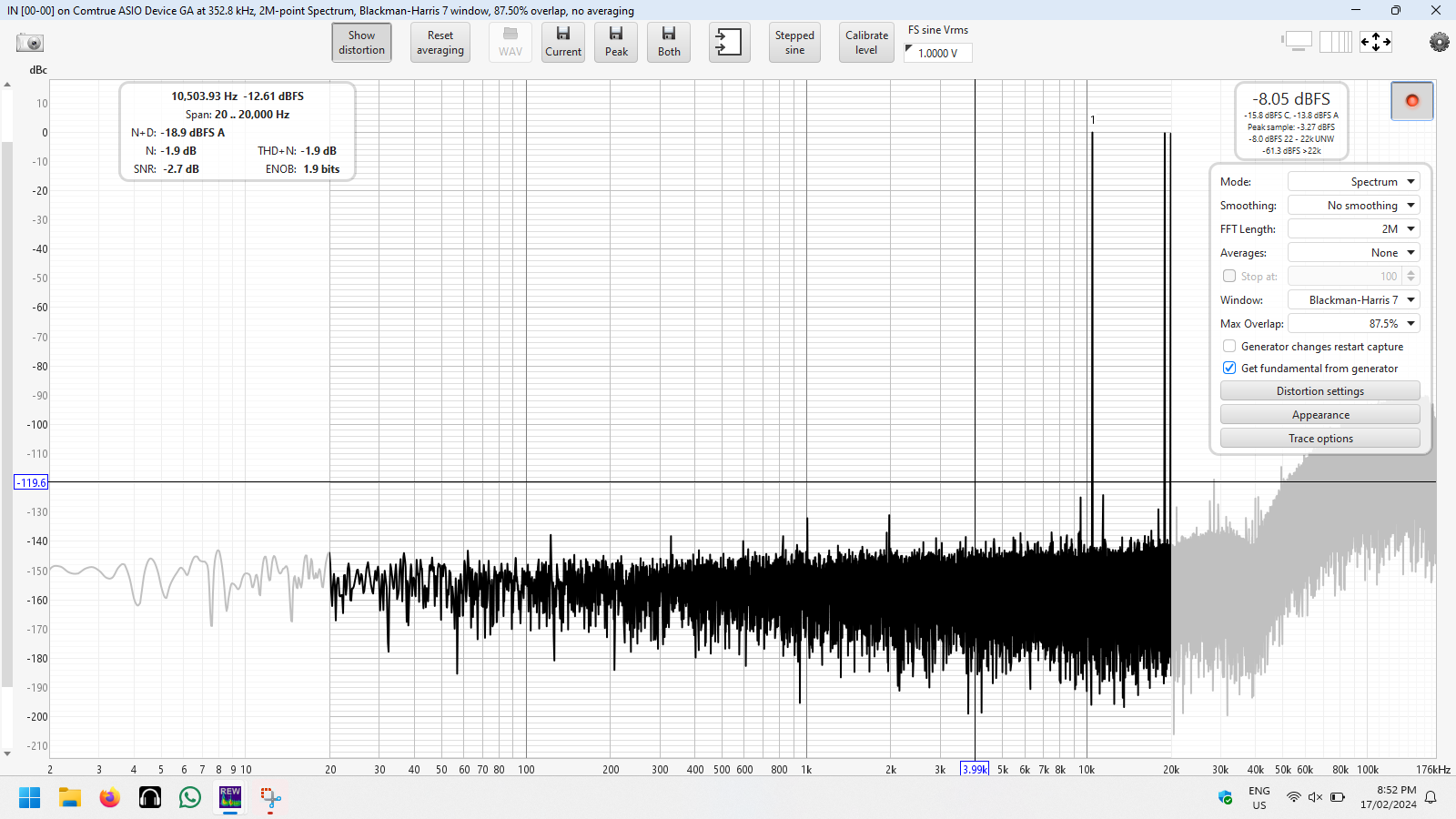
Probably the decision to use 5EC vs 7EC matters here more than higher rates. Those measurements also below. Listen for any hiss with your speakers/headphones I guess. No hiss, no worries.
NID Multitone - 125dB distortion free range before the DSD noise hump
By the way, despite DSD128 performing better in all my measurements , DSD256 performance remains excellent obviously.
I guess choose which sounds best to you.
Your HQPlayer server might struggle with certain filter/modulator combination at DSD256, that might be easier/possible with DSD128 - in which case it’s an easy decision !
I’ll measure it as soon as I’m able to borrow one from someone to test.
The E1DA is a really neat bit of kit, though one thing that is important to mention is that the unit relies on channel summing to get the best performance, meaning there can be various situations where what you see isn’t accurately reflecting what’s really coming out of the left or right channel.
Still a really nice product though and great that this stuff is becoming more accessible.


 Let’s move on.
 ) : those of you following Jussi’s posts over the past decade about one of the key benefits of DSD256 (or higher) to analogue conversion, is about no images PLUS pushing this DSD noise hump further out and importantly how this DSD noise hump is not correlated to the input signal.