Even if both of us hear the same difference. The only variable is the cable
NO IT ISN’T
The variables include US, our senses, our brains.
That’s why we take subjectivity out of experimentation.
We can both hear that guy saying “Paa” even though we both know that he’s actually saying “Baa”. Both of us are wrong, and in the same way. It doesn’t change the fact that we’re wrong. This is why your test tells us nothing.
4 Likes
I see, thank you for clearing that up.
I can see where the confusion is coming from. Nobody likes to admit they’re fallible, but every single one of our senses are prone to error, sometimes errors that are quite profound. I’ll be honest Douglas, I don’t think you have any grounds to claim otherwise, no matter how much you wish it were true.
1 Like
I hear you, Dave. Take care
1 Like
“The first person you should be careful not to fool is yourself. Because you are the easiest person to fool”.”
“Science is what we have learned about how to keep from fooling ourselves.”
-Richard Feynman
12 Likes
That is the perfectly apposite quote for this topic: thank you!
2 Likes
I spent a while reading about “power conditioners”.
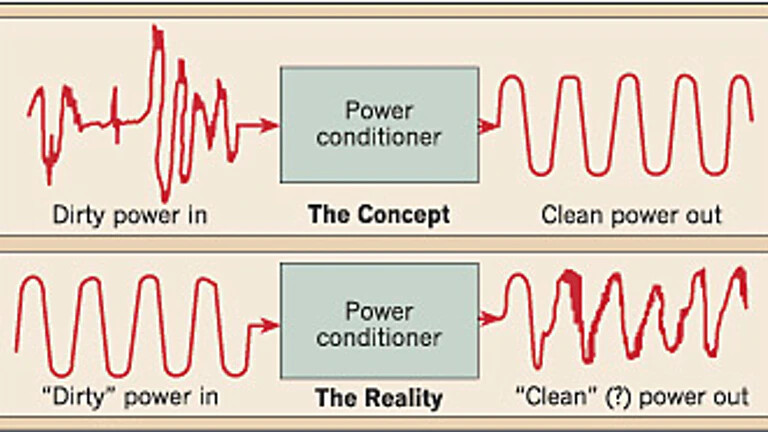
General description here:
Power Conditioner Audio [Does It Improve Sound Quality?] (samplerateconverter.com)
It seems that they can partially correct sine wave but it must be originally very wrong sine to actually see some improvement. They are more power surge protectors than “conditioners”.
They even cannot remove harmonics in audible range (see this review AudioQuest PowerQuest 3 Power Conditioner & Surge Protector Review | Audio Science Review (ASR) Forum where author concludes:
It is clear that the PowerQuest 3 does nothing for our audio performance. I am confident the same is true for your video device. So the claims there completely unjustified.
On surge protection though, there is some value add in what seems to be an absorbing type device (series?) and over voltage protection (although its response time may be too slow to do any good). For this reason, I did not give the PQ3 the worst score I could.
As an audio and video improving device, I cannot recommend the AudioQuest PowerQuest 3. Only buy it because you need some of the other things it does, or its form factor.
So do I need a power conditioner?
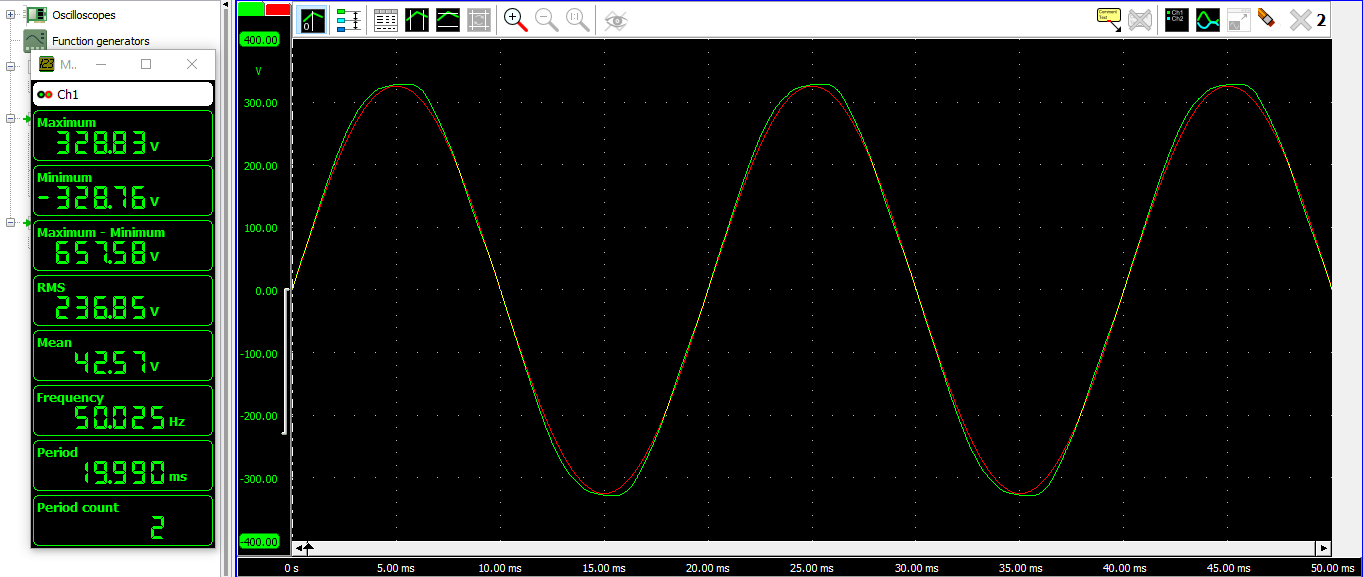
I measured my 8-Outlet Power Strip Surge Protector (tangled with other power or network or speaker cables) loaded by TV, AVR, amplifier, router, raspberry-pi, blu-ray, nv shield tv and game console.
Red is ideal sine wave, green actual. Very good as you can see:
I “recorded” min/max sine for 1 hour to find abnormalities:
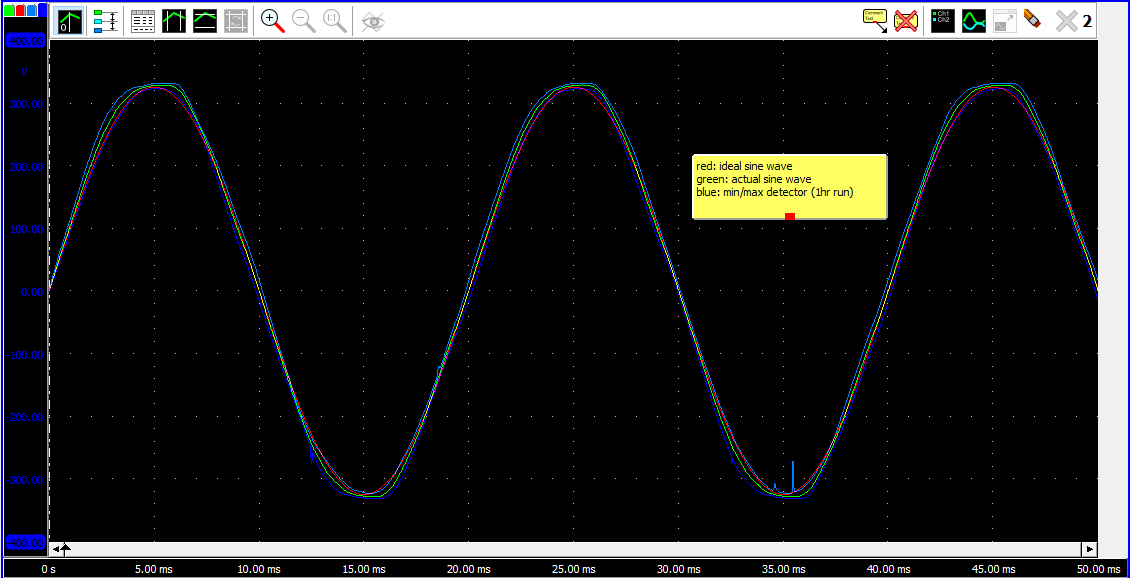

As you can see biggest was 50V drop (from 658V peak to peak voltage not RMS) for 100µs / 0.1ms in 1hr which is basically nothing.
FFT is very good also:
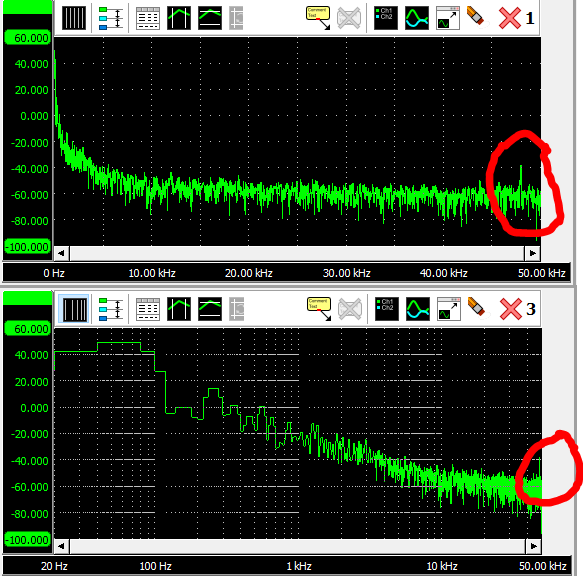
So obviously in my case there is no need any countermeasure by power conditioner / UPS nor (even I know it is bu****it anyway) by fancy power cord.
5 Likes
I have not read any of the posts as it’s a long thread, but in answer to the OPs question - yes of course power cables make a difference to SQ. Probably more so than interconnects or speaker cable. Try a few and see for yourself, the differences you’ll hear are not small.
So where to you propose one should try first…pre/amp/source/etc
Read the thread. We’ve been over this ground.
@Douglas_Henning and anyone else who has been enjoying this thread—
No sarcasm, no kidding around:
I think you might enjoy this book.
It’s fascinating.
1 Like
I agree with you, but the group feels otherwise. In short the ground argues that any changes you experience are in essence based on other factors, external stimuli that causes you to perceive a change that does not exist. Your absolute desire to justify your purchase and your deep routed biases is what is driving what you think you are hearing. It does not matter if you invite your friends and they experienced the same auditory changes, that would probably be akin to powerful group cognitive bias. The same goes for all reports and reviews published on the topic since the dawn of audio. We are just human after all. . Then of course on top of that science disproves our claims as well. So my friend, its all a figment of our imaginations. I am quite nervous to go and listen to my system today, I might just think its a cat.
2 Likes
I am sure it is, I would love to read it. 
That’s a very good book indeed, but a lot of it’s concerned with neurological/psychological trauma if memory serves. It’s been 25+ years since I read it last though.
I wrote earlier about changing the power block in my system which made it sound unlistenable in the end. This happened almost ten years ago. It’s strongly said but true. I couldn’t listen to my setup for more than ~15 minutes without it causing strong listening fatigue and I had to stop. Funniest thing is that when I bought this Furutech power block, I just plugged it in and let it be. I did zero comparison to the old block first. I noticed the fatiguing, tight and sharper sound pretty soon with some familiar music playing in background but it took me around two weeks before I realized that it might be the power block doing this to my system. Then I plugged in the old bulk power block back and did some test listening and the fatiguing elements in the sound were gone with the old block. Smoother and more relaxed sound again. I used full Naim setup back then and power cables were all stock/bulk Naim power cables supplied with their gear.
Now if this is all just my imagination then our mind is truly a powerful thing and cognitive bias is working somewhere deep in the subconsciusnes. I had zero expectations that the cheap plastic block would actually better the new Furutech block which I bought only because I found out there was one available for -50% discount and I hadn’t tried different power blocks in that system before. Simply out of curiosity.
Now everyone can imagine that if I have this strong experience with power cables/blocks, I have zero need to question my experience or investigate it further. It’s completely irrelevant what causes the experience since it’s very real and happening to me. I act based on this experience and choose my gear according to it.
Analog interconnect cables and speaker cables offer very clear differences also (XLR cables also but not so clear). Based on my subjective experience, always when there’s electrical connection between two equipment or wall socket and equipment and you change this connection somehow, there can be audible difference. I’ve never heard any difference between two optical cables and that makes perfect sense to me since it’s 100% isolated connection. Same with two unshielded ethernet cables.
2 Likes
This echoes my experience 100%. Furutech products are notorious for taking a long time to run in. I have posted my experience with run in sequence earlier in this thread, which was based on Furutech products. It comes around after ± 700 hours, before 500 hours it sounds horrible. If you let it settle and then compare, your experience should be different. It would be great if you can do that and report back, just for confirmation. But of course the small possibility is there that you are just imagining it.
It’s about brains and perceptions and the malleability and fragility of subjective reality. My recommendation is not specific to this situation, but more an ancillary note of interest. The book is fun and funny, and I’ve never known someone to dislike it. If I can reach across the gap between the fancy cable people and the deniers for a moment, perhaps we can reduce the emotional friction that hinders clear communication.
I’ve done some sneering in this thread, and I wish I hadn’t.
1 Like
Andrew, it is understandable, we are all very passionate about this hobby, and we all have our views. We should keep an open mind and be civil. A joke here and there is not out of place😊
I get my electricity off the roof. It’s free so it obviously sounds so much better to me! I’ll experiment with ‘audiophile’ solar panels next time and see if they are better still…
5 Likes