Author: Hirosih Demachi, M.D., Ph.D.
Note: This report focuses exclusively on hardware engineering, power delivery optimization, and measured operational data. To maintain the integrity of this technical archive, I will not be discussing subjective sonic characteristics, nor will I be responding to comments or inquiries.
1. System Architecture & Component Selection (see Figure 1)
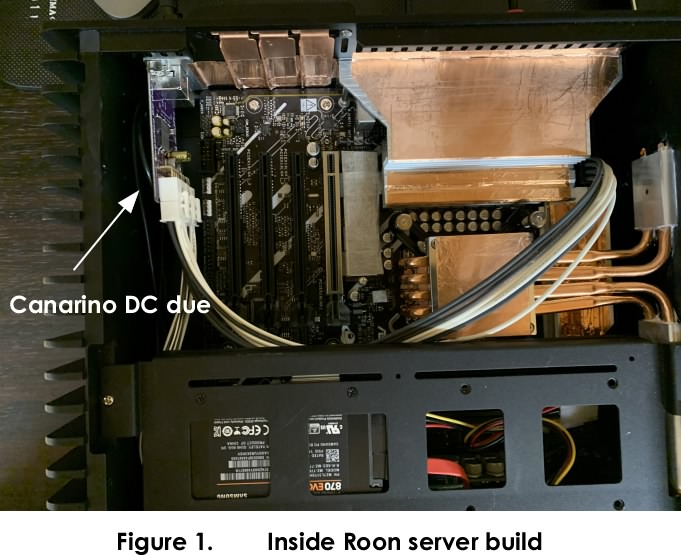
The system was engineered to transform a high-performance PC into a “Class-A” style static load transport, providing a stabilized DSD256 (CLANS 7th-order) stream via the Diretta protocol to an Accuphase DC-1000 DAC.
-
Chassis: Streacom FC9 Alpha Fanless Chassis (TDP 65W)
-
Anti-Vibration: JS PC Audio ATXUP-M Underplate
-
Motherboard: ASUS PRIME Z890-P WIFI-CSM
-
CPU: Intel Core Ultra 7 265T (Arrow Lake)
-
Memory: 16GB Crucial Pro DDR5-5600 (Single Module)
-
Network Output: OPT USB Bridge (SFP Optical Isolation) via CPU-direct USB port
-
Storage: 250GB WD Red SN700 (OS) / 1TB Samsung 870 E VO (Music)
2. Power Architecture & Strategic Im plementation
To decouple computational fluctuations from the communication layer, a multi-rail DC configuration was implemented.
-
CPU Dedicated Rail: Canarino DC Power Supply 12V
-
Motherboard Rail: Ferrum Audio HYPSOS (Hybrid DC Power Supply)
-
USB Bridge Rail: Independent DC Supply
Critical Power Sequencing Strategy:
To successfully integrate the Ferrum HYPSOS with the Z890 platform without triggering OCP trips during boot, the motherboard and CPU rails were initially connected to a single Canarino supply. Once BIOS optimizations were applied to lower the initial power demand, the rails were decoupled, and the HYPSOS was introduced specifically to the mot herboard rail.
3. BIOS Optimization: The “Static Load” Pro file (see Figure 2)
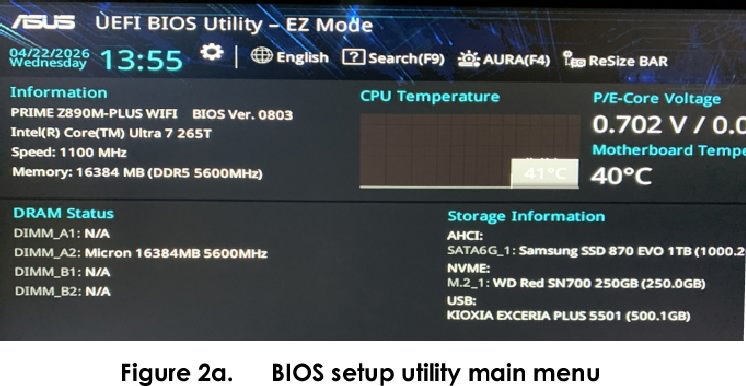
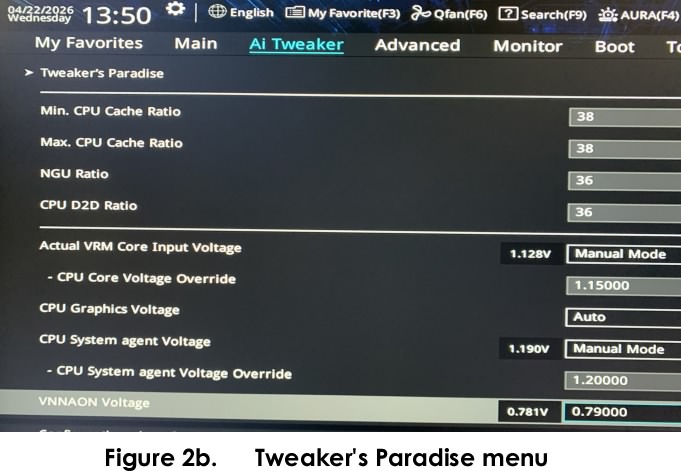
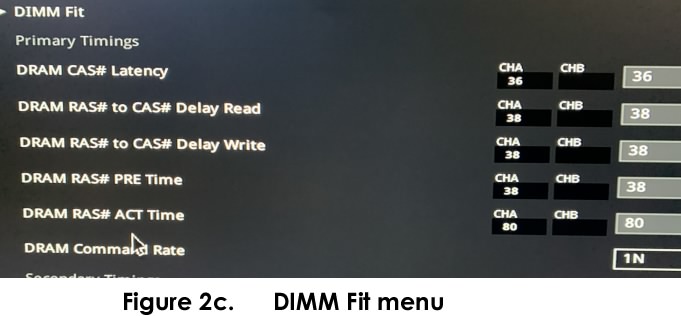
Important Note on Parameter Disclosure:
The parameters disclosed below are provided not as a “universal recipe,” but as the specific values I adopted to realize the core engineering concept: the Static Load. When attempting to replicate these results, one must exercise caution regarding hardware individual differences (silicon lottery). Each system requires meticulous tuning to find its ow n equilibrium point.
-
CPU Performance: P-Cores fixed at 1.1 GHz (x11) / E-Cores Disabled / C-States & SpeedStep Disabled.
-
Power Limits: PL1 and PL 2 hard-capped at 30 W.
-
Voltage: Actual VRM Core Voltage 1.150V (Fixed Override), VNN: 0.790V , System Agent: 1.200V.
-
Data Fabric (Asymmetric Strategy): Ring Bus / NGU / D2D maintained at 3.6GHz - 3.8GHz to ensure low-latency packet delivery de spite low compute clock.
-
Onboard Device Deactivation: All unused USB, Thunderbolt, SATA, Onboard Audio, LAN, BT, and Wi-Fi were Disabled to elimina te EM I/RFI at the source.
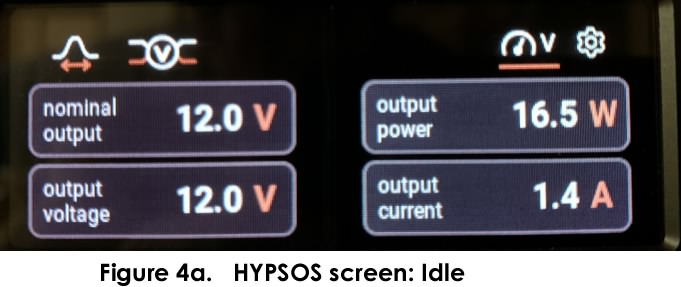
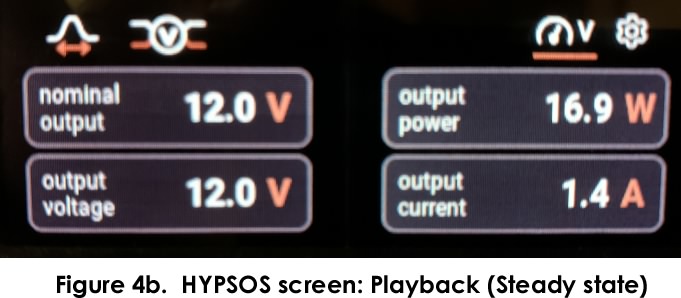
4. Measured Power Consumption & Operational Tran sients (see Figure 3 and 4)
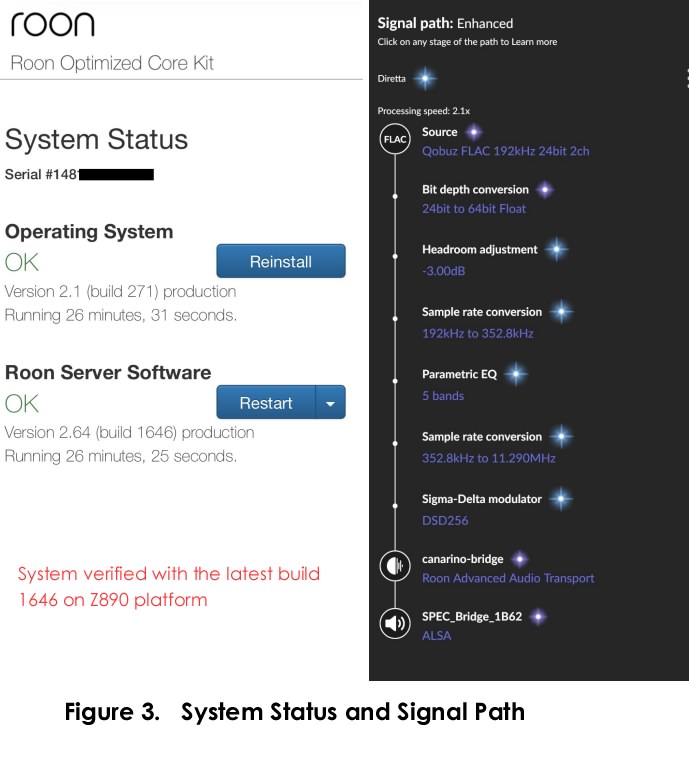
DSP Load: FLAC 192kHz/24bit (Qobuz) to DSD256 via 7th-order CLANS / Processing Speed: 2.1x
Software: Verified with Roon Server 2.64 (build 1646)
[CPU Rail - Canarino 12V ]
-
Idle: 15.6 W – 15.8 W
-
DSD256 Playback: 17.6 W – 1 8.3 W (Approx. 2.0 - 2.7 W Delta)
-
Measurement Limitation: Given the rapid transient response of the Arrow Lake architecture, capturing every instantaneous spike is technically challenging. The delta represents a stabilized average; micro-transients likely exist b eyond current temporal resolution.
[Motherboard Rai l - Ferrum HYPSOS] (see Figure 4)
-
System Idle: 16.5 W / DS D256 Playback (Steady State): 16.9 W
-
Measured Load Delta: Exactly 0.4 W
-
Observation: Once initial transients (during power-on and track commencement) subside, the motherboard rail achieves near-perfect electrical stillness (measured after 2 hours of operation).
5. Reliability & Mainte nance Verification (see Figure 2a and 3)
-
Thermal Performance: The system reached a fanless thermal equilibrium at 41°C, measured after 3 hours of continuous playback in a controlled ambient temperature of 22°C.
-
Burn-in: 7-day 24/7 continuous operation confirmed.
-
Maintenance: Reliability confirmed through the latest Roon Server 2.64 (build 1646) update cycle; the system resumes normal operation via a standard reboot sequence while maintaining all optimizations.
Conclusion
By physically decoupling the NIC functions and isolating the power rails, the computational noise and measurement uncertainties of the CPU are effectively “caged,” leaving the motherboard in a state of nearly static electrical load. This build demonstrates a definitive engineering path toward an ideal digital transport.
Respectfully submitted,
[Author’s Final Statement]
As this report is intended solely as a static technical archive of my findings, I will not be engaging in further discussions or responding to comments. The data and configurations presented here repre sen t the final results of my engineering process.