I’m not arguing. I think Bob Stuart has said as much in interviews, that the JAES papers are dense. A lot of the ideas are covered in the papers’ reference lists. Sampling theory is an example, where a reader needs to understand the implications of sampling theory in general. The references include the right papers for that. Modern sampling theory (FRI) is a year or two of reading the literature in that area. It takes study if you don’t work in the area, but I can say from experience that it’s doable.
That’s without getting into psychoacoustics and neuroscience, with the latter having gotten considerable research in recent years. Bob Stuart has been following those areas for decades, and includes references in the paper. Others in audio are beginning to pick up on those same ideas.
3 Likes
AceRimmer
("I’m not just a hero; I’m a legend!")
335
Cannot remember who said this many years ago but it has never left my mind.
" MQA, the solution to a problem that does not exist"
Paper doesn’t blush. Just because an author is on one of those reference lists doesn’t mean he or she agrees with Bob Stuart’s ideas. In fact, it doesn’t even mean the author knows what MQA is.
Of course. That’s true for any and all publications. References just refer to prior research on the scientific or technical topic being discussed, and have nothing to do with the given paper. But they do save the author the trouble, and space, of having to re-explain ideas that are already covered elsewhere. References are required by any journal, and the authors will be advised to provide an up-to-date reference list if the references aren’t complete enough.
But it does exist and we can hear it.
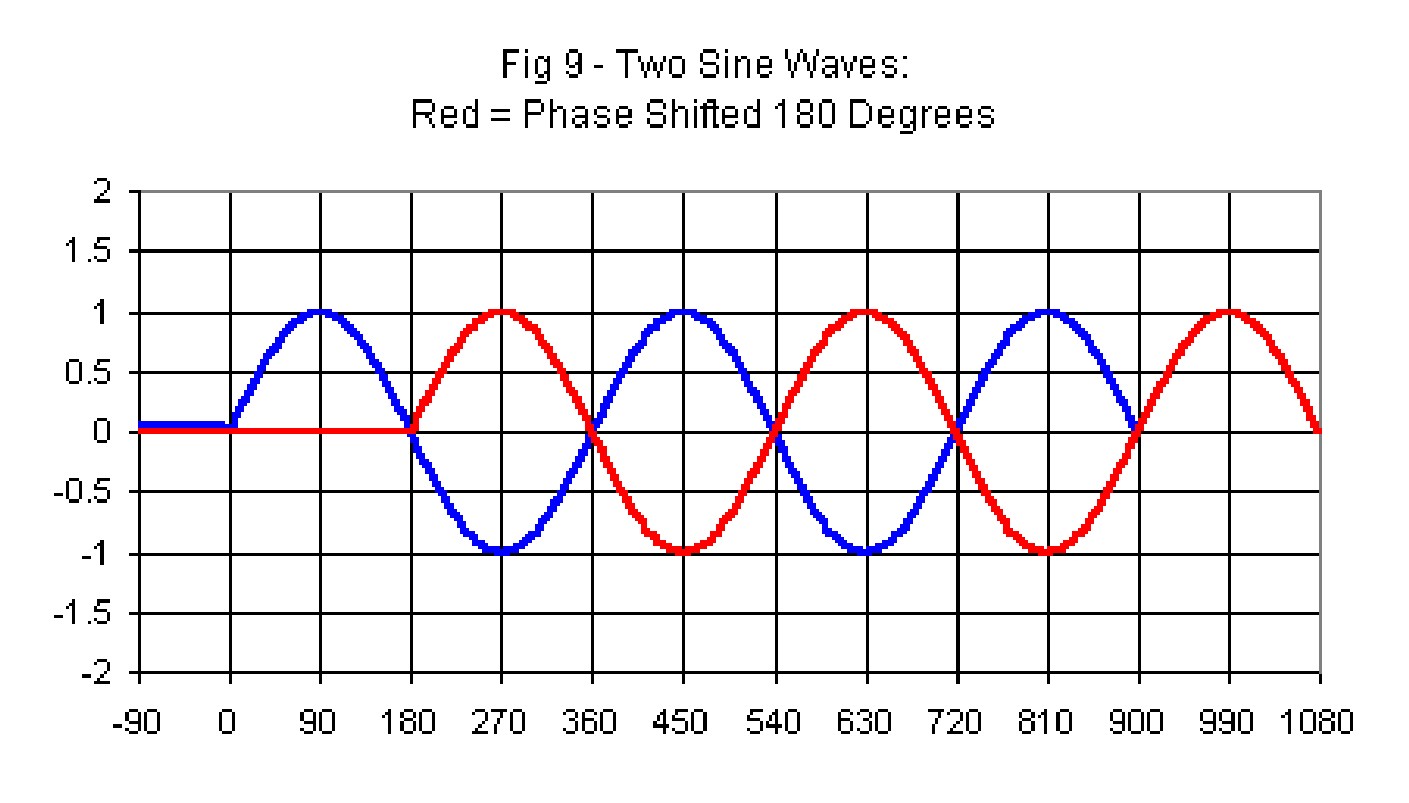
Do the following simple test of your ability to hear phase differences, swap polarity on one of your speakers i.e. red wire and black wire. That’s only a 180 degree phase difference.
Absolute polarity inversion and a 180 degree phase shift are not the same thing, though both can have a similar end result. Absolute polarity inversion does not involve a time delay, while a 180 degree phase shift does. Swapping +/- leads on a loudspeaker or amplifier is the former, not the latter.
It’s a 180 degree phase shift obviously and you can easily hear it. It’s very close to the same as delaying sound by half the wavelength.
The point is we can hear these changes easily.
The phase/time changes introduced in PCM is not as uniform so it’s not as obvious but it’s there.
But, most importantly, y = -sin x is not a phase shift. Rather, y = sin (x + π) is a 180 degree phase shift. Because a phase shift is a frequency specific time delay.
Another error – unless your listening room is the size of an aircraft hangar. The speed of sound is approximately 1 ft/ms. A direct to reflected path length difference is unlikely to be greater than 20 ft in an ordinary listening room. Now, do the math on the time delay.
No, you are conflating two different things – absolute polarity inversions and phase shifts – in an attempt to make some unspecified point about time domain accuracy.
It’s easy to hear the polarity change and it’s easy to hear the phase shift.
It is an easy test to do which is why I proposed it.
I linked studies done earlier where phase/time shifts have been tested and people can hear them.
Now if you want to go on with this pedantic nonsense avoiding the real issue then go ahead.
That’s without getting into psychoacoustics and neuroscience, with the latter having gotten considerable research in recent years. Bob Stuart has been following those areas for decades, and includes references in the paper
I’m sorry, which paper is this referring to?
As someone with slightly more than a passing interest in neuroscience, I suspect that the connection between MQA and neuroscience is fleeting at best and marketing talk at worst.
Ooo you should expand on that then. Perhaps show us all where the way humans perceive sound has little or no impact…
It’s amazing how Bob Stuart and his team are the first as far as I know to actively take this seriously in the Hi Fi world. Even back in the day the Meridian DSP speaker heads are the scale of the human head for a reason…
The anti MQA crowd can keep their numbers, which are fine as far as they go, but I am more interested in my experience with and perception of the actual sound I perceive…