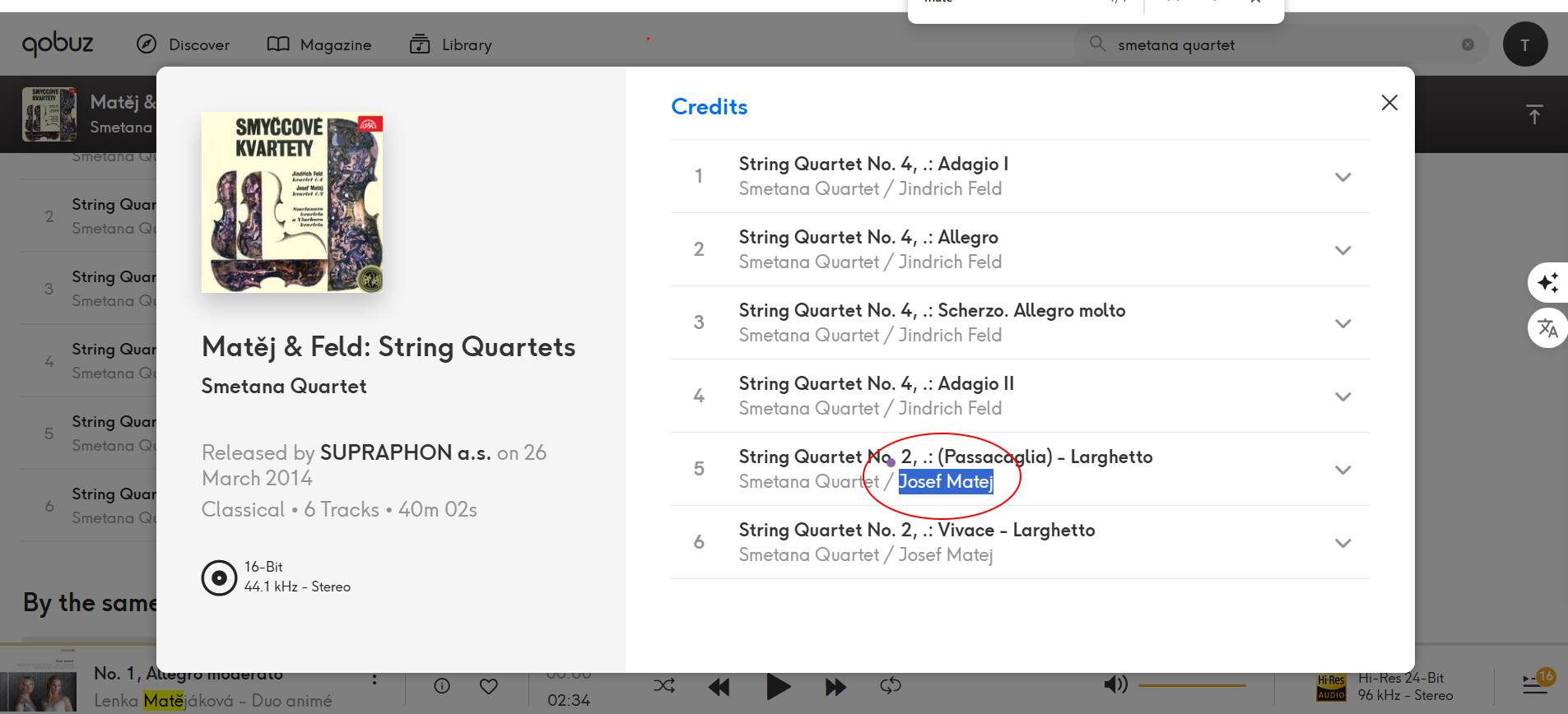
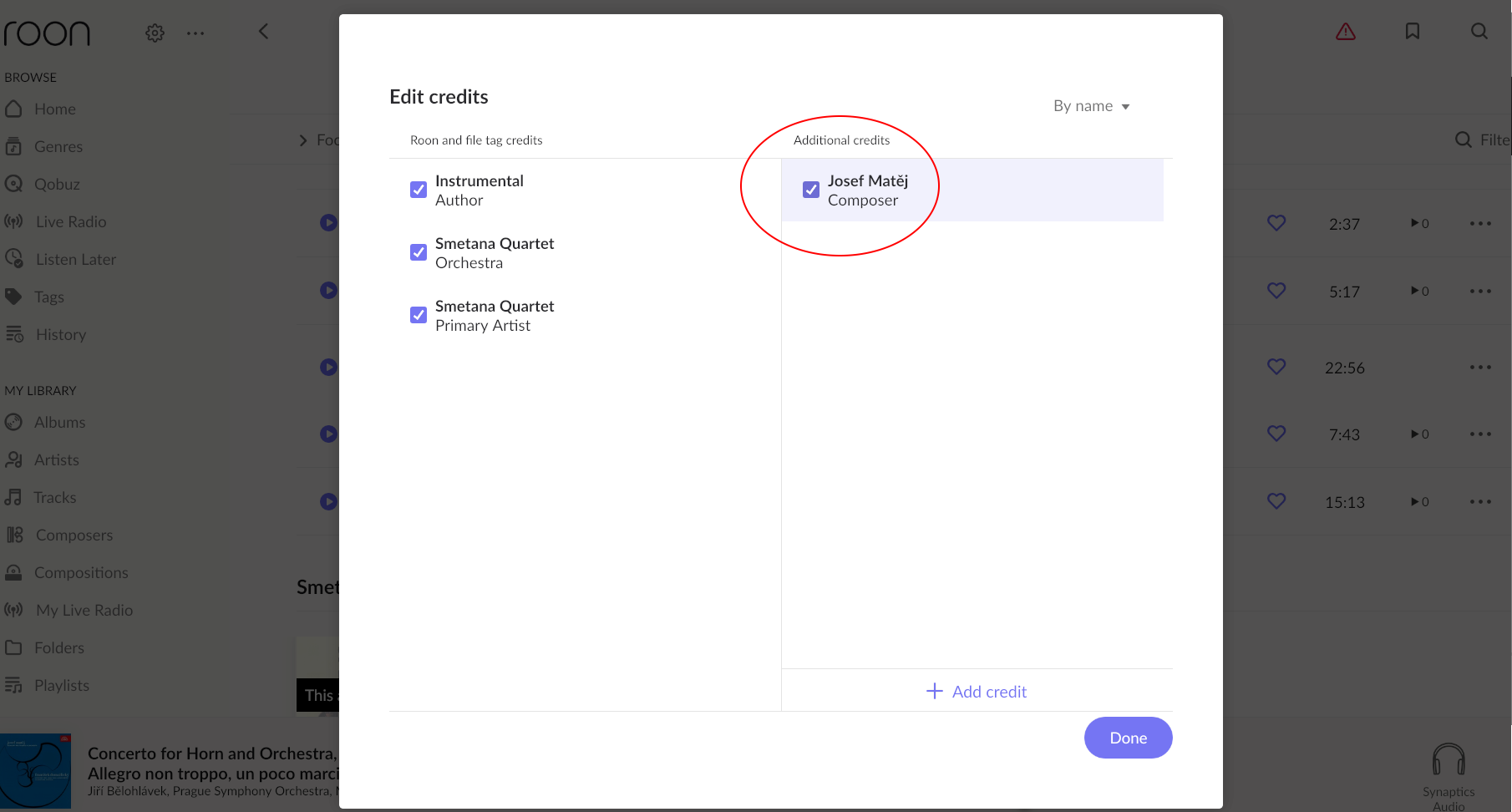
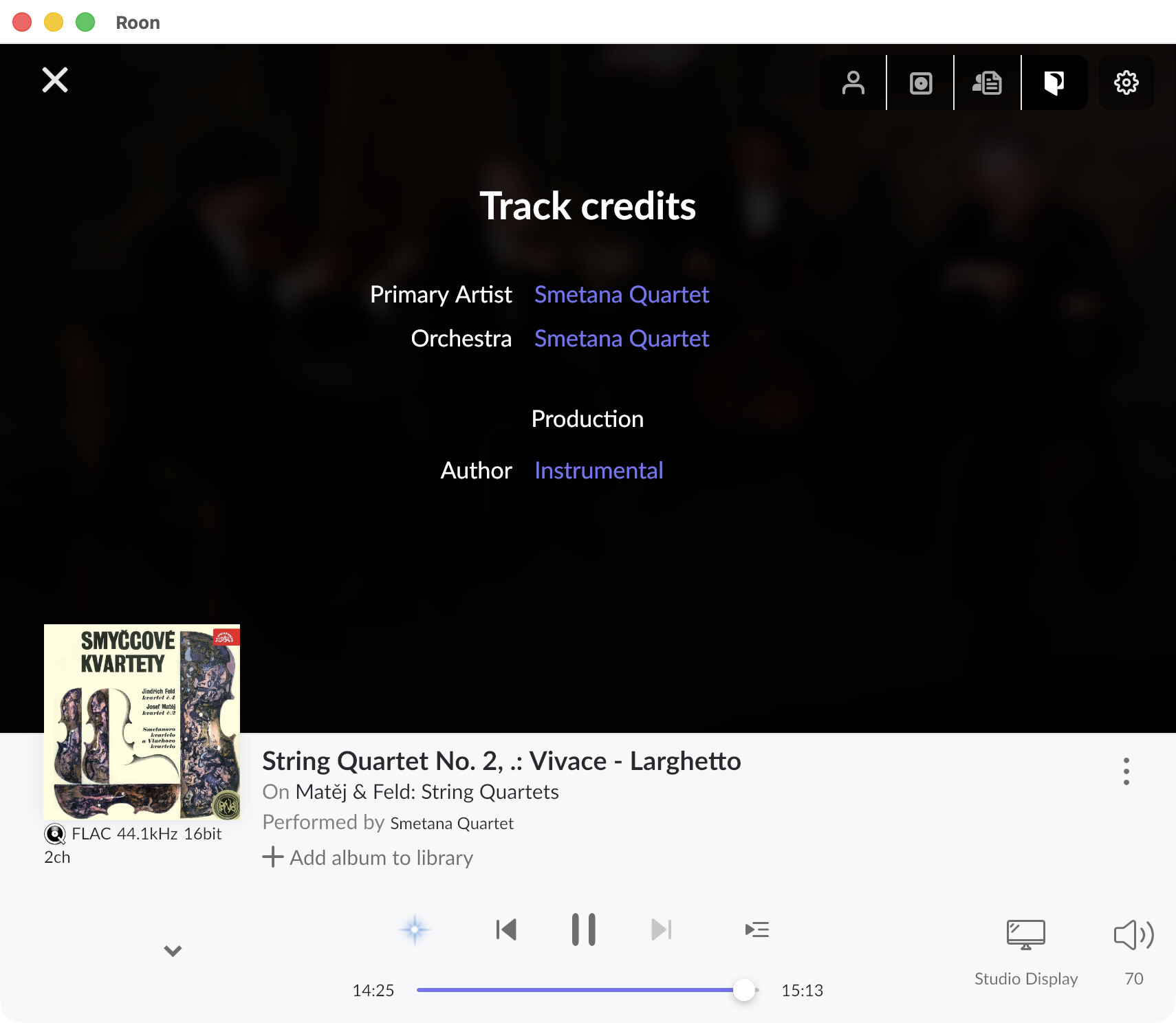
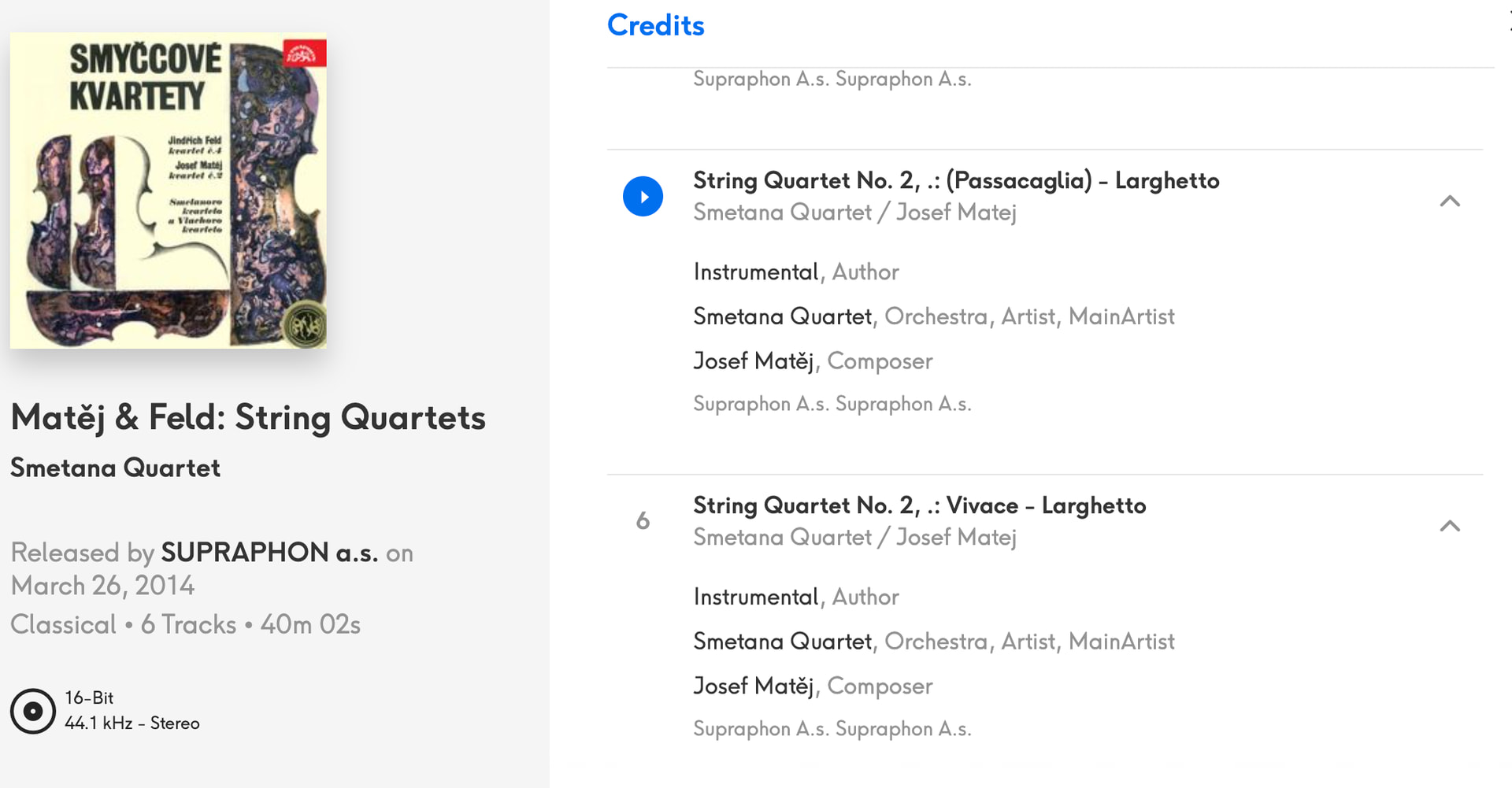
As @Suedkiez says, there’s no track metadata for those two tracks.
However, by a process of elimination, since the other tracks on the album are all composed by Feld, I think that we can rest assured that tracks 5 and 6 were composed by Josef Matěj.
Does anyone know if there is a feature request to use Qobuz meta data or at least supplement the usual sources? I find this sort of gap quite common with modern composers whereas Qobuz usually has it covered.
It’s usually not that big a deal to manually add the credits except in cases like this with modern composers where roon hasn’t got the artist/composer at all. Then instead of creating a new artist/composer that won’t be connected to anything I often find myself adding another album from Qobuz with a roon credit and then that album has another credit roon doesn’t have, and then adding another album etc. down the tagging black hole .
You can cut and paste from Qobuz into Roon. That way you retain the accents and dypthongs. This is quite a common synchronization problem if you like modern and “international” music.
That varies alot by genre, but for sure, roon modern Classical has a lot more metadata gaps than Qobuz. Another roon blind spot is French pop if you have a weakness for that. I must say I find it strange that roon/Qobuz integration isn’t tighter with regards to metadata but no doubt there is a technical and/or licencing reason.
I don’t know if there’s a request (didn’t look) or if Qobuz would be willing AND if their label contracts would allow it, but for Tidal this isn’t the case:
This. I’d bet the same legal contractual issues exist. Even so, there is consistency to be considered. Roon needs to supply the same credit information to every user, whether or not, they use Qobuz or not, for the same album.
You could just purchase the album from Qobuz, and then, tell Roon to use the files’ metadata. This is what I do.
I don’t know what the equivalent is on a Mac. As @rugby says you can always pay for the download. That way you will have far more control over the metadata of your own local copy. In this case, if all you want to do is some simple edits like adding a composer or maybe some performers, you can certainly use the roon editors for that task. But if for example, roon messes up the composition hierarchy of a complex piece like a multi-Act Opera, roon does not provide an editing option for streamed content in that scenario. I often purchase the download or physical disc and rip a local copy in those cases.
Roon and computer audio generally has certainly improved alot in recent years but depending on the genres you are interested in and their mass-market appeal, systems integration and cross-application interoperability can still be far from seamless.


 .
.