glad you’re enjoying it.
wish Dohnányi had finished his Cleveland Ring Cycle.
glad you’re enjoying it.
wish Dohnányi had finished his Cleveland Ring Cycle.
Achingly beautiful! Superb recording too.
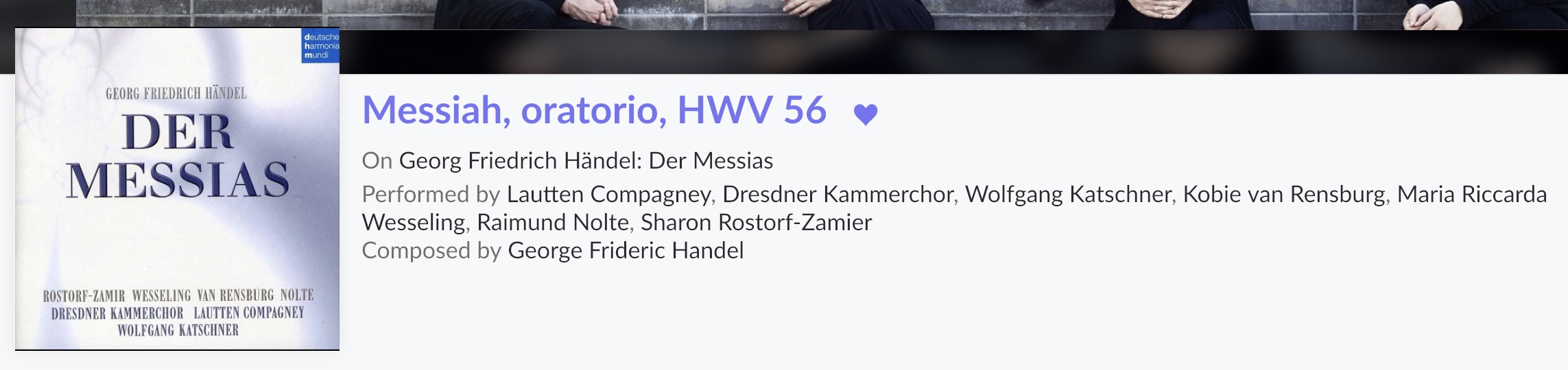
The discussion in another thread (about bowerbird style collectors) was bringing me to go through my various recordings of Händel´s “Messiah”, so I wanted to share my favorite one with you.
Warning: This may sound like an odd choice for many Händel lovers as not the original text is used but the German translation by Johann Gottfried Herder:
I mean the 2004 DHM recording by the Dresdner Kammerchor and Lautten Compagney (meaning Lute Company in medieval German) led by Wolfgang Katschner. I admit, an unusual choice in every respect, not just because you can hear at times that the text version is actually a translation. A Baroque orchestra preferring lutes, plucked strings or compact period instruments like harpsichords as main continuo leading to a lean, precise and violin-dominated sound, plus a very small semi-pro chamber choir and rather unknown, at the time very young soloists from the Netherlands, South Africa and Israel.
It is nevertheless in my ears one of the most homogeneous and balanced recordings of sacred music ever. Particularly due to the excellently trained choir members and the naturally-singing soloists. This Messiah sounds natural and professional at the same time as well as both powerful and light, meditative and dramatic. Even the coloratura of all 4 soloists plus the choir sounds as light as it is the most natural thing to sing which is a rare thing.
If you want to give it a try and do not have 2.5h, I recommend to listen to some of the arioso-like as well as the meditative arias: ´Wie? Dass die Völker wütend ergrimmen´, ´Alle Tale werden erhaben´ or ´Ich weiß, dass mein Erlöser lebet´. Or maybe one chorus: ´Denn ist es uns ein Kind geboren´ or the ´Hallelujah´ - not the loudest one but with a pretty interesting dynamic concept.
When I listened to the latter, I thought it was the Monteverdi choir but even more precise, ´radio-grade´. Stunning.
What is your favorite ´Messiah´ (or ´Messias´)?
this looks interesting.
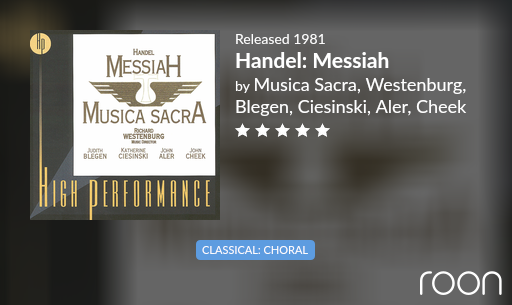
it’s a bit warm for the Messiah (see what I did there?), but my favorite version is Richard Westenburg and Musica Sacra. it does not appear to be available on streaming services, but it’s worth seeking out on CD or vinyl (I have both).
modestly sized forces, period informed, modern instruments, and absolutely fantastic singing from all four soloists and choir.
superbly recorded too.
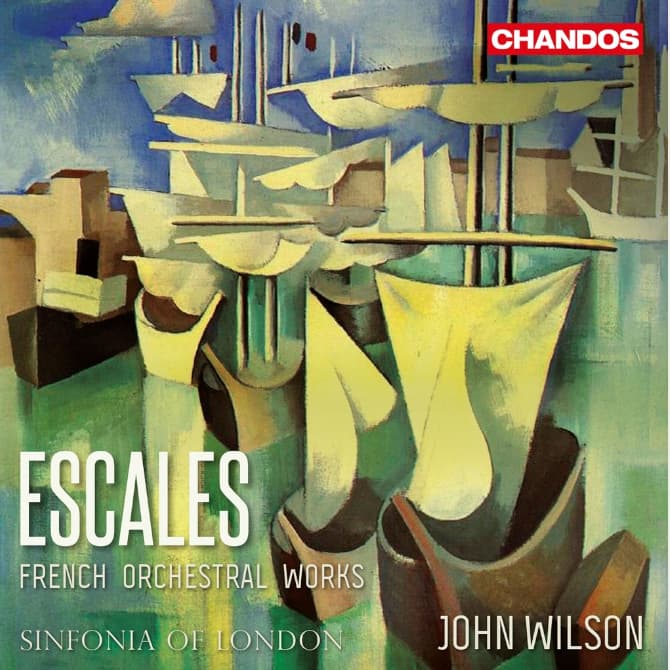
Maurice Duruflé, the organist titulaire St. Étienne du Mont in Paris, 1929-1986, composed two works for (but not exclusively for) orchestra, the Requiem (Op. 9) and Trois Dances (Op. 6), the latter only rarely recorded. In the Proms (July) BBC Music Issue, Jeremy Pound, deputy editor, alludes to this piece (p. 20) and I couldn’t resist having a listen to this on one of John Wilson’s Sinfonia of London recordings, Escales. It is a remarkable piece, although it is difficult to tell how remarkably performed it is, as there are so few (two) orchestral recordings I discovered.
I didn’t find the rest of the recording as compelling. May need to turn up volume a bit to capture the pizzicato opening for the second movement. Tambourin, the third movement, is a particular delight with resolute, even menacing, percussion and, later, marvelous saxophone.
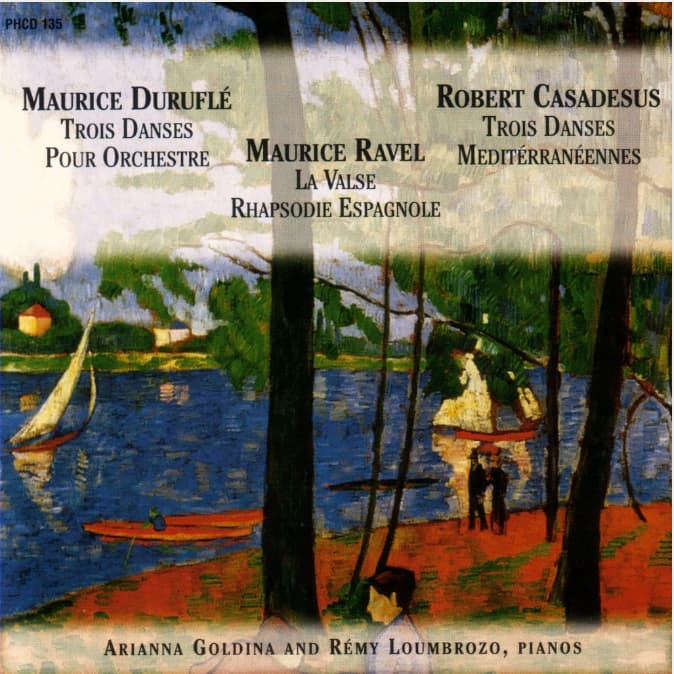
Mssr. Duruflé also composed versions for organ and for piano. Here is a four-hands piano version that I think captures the second movement a bit better than the orchestra recording.
A rarity, more than an amuse oreille, worth attending to. Can definitely appreciate his teacher Paul Dukas (and Stravinsky and Debussy and Ravel) influences on Trois Danses. It is, however, no simple pastiche to this listener.
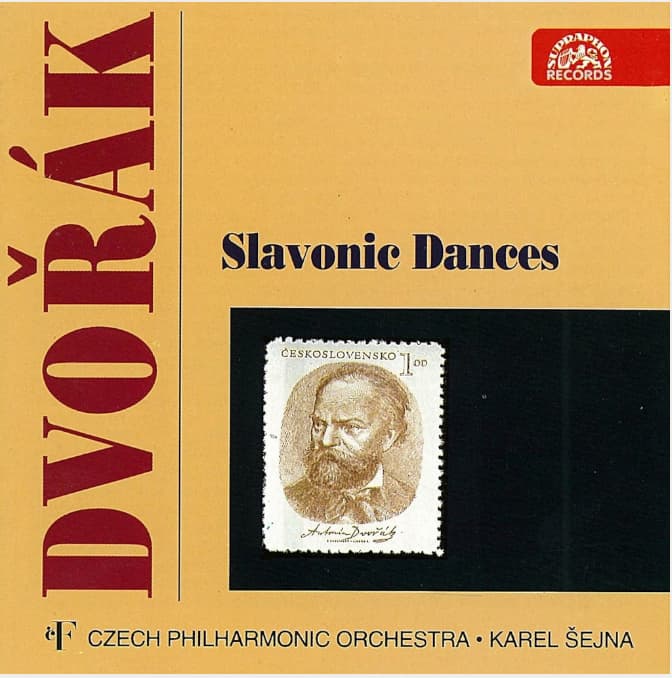
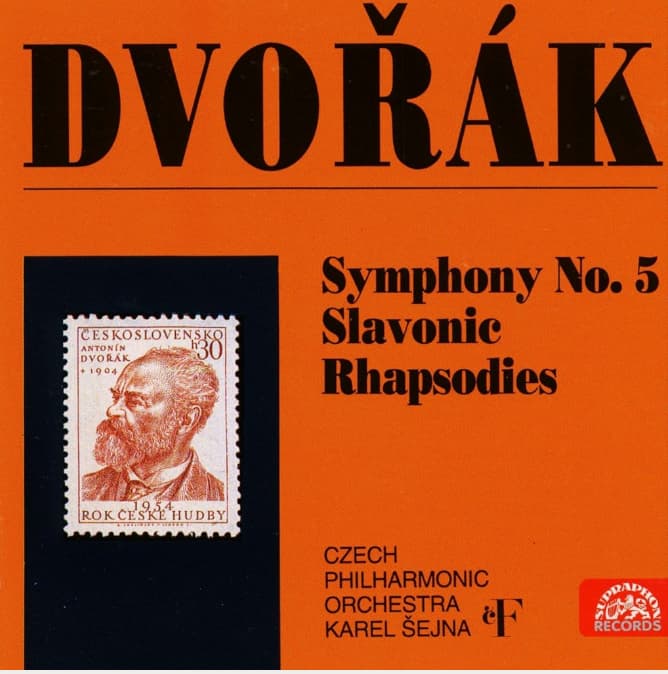
Nothing like the woodwinds of the Czech Philharmonic, especially when performing the vivifying Antonin Dvořák Slavonic Dances, to lift one’s spirits and energy. I ran across this performance conducted by Karel Šejna (superbly recorded by Supraphon) gratis David Hurwitz/Classics Today. Was reminded of it by a recent BBC Music recommendation of Šejna’s Dvořák fifth symphony, which is also exceptionally good. Šejna was well-loved and highly regarded in the “Eastern Bloc”, but is, to western listeners, much to their loss, largely unknown. Remarkable conductor.
If Slavonic Dances doesn’t get the juices flowing, may need to see a physician. 
Lastly, I’d like to point out an enjoyable and new to me instructive classical music podcast resource, WETA’s Classical Breakdown, hosted by John Banther. A recent episode featured Peabody Cellist Amit Peled discussing cello. Fascinating discussion of cello composers, particularly in the 19th century (Alfredo Piatti, David Popper and Carl Davidoff to name a few). Wonderful discussion of Haydn’s Cello Concerto. Led me to some wonderful cello repertoire that I’ll mention later.
In another episode the history of the piano was instructively discussed, which led me to explore piano construction with more granularity than ever before, particularly the amazing double escapement. So many mechanical problems to solve to provide the dynamic range, dynamics and color of the concert grand piano. Helped me understand possible causes of some unusual sounds (almost buzzing on certain notes on a Fazioli concert grand) at a recent concert.
I hope at least a few of you find this podcast of interest and perhaps some of you know of others you’d care to share with the rest of us?
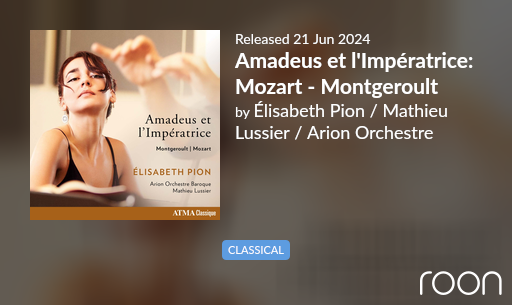
I have been enjoying discovering the music of Hélène de Montgeroult who I had never heard her work prior.
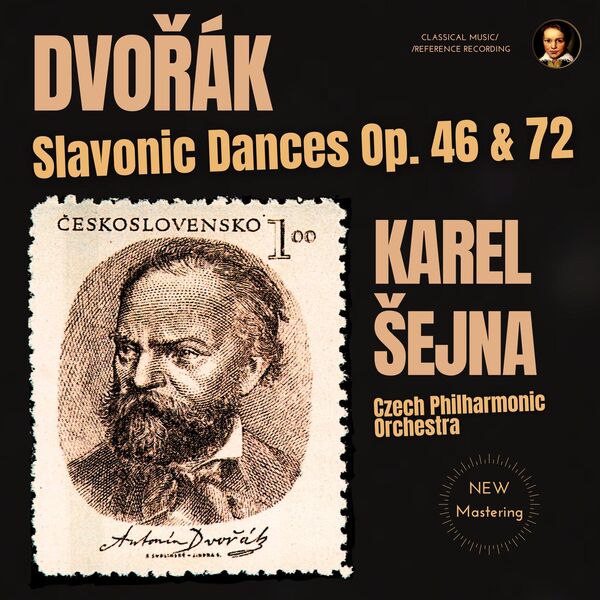
There’s also a New Mastering (2024 Remastered) of Slavonic Dances available on Tidal in 24/96. Wonderful music indeed.
@bill_perkins I am unable agree with you more regarding the Czech Philharmonic’s woodwind players.
I don’t think I intentionally listened to the Czech Phil until three or four years ago but I feel rewarded each time I listen to one of the many albums they’ve recorded.
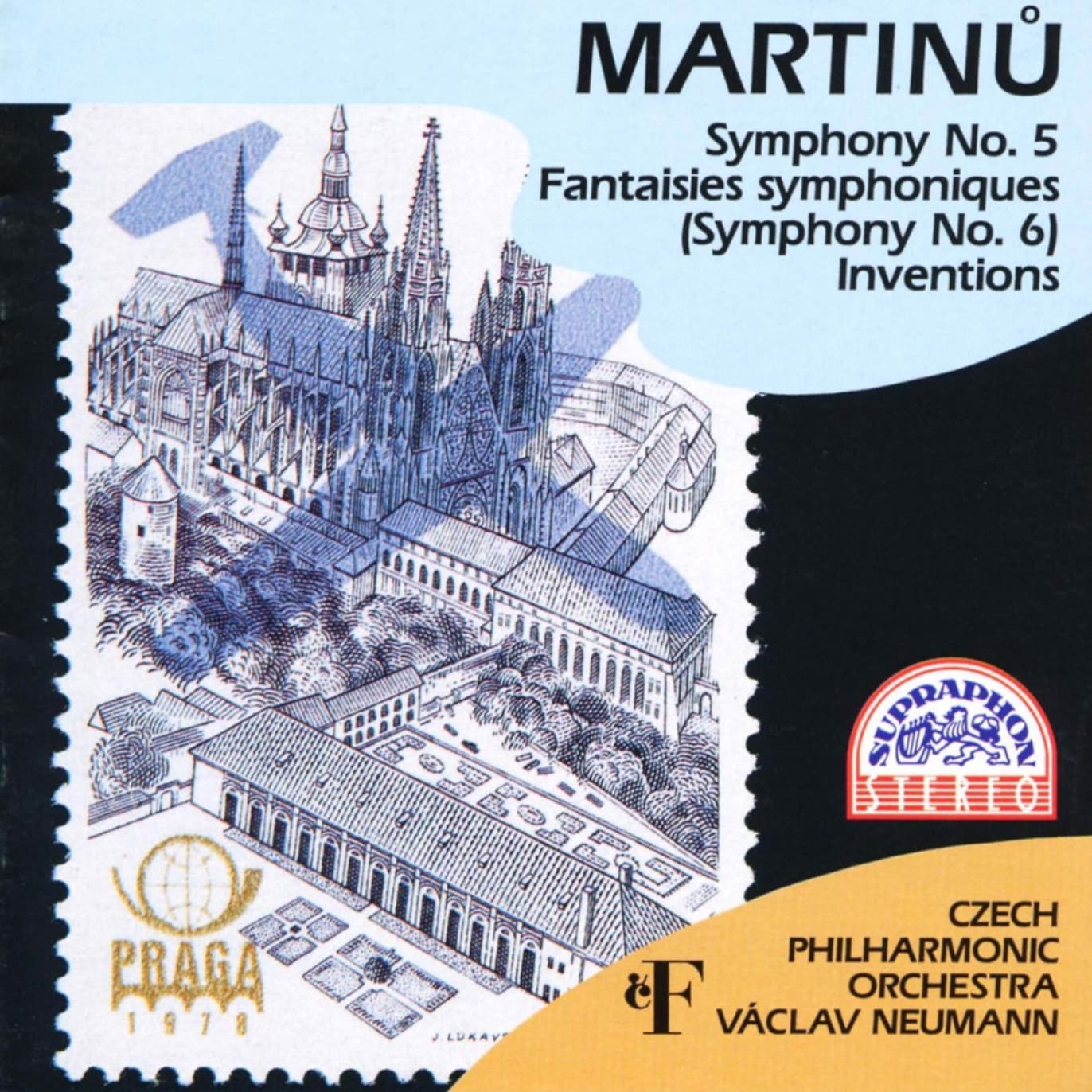
I’m a near fanatic when it comes to Bohuslav Martinů and my favorite cycle is by this great orchestra and Václav Neumann (Supraphon). In symphony no. 6, the woodwinds stunning interplay with the strings and brass get me every time. The woodwind players’ perfect intonation during any and all passages endlessly baffles and delights.
The 2024 remaster is available on qobuz too.
I find this one of the (few) good Alexandre Bak remasters. Note there is also a 2022 Alexander Bak remaster
@Thomas_Becker, the Neumann/Czech Philharmonic Orchestra’s Bohuslav Martinů symphony recordings are indeed wonderful (as are those by Jiří Bělolahvek/BBS Symphony Orchestra and Bryan Thomson/Scottish National Orchestra). He’s a fascinating composer. Here’s a wonderful Martinů treat from the same label, but this time by the Prague Chamber Orchestra, but I expect you may have already heard this.
Thank you @Douglas_Henning and @jacobacci for pointers to the Karel Šejna/Czech Philharmonic Orchestra Slavonic Dances remasters. I’ll have a listen. Šejna is a revelation.
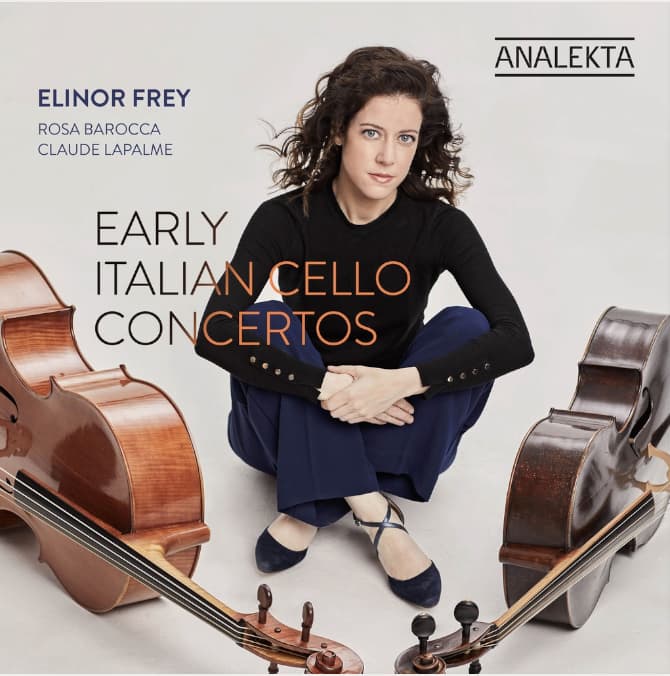
The previously alluded to Classical Breakdown discussion re: cello repertoire (cf. note 2266) mentioned some of the usual suspects (Vivaldi, Tartini, Boccherini), but also mentioned Leonardo Leo, another wonderful Italian Cello composer, whose dedicatee and patron was Neapolitan amateur cellist Domenico Marzio Crarafa IV, Duke of Maddaloni. He also supported Scarlatti and Pergolesi. Perhaps because of his adaptive cello compositions, Leonardo was phenomenally successful in Naples. I found a few recordings of work by this composer, one performed by the estimable Elinor Frey with Rosa Barocca conducted by Claude LaPalme on Analekta. Other early cello works on this recording by Giovanni Battista Sammartina, Vivaldi and Giuseppe Tartini are also well executed. The notes for this recording are also well worth attending to.
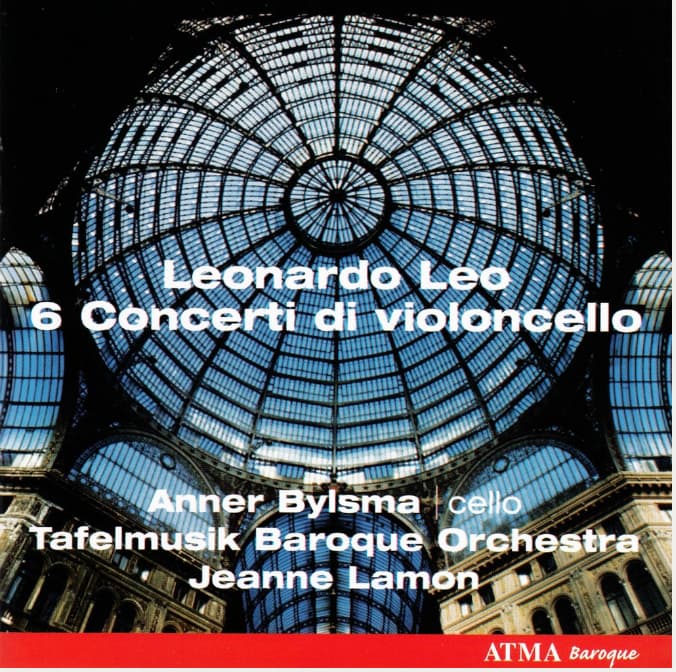
Another Leonardo Leo recording that I enjoyed was
Not Anner Bylsma’s finest moment, but still quite wonderful. The cello in these compositions isn’t yet singing like it would in and after Bach’s cello concerti, but it is still wonderful to hear in these earlier works, as it is with Vivaldi and Boccherini.
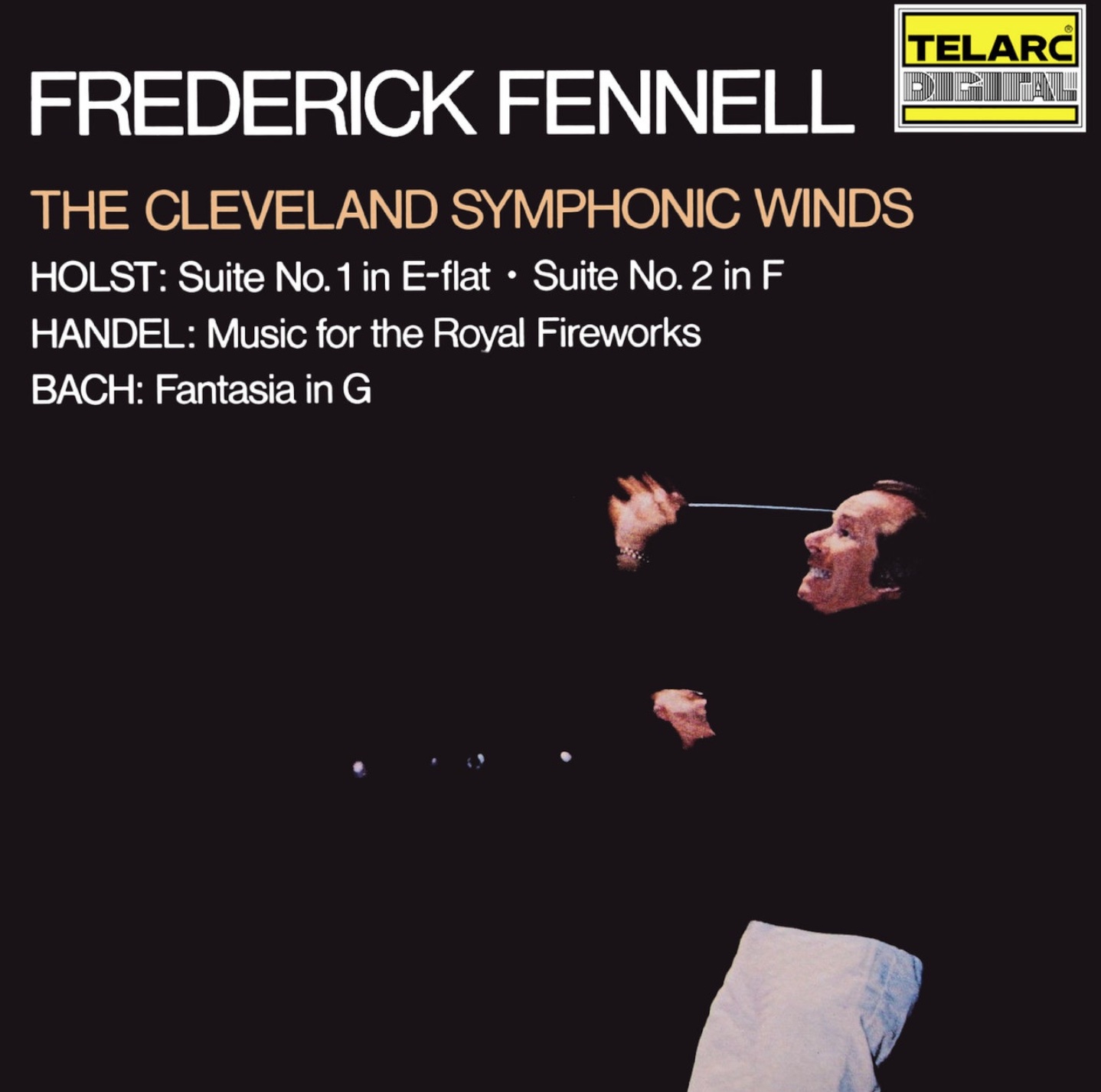
A wonderful recording, loved by hi-fi buffs for the exceptional bass drum sound, and by the rest of us for it’s musicality and general joie-de-vivre. For many people, including me, it was our first exposure to Holst’s music beyond “The Planets” and still a favourite today.
agreed.
also, highly recommended, for similar reasons.
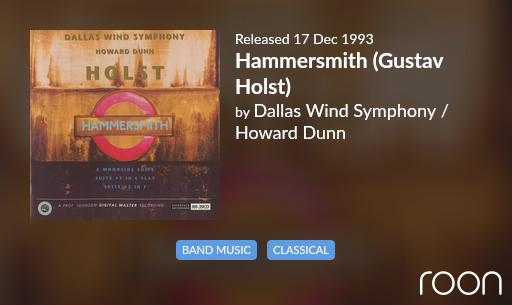
These are excellent:
@bill_perkins I am embarrassed I have not heard the Prague Chamber Orchestra’s recording of Martinů’s Sinfonietta La Jolla because I find it a very captivating piece.
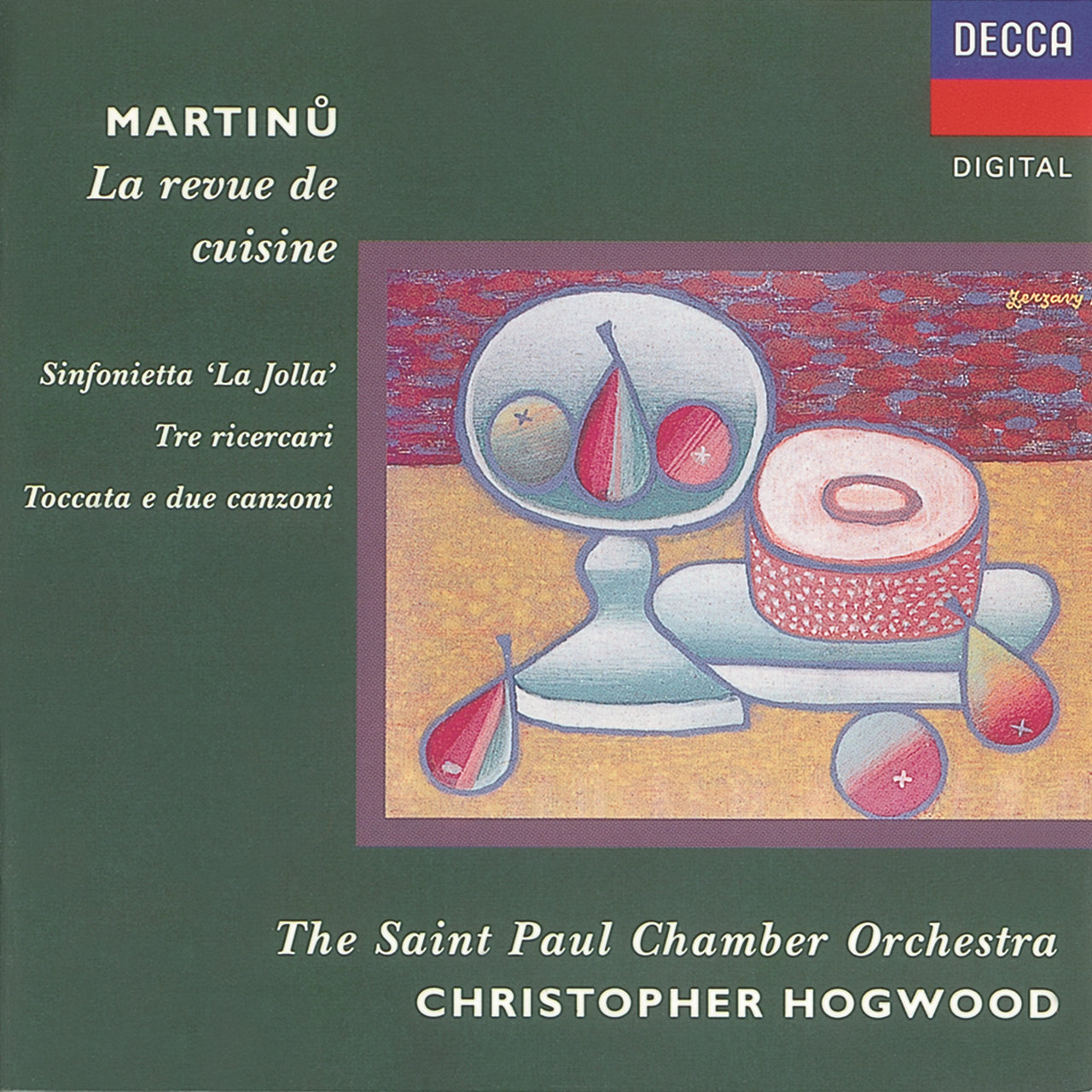
For the most part, I default to the recording by Saint Paul Chamber Orchestra and Christoper Hogwood (Decca) but, now that I’ve listened to the album you posted (Supraphon), I am hearing new aspects of the piece. Much appreciated.
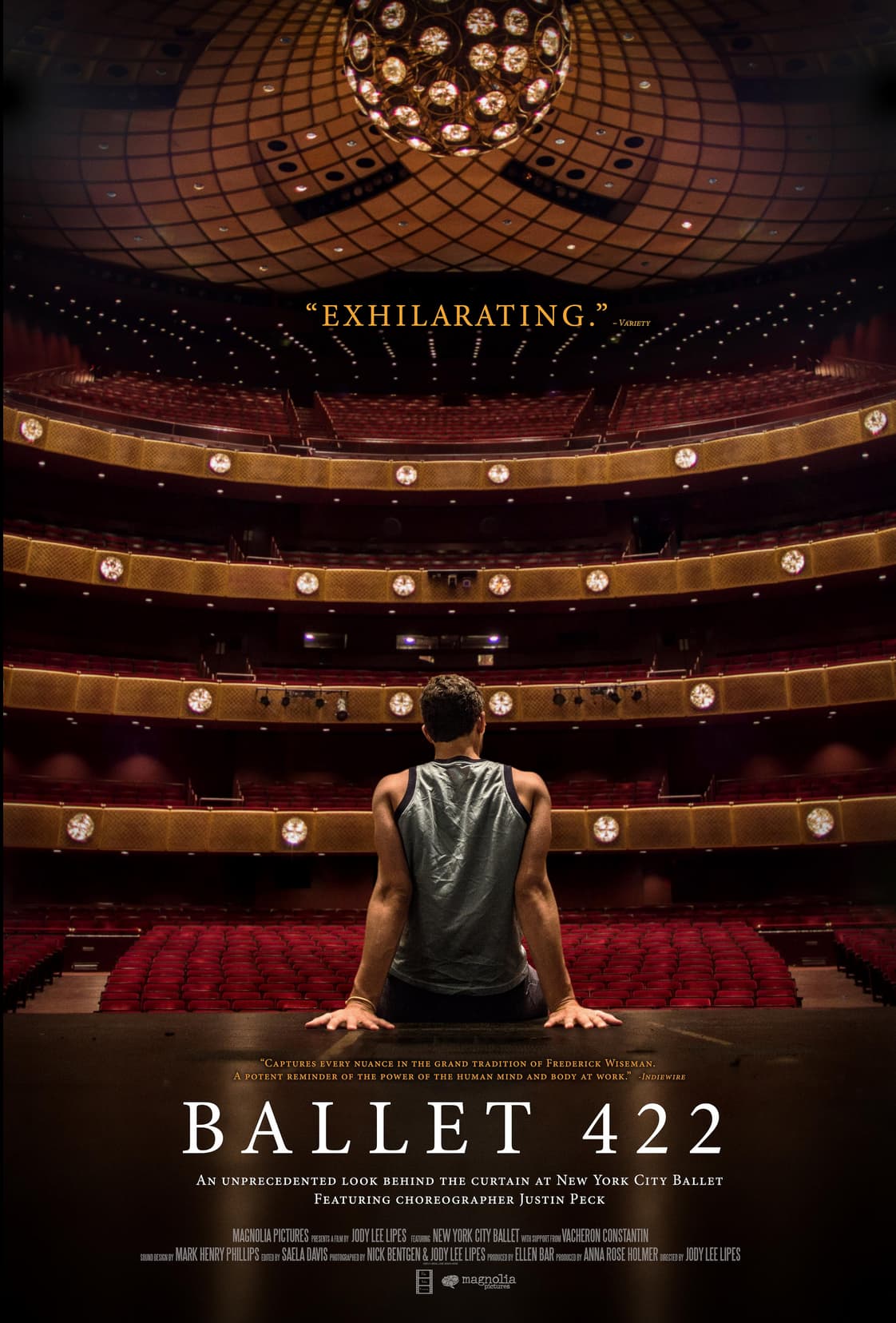
Sinfonietta La Jolla is used for the music in the 2014 documentary “Ballet 422” which introduced the piece to me.
Hogwood/SPCO La Jolla is wonderful. Thank you for pointer to “Ballet 422”. I listened today to his Fantasia for theremin, oboe, string quartet and piano. He definitely adapted to new technology and was delightfully adventuresome
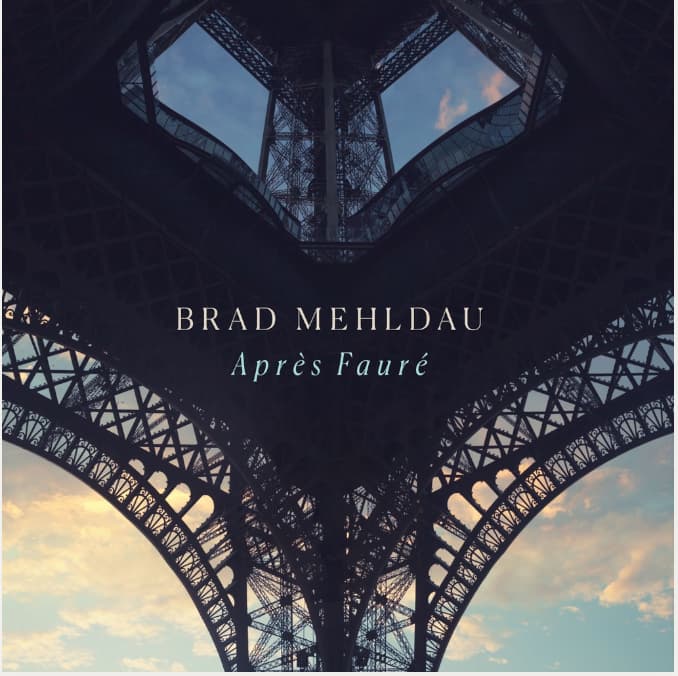
On a completely separate tack, here is a piece worth noting for those who love jazz and classical music. I’m referring to Brad Mehldau’s most recent release, Après Fauré. Not at the level of Marc-André Hamelin, but who is? Wonderful quotidian listening piece by a remarkable pianist. The best pieces are those composed by Mr. Mehldau, but his Fauré playing is quite enjoyable with a piquant jazz inflection.
As my family is planning to visit the monastery of Benedikt Beuern, a related question was arising which might be of interest here:
What is your favorite recording of Carl Orff´s ´Carmina Burana´ or which ones could you recommend?
(I might want to add that I have pretty high expectations regarding the quality of the choir and the male soloists, particular their ability to deal with the few very high passages forcing them into falsetto or counter registers)
Would rather hear yours and @woodford’s , given your keen ears for voice. Cantiones profanae cantoribus et choris cantandae comitantibus instrumentis atque imaginibus magicis from a time when plainchant was the main musical form. A wild, wonderful piece of bawdy Medieval Latin literature. Fortuna Imperatrix Mundi.