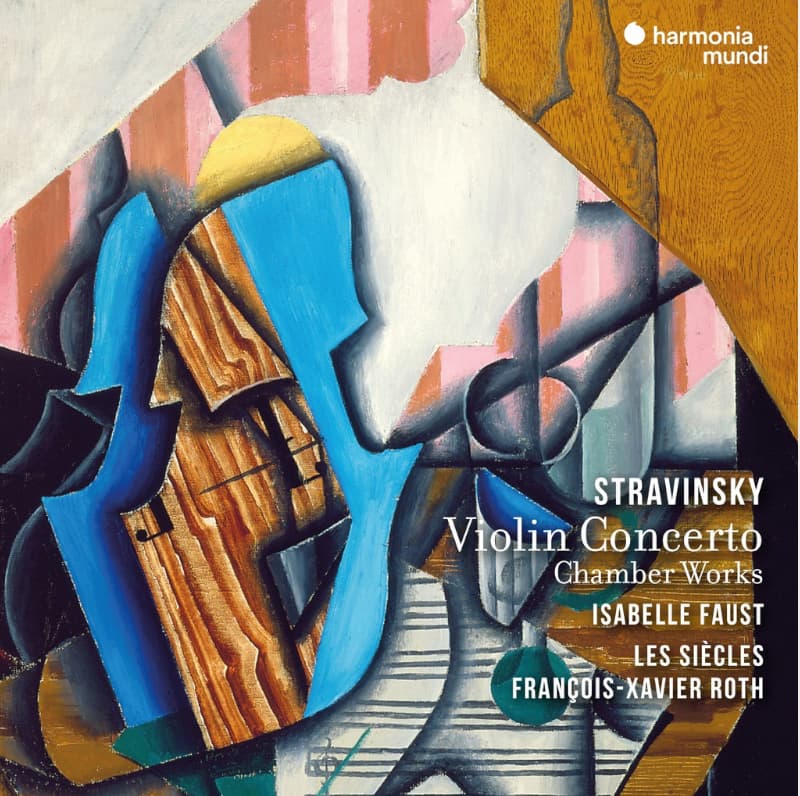
Gergiev’s version was not my cup of tea, prior to his excommunication for Putinophilia. It is satisfyingly barbarous, if not Bacchanalian, though. I like the atypical HIP François-Xavier Roth/Les Siècles performance well enough, just not as delirious as I like it.
Up in the Upper Midwest, we define Spring astronomically, rather than by weather
The Bavouzet/Guy four hands approach is quite remarkable and well worth a listen. Not quite as stunning as Hamelin/Andsnes, but stunning nonetheless and available on Qobuz. The Bartok Pictures transcribed by Zoltán Kocsis and Debussy Jeux transcribed by Jean-Efflam Bavouzet are also quite lovely and give a spring flavor.
Love listening to Biber, the baroque Paganini, particularly the previously mentioned Manze/Egarr Rosary Sonatas and the Amandine Beyer/Gli Incogniti Mystery Sonatas with a tangentially-related cover.
Speaking of both Stravinsky and the recent mentioned Les Siècles, there is a newish Stravinsky Violin Concerto & Chamber works by Isabelle Faust/François-Xavier Roth/Les Siècles on period instruments that is a listening pleasure.
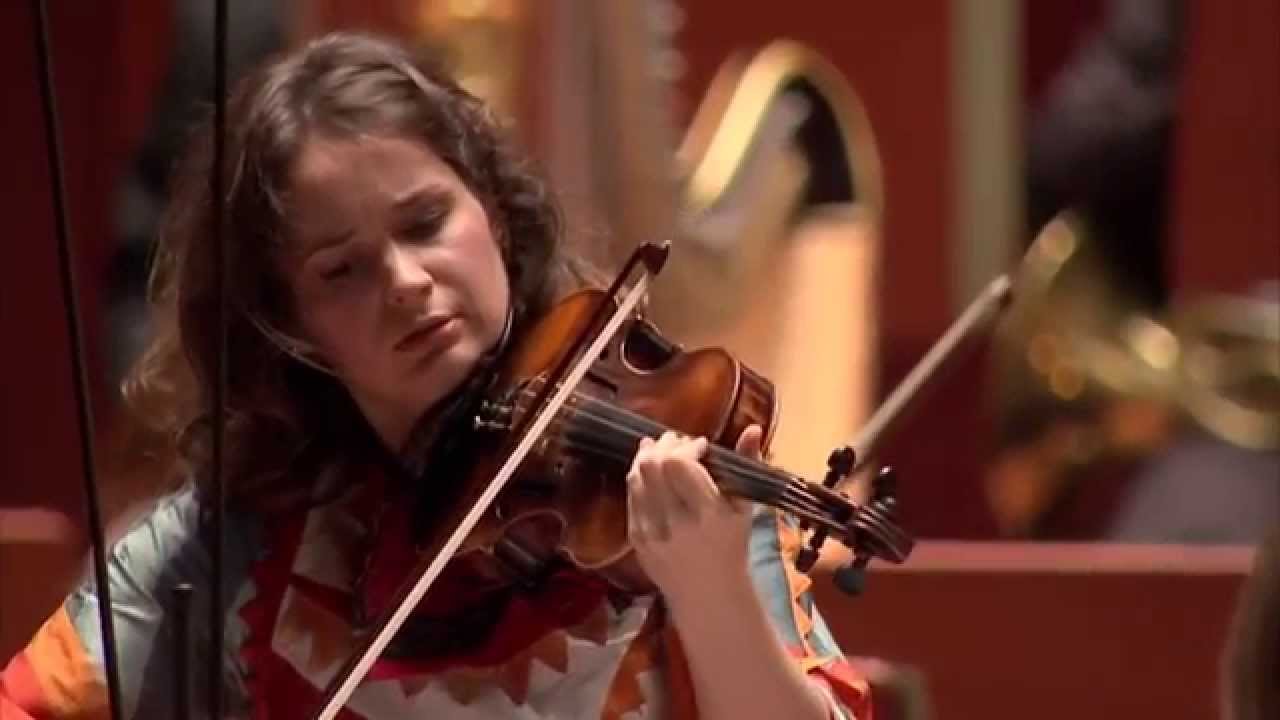
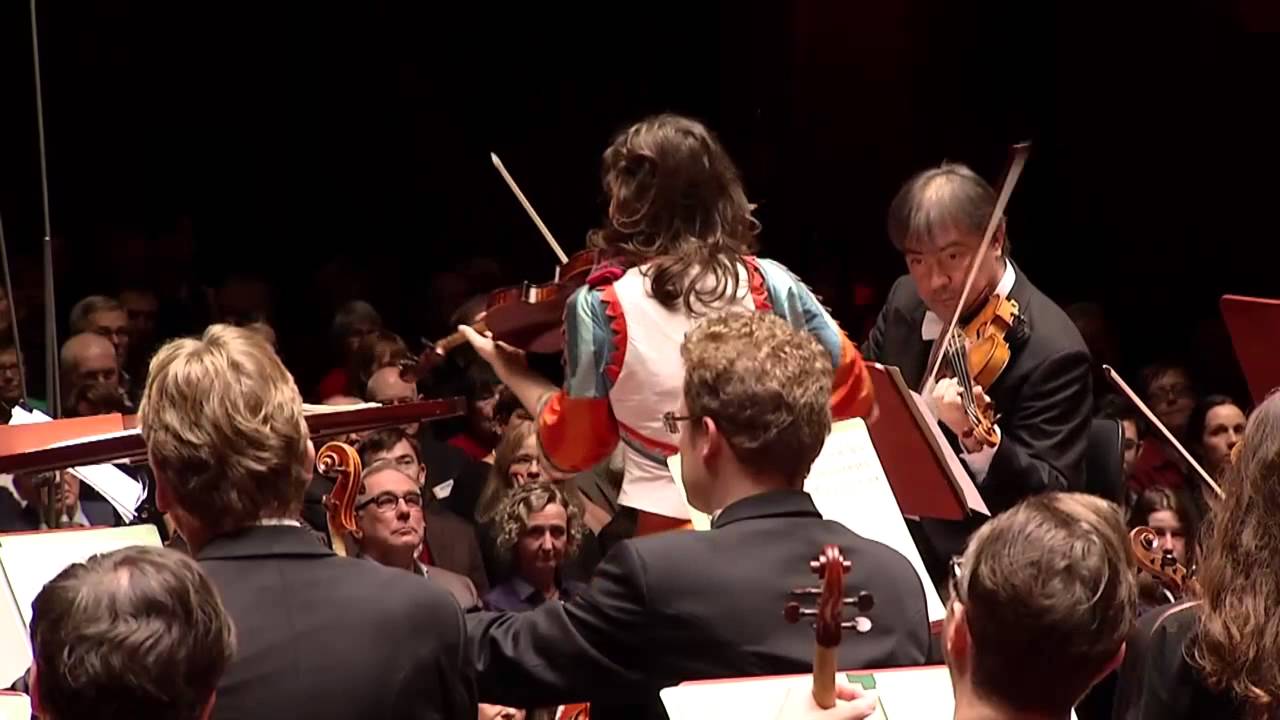
I love the Stravinsky violin concerto and enjoyed Faust’s performance. I’ve listened to many recordings and my favorite is Patricia Kopatchinskaja’s live performance on YouTube (her album recording is good but doesn’t convey the same level of energy). She has a style that emphasizes spontaneity and improvisation, and is a perfect match for this music.
She performed her own cadenza-encore at the same concert.
Thank you for this. She is a force of nature, a great artist. Playing in the Alte Oper in Frankfurt, with a concertino from Argentina and a violinist-director from Medellín, Colombia. Brava Patricia!!
I hadn’t heard this. It is wonderful. Thank you @mSpot. As you may have noticed, I am a huge PK fan! She is virtuosically elemental and I love this performance.
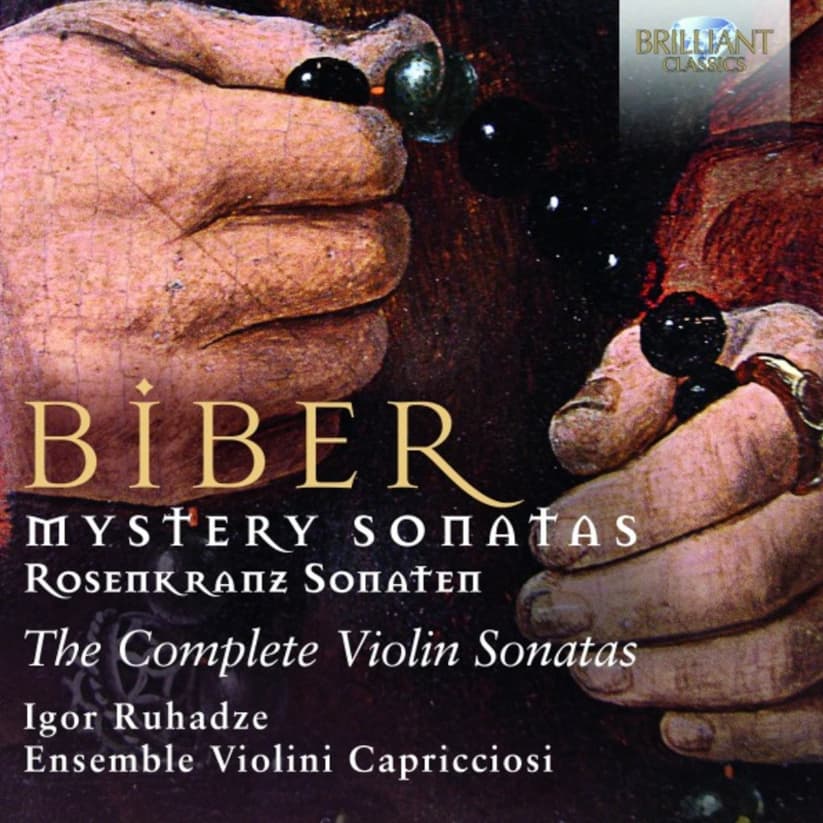
Lost track of the thread, but I’ll catch up. For today still on Mendelssohn No 6. And just for some variation I was cruising around and I got again in the web of this thread. Igor Ruhadze (from Locatelli posts) with Mystery Sonatas (posted once with Sirkka-Liisa Kaakinen-Pilch).
Moderator, please move this to another thread if you think it appropriate and fellow Classical Community Discussants, please excuse what may be a distraction for some, if not many.
There has been a significant disturbance in the Force.
Came to my attention via an article today in The New York Times Reporter’s Notebook.
Will be interesting to see whether Apple Music following Primephonic acquisition gets a better handle on the ever-challenging classical music metadata morass and whether they suffer from the same recording gaps previously noted on this blog. Claims to have a “search built for the genre.” I note that neither Qobuz nor Roon allow for true Boolean searches and don’t know whether Apple Music Classical does either. I’ve always thought this essential for Classical Music, but no one else seems to think so. I don’t think Roon Filter is part of a True Boolean search. Close, but not quite.
I’m not an Apple Music subscriber, but not best pleased by the numerous Qobuz holes in repertoire in North America versus South America and absent helpful responses when Qobuz presented with these holes. Understand why, just not pleased.
No idea what Classical Music catalog depth Apple Music includes. Legacy recordings? Smaller labels? Hyperion?? Boxed sets?
Expect that all high audio quality music will be ALAC and there is no Roon Integration at this time. Currently only available on iPhone.
Also not interested in re-ripping several thousand CD collection either, so sticking with Roon (Lifetime Subscriber).
This, however, is a major shot across the bow for Classical Music streaming services/metadata-using software providers. I expect only a combination of inertia by end-users and/or increased exertions on the part of the streaming services and metadata-using software providers will keep them competitive.
Maybe this will be a good thing for what has been (appropriately?) treated as a vexatious (metadata entry and other metadata conundrums) and excessively niche (high resolution classical music) market. Time will tell.
Thanks for posting this in here.
I think you’ll get an idea from the threads linked below, if you are interested and have the time.
I did read them, because:
For the last 2 month looks like 97% of my listening was classical and since started roon it was 75%
All comps that I’m using (starting 2005) are apple. I did quit on iPhone 7 years ago: it was so well integrated that it did replace the computer and made me spend more and more time on screen (at least now it is a bigger one, same goes for iPads)
Since Qobuz it is not available in Romania and Tidal Master is MQA I would like to switch to ALAC or other form of Hi Rez (or just try and decide after the trial)
I’m already a subscriber to a iCloud plan so I can build a package (I think I can drop Netflix for Apple TV)
I’m planning to have a trial… But not until I’ll find a (easy) way to connect to my DAC (or actually HQP) without AirPlay. I’m not having any high hopes (or at least to quick happening) as Apple current market plans are oriented more to the mass consumer than the niche that roon is representing. I think they play in the amazon and Spotify league where priorities are a bit different.
Thank you. Nice helpful early user comments. You are right about the niche character of classical music listening via Roon/Streaming service. Apple Music Classical (AMC) has been in development since 2021, when Apple purchased Primephonic. Oliver Schusser, a vice president at Apple says “we’re really serious about this.”, but we both know that integration into DAC streaming, etc, is not a typical AM/AMC user priority. OTOH, Apple did, against all predictions, eventually support higher resolution releases with RBCD resolution broadly available.
I expect that where Qobuz is almost uniformly unresponsive to catalog holes (too small to care), Apple will be uniformly so (too big to care).
Still don’t have a handle on classical music recording depth in AM/AMC and wonder if legacy recordings which form a sizable portion of what I listen to will be broadly available. The absence of accompanying materials (the “liner” notes, etc), a key part of my classical music enjoyment, is a complete non-starter for me.
And thank you for the Ruhadze/Ensemble Violini Capricciosi Biber Sonata recommendation.
Shortly before 1730, J.S. Bach assembled his six trio sonatas or organ sonatas, reportedly for the organ practice of his oldest son Wilhelm Friedemann. All six sonatas have three movements, with two fast movements and a central slow movement. They were scored for two manuals and obbligato pedal, with all three voices equally important.
I love these pieces, they are prime examples of the musical profundity and beauty of the mature Bach. Although the existing autograph copies call for ‘two claviers and pedal’, these sonatas have been transcribed and arranged for all types of instruments and chamber ensembles. I am partial to the organ interpretation by Marie-Claire Alain, which can be found online as CD1 of Erato’s 2018 new mastering and edition on CD. It was originally recorded in 1959. The remaster is very well done and the sound quality is superb. Another interpretation on organ I like is John Butt’s release on Harmonia Mundi from 1992.
As to chamber ensemble releases, there are the very well-received versions by London Baroque (2002) and England’s Purcell Quartet (2000).
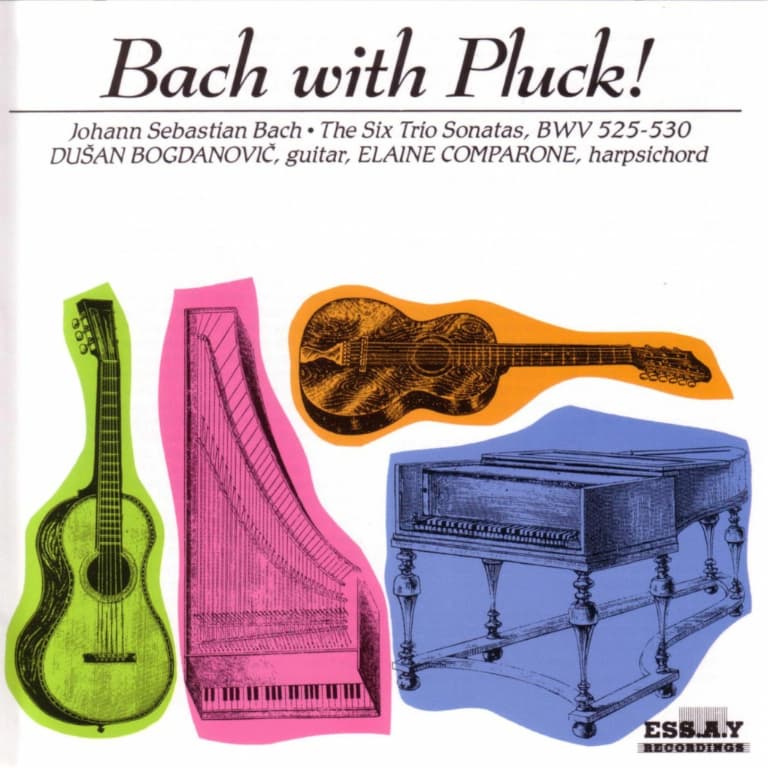
Today though I wish to recommend a terrific if rather odd version, arranged for guitar and harpsichord, masterfully played by the Serbian guitarist Dušan Bogdanovič and Elaine Comparone, released in 1992 on Richard Kapp’s Essay label. I am delighted with the music produced by these two artists, and quite happy that there is a second volume, released in 1994 with Bach’s two-part and three-part inventions. I think both albums will satisfy any open-minded Bach aficionado.
I transcribed the first trio sonata for bass trombone and organ for my final doctoral recital — it worked surprisingly well. I still love these pieces.
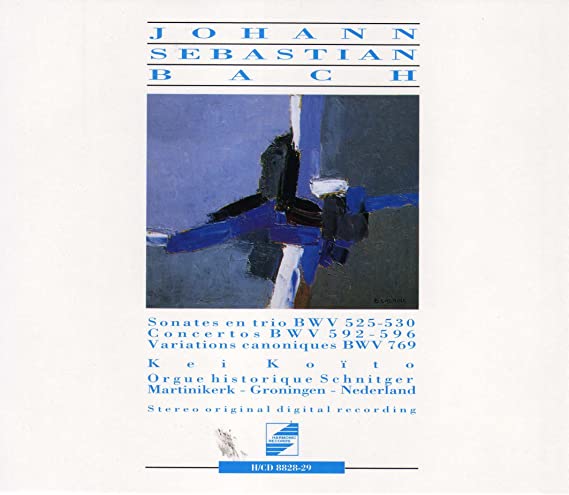
I have soft spot for an older recording by Kei Koito on Harmonic:
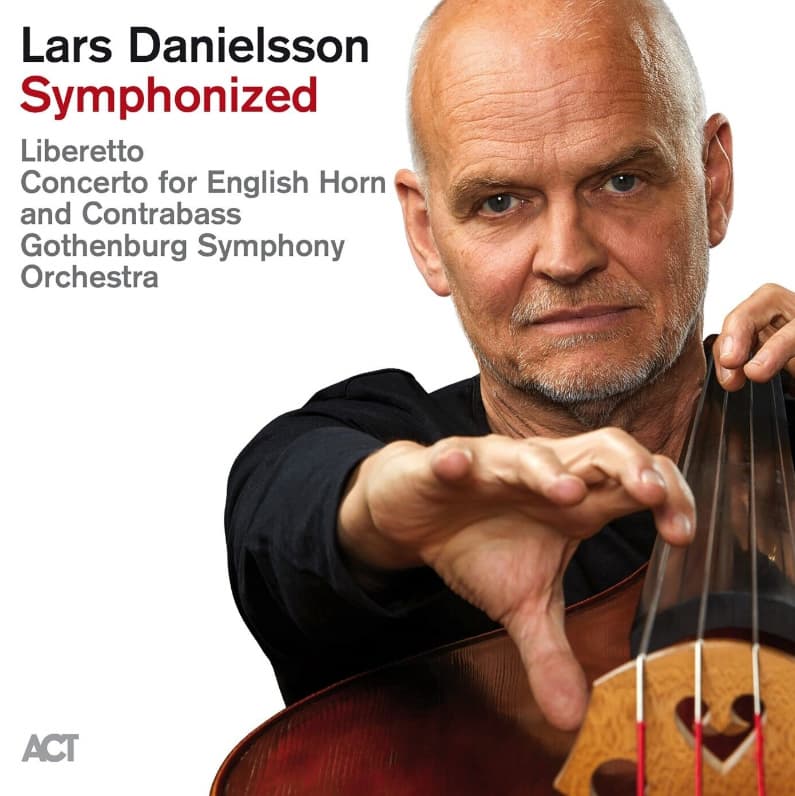
Lars Danielsson’s jazz work on ACT is great. He’s a fine bass player and also good on the cello. This album is an interesting concept. It was release on 31st March.
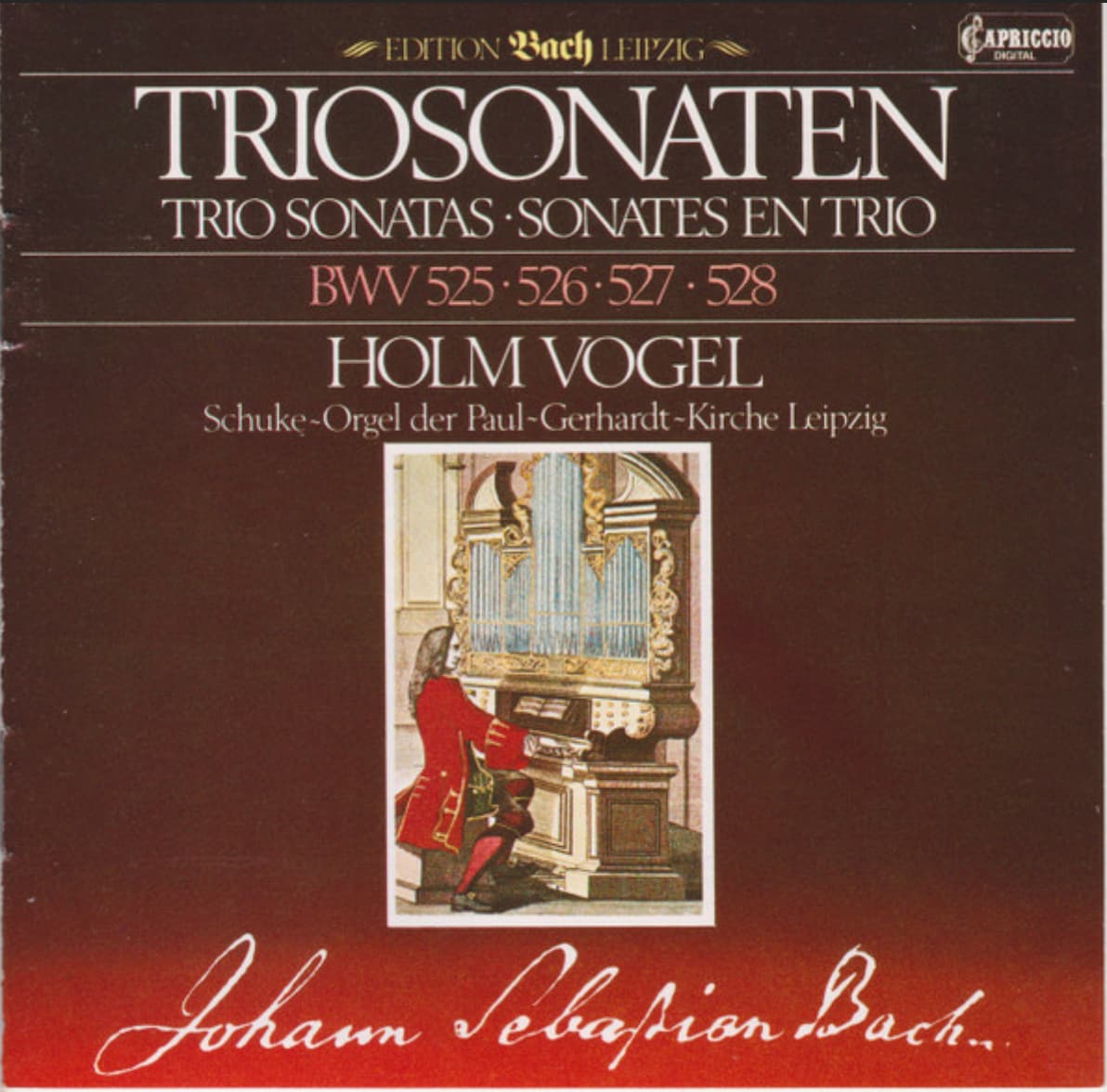
As do I. Your note brought back some fond memories. One of my earliest CD purchases was a Holm Vogel Trio Sonatas Capriccio label recording. Recorded on the Schuke-Orgel der Paul-Gerhardt-Kirche Leipzig. At the time I had only heard a few organ pieces (pretty much all Bach, except for the Saint-Saëns Symphony No. 3 and Strauss’s Also Sprach Zarathustra). I was transported.
Some organ aficinados, while admiring his playing, don’t like the organ used. I’m not astute enough to comment beyond the fact that Mr. Vogel’s recording remains a favorite. I see that it is available on Qobuz.
Have since moved on to some of the folks you mention, but also the Walcha, Reichert, Koopman, Yearsley (on an organ based on the Berlin Eosanderkapelle Schnitger organ), Chorzempa and Kaito (also on a Schnitger organ, mentioned above). All bring a different flavor to the performance.
Love the idea of adapting this to different instruments and am thoroughly enjoying the Dušan Bogdanovič/Elaine Comparone version you recommended. Thank you.
I generally enjoy listening to trio sonatas, almost as much as I enjoy the string quartet format, which came later… Do you know London Baroque’s beautiful 8-CD series with recordingsof 17th/18th century trio sonatas from England, Germany, France and Italy? All individual albums are available on Qobuz, as is a 8-CD box set released in 2018…
When I say a favorite, there is an “imprint” and memory element to this assessment. YMMV. Thank you for the London Baroque recommendation. I have some of their CD’s in my collection because I was mad for anything Emma Kirkby recorded. Looking forward to their Trio Sonatas through history.
Sad to hear about Daniel Chorzempa, but I remember the joy he gave me and so many other listeners.
I understand that very well. I have at least one favorite recording with very fond memories attached. This is the Decca recording of Beethoven 9 with Ansermet directing the Orchestre de la Suisse Romande. I’ll never forget the day my mother came home from doing groceries, with this album as a gift for my little six or seven-years old musical mind. I still have this album which was a German re-issue, and years later found a NM Decca original which I treasure for the memories…
Thank you for bringing David Yearsley to my attention; I see that he releases on Musica Omnia, which usually guarantees decent sound quality. I am looking forward to exploring his albums and his art.