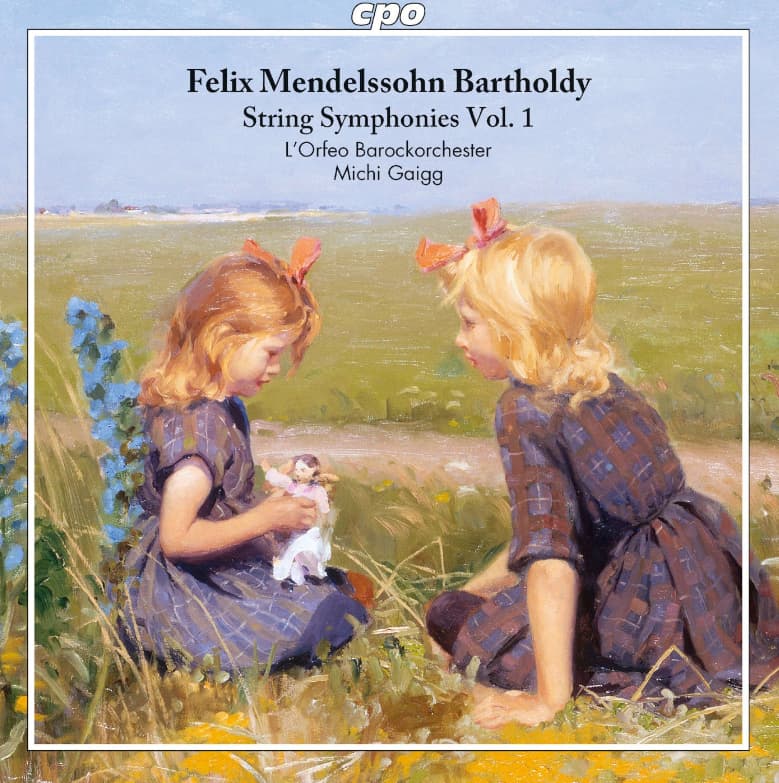
Interesting. I have this Gaigg and it’s accompanying vol 2 in my library for comparison.
2 Likes
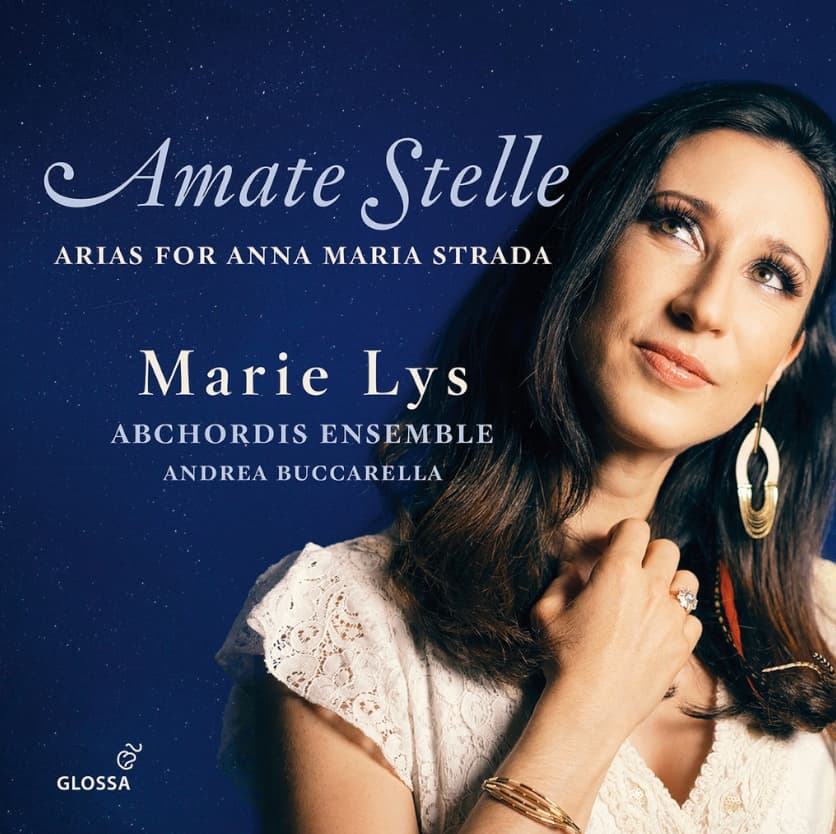
In this year’s Handel production at the Göttingen Festival, the youthful Swiss soprano Marie Lys sang the title role in Semele. She already in January had this fabulous album out, with arias written for the Italian soprano Anna Maria Strada del Pò.
At the very young age of 17, that lady was the first Rosane in the premiere of Vivaldi’s La Verità in Cimento, during the 1720 Venice carnaval season. In 1729, she arrived in London and was there engaged by Handel, transforming herself into his third soprano muse, after Faustina Bordoni and Francesca Cuzzoni.
The harsh critique of Strada by the contemporary English music historian Charles Burney is well known:
A singer formed by himself [Handel], and modelled on his own melodies. She came hither a coarse and awkward singer with improvable talents, and he at last polished her into reputation and favour … Strada’s personal charms did not assist her much in conciliating parties, or disposing the eye to augment the pleasures of the ear; for she had so little of a Venus in her appearance, that she was usually called the Pig. However, by degrees she subdued all their prejudices, and sung herself into favour.
As to the efforts by Marie Lys on her first solo album, I am very much pleased, and so are the usual pundits, having given the album glowing reviews. Here just one example:
Not only the soloist, but also the ensemble merits a well-earned mention. Andrea Buccarella, the 2018 winner of the prestigious Bruges harpsichord competition, leads his Abchordis Ensemble, and what I have being able to explore coming from this group, makes me very much looking forward to future releases…
3 Likes
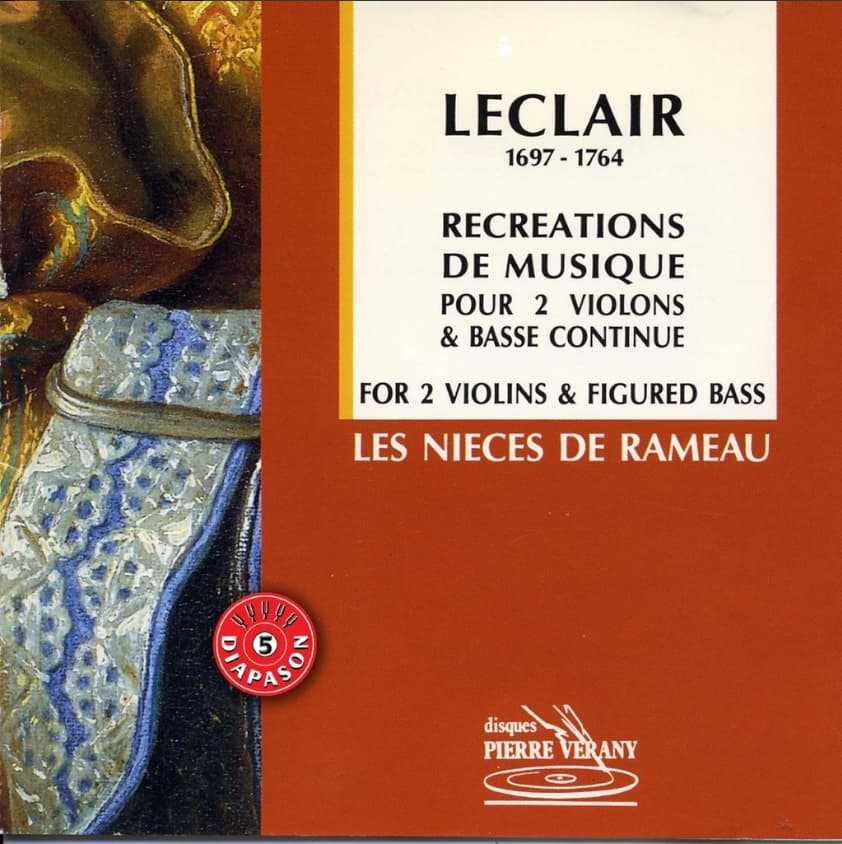
I just read that the French Baroque violinist Florence Malgoire died last Friday in Marseille. Maybe little known to many, she was a terrific musician, having studied with Sigiswald Kuijken, and at a very young age began to perform with her father’s ensemble, La Grande Ecurie et la Chambre du Roy.
Here she can be heard performing with her own all-female ensemble Les Nièces de Rameau, playing Leclair’s Op.6 and Op.8 Récréations de Musique…
¡Hasta siempre Florence!
4 Likes
From the young Mendelssohn back to his musical influencer CPE Bach…
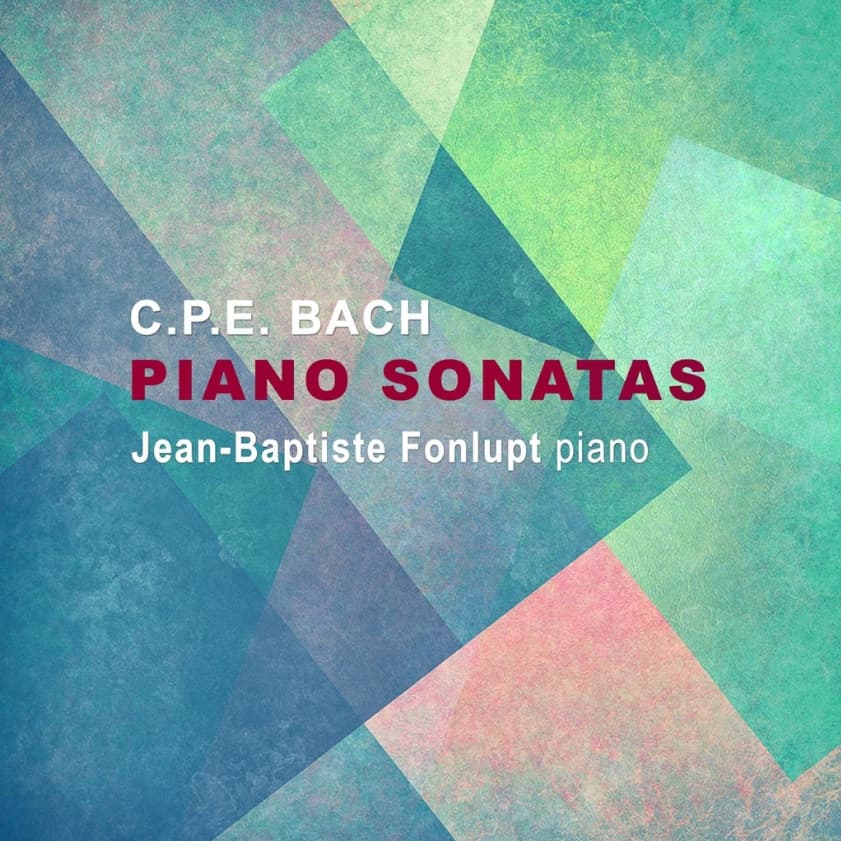
Before the 2017 release on ECM by Alexei Lubimov playing on a tangent piano, and the 2022 release by Marc-André Hamelin on Hyperion, which now thankfully is available for streaming, the French Jean-Baptiste Fonlupt self-released in 2011 a very well-played selection of CPE Bach’s keyboard sonatas, playing on a modern concert grand. This recording may be little known, but it is certainly worth the time of those who appreciate Bach’s music…
2 Likes
Going to listen to the Boston Symphony Orchestra with Andris Nelsons next weekend, and wondered what versions of Prokofiev 5 @bill_perkins, @woodford, @jamie (and everyone else) you’d recommend? I have not listened to a great deal of Prokofiev, apart from the ballets and Piano Concerto No. 3.
1 Like

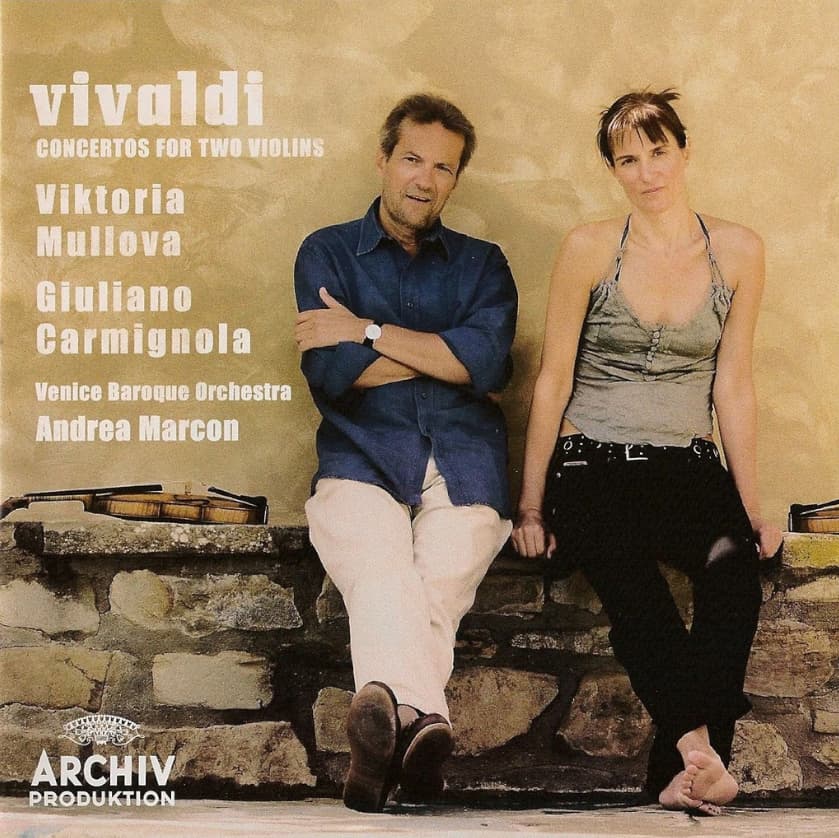
After a week of Internet outage and being forced back onto Apple Music, this is my Sunday morning feel good album… The give and take between Carmignola and Mullova is delightful, and this is one of my desert island albums…
9 Likes
Away from computer and just out from backpacking in Oregon’s Wallowa mountains.
Two recordings come to mind.
Neeme Järvi with Scottish National Orchestra on Chandos.
Herbert von Karajan with Berliner Philharmoniker on Deutsche Grammophon
Lucky you.
2 Likes
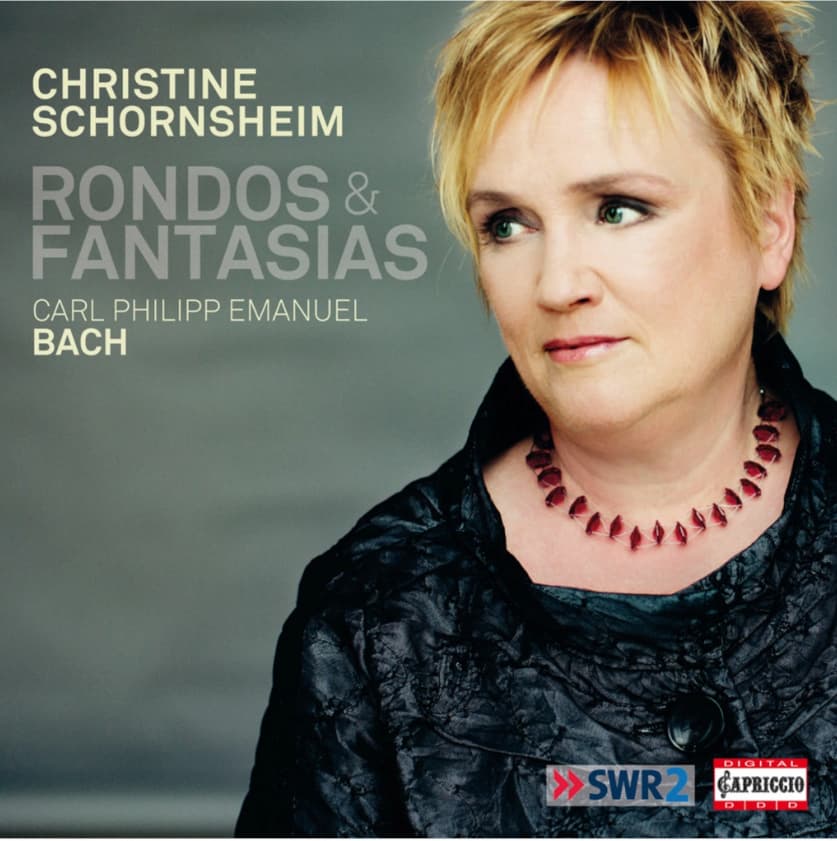
Back once more to C.P.E. Bach and his music… In a previous post I mentioned Alexei Lubimov’s 2017 release, playing on a rare tangent piano. Well, he was not the first to use this instrument for interpreting CPE Bach’s music. In 2013, the German pianist Christine Schornsheim recorded a selection of Bach’s Rondos and Fantasias on a tangent piano held in a private collection, and in the accompanying booklet notes she reasoned about her instrument choice:
“In my view, what characterizes a Tangentenflügel is that it unites all the timbres of stringed period keyboard instruments, so to speak. It can sound as gentle as a clavichord, even the harpsichord can almost be imitated, and the sound of an early forte- piano can similarly be produced. The instrument in Bad Krozingen meets all the criteria. I opted for a Tangentenflügel because Carl Philipp Emanuel Bach’s music is decidedly diverse in character. It is difficult to present it on only one of the possible instruments harpsichord, fortepiano or clavichord.”

(Instrument built in 1801 by the inventors of the tangent piano, Franz Jacob Späth and Christoph Friedrich Schmahl)
Whatever you may think about the reason given by the musician, the recorded result of her interpretative art seems very adequate, indeed…
4 Likes
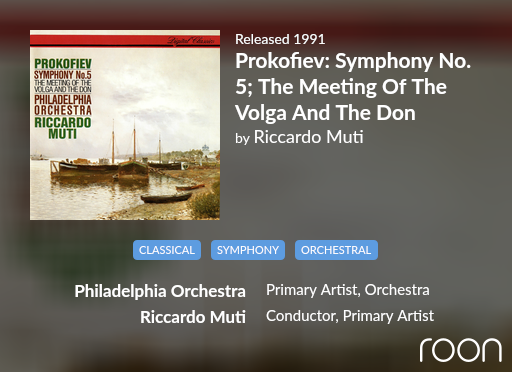
Karajan on DG is very good, there are a few different couplings. I also like Szell and Ormandy, both available in MQA, butt my favorite is probably Muti/Philadelphia, which should be better known.
5 Likes
Thank you!
Will check it out, as his Rachmaninov Symphony No. 2 at the Proms got rave reviews; friends who went said he was sensational!
1 Like
Thanks, Bill.
I only go to the Proms, because we don’t have mountains. Thanks for the recommendations!
1 Like
David Hurwitz agrees with you  , although his favorite is Andre Previn/LSO.
Something to consider is that to prepare for a concert, it might not be the best strategy to preview best recordings of a work, which the concert might not live up to. Perhaps preview just to gain familiarity with the music from someone generally reliable but usually not noteworthy, like Eugene Ormandy. Now I feel guilty that I said it 
3 Likes
It is surprisingly common for Muti to come out tops in Russian repertoire, so really appreciate this pointer.
1 Like
I know what you mean…however, I felt so unfamiliar with that work, I though a bit of an intro would help. So I’ve played a couple of recordings, and think I’ve now got some sense of it.
The other way also holds, though, that you know you are hearing something wonderful, live, and wish you knew just how wonderful!
As do quite a few others, but I favor my own listening experiences when I’ve heard something. Love getting recommendations from others, particularly here. My first listen was to a Eugene Ormandy LP featuring Prokofiev’s wartime symphony (1944). Haven’t listened to it in quite a few years, but fondly recall it.
Looking forward to hearing Riccardo Muti/Philadelphia Symphony Orchestra and perhaps the Andre Previn conducted versions. Something about Mr. Previn’s mod phase puts me off. My problem, not his or reflective of his musical expertise.
The Neeme Järvi complete set of Prokofiev’s symphonies is very good at worst and sublime at best.
3 Likes
Thanks, everyone.
In the end, I pursued @mSpot’s advice, and found this version, that the reviews suggested was almost understated.
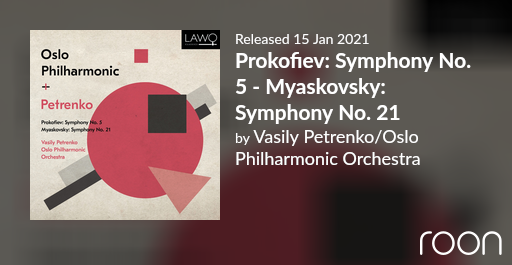
Must say, I really enjoyed it, and hadn’t expected that level of seriousness and sophistication from Prokofiev…Perhaps wrongly, he is too linked with the ‘3 Oranges’ March in my mind.
I wanted to give Nelsons a fighting chance, and so held off on Karajan, Muti and Jarvi.
As for Previn, @bill_perkins, I too tend to overlook him, because of his light entertainment/comedy antics in the '70s; was he a serious musician? Yet his Russian recordings often come out at or near the top in reviews…so look forward to checking it out.
3 Likes
Really enjoying these recommendations…so will seek more 
Nelsons is conducting Strauss’ ‘Tod und Verklarung’ in the first half. I know his recent Strauss collection was much admired, but my first inkling was to reach for Karajan, and his last recording with the accompanying, excellent ‘Metamorphosen’.
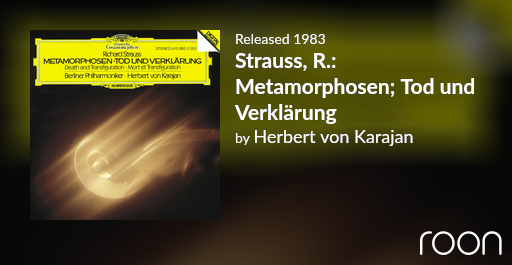
But who else? Kempe?
3 Likes
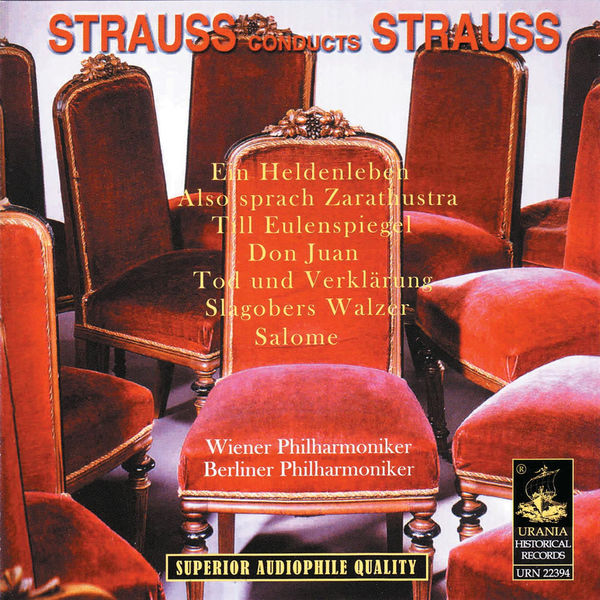
There are recordings of Richard Strauss conducting his own music. This album has Tod und Verklärung from 1944 with surprisingly good sound for its time.
4 Likes
I had the great fortune to hear HVK/BPO playing Strauss at Carnegie Hall in the early '80s. I don’t remember the exact program, but it “blew the roof off”, in a good way. what an amazing sound.
3 Likes