Definitely Kempe, but also George Szell/Cleveland and, my favorite, Fritz Reiner/MetOpera or VPO, both are excellent. I own these and unsure they are all available for streaming, so apologies in advance.
For Metamorphosen, might listen to Fürtwangler/Berliner Philharmoniker.
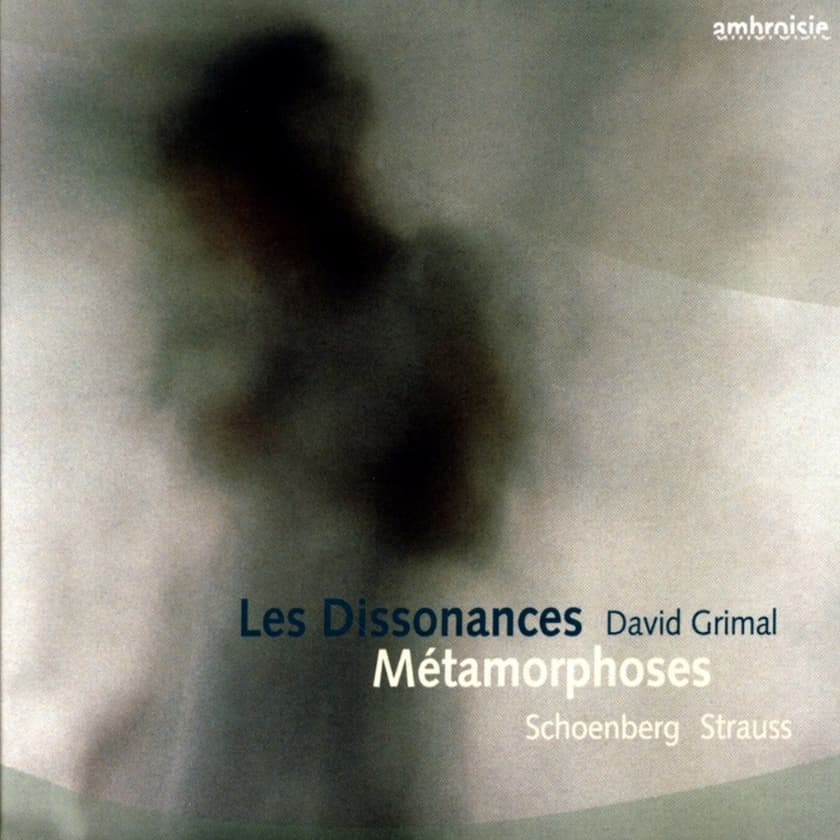
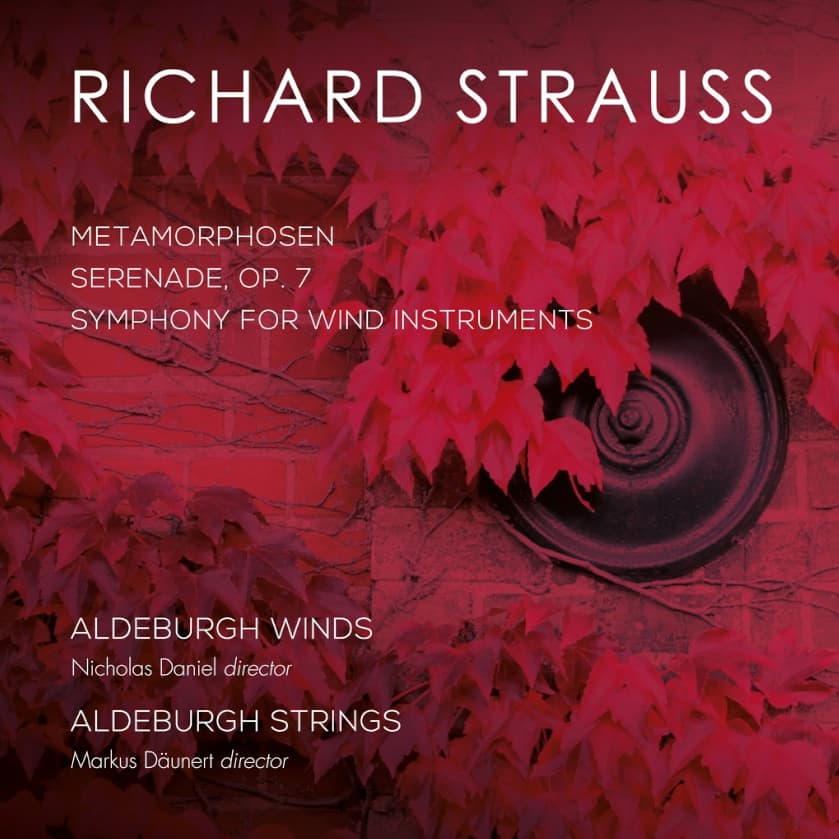
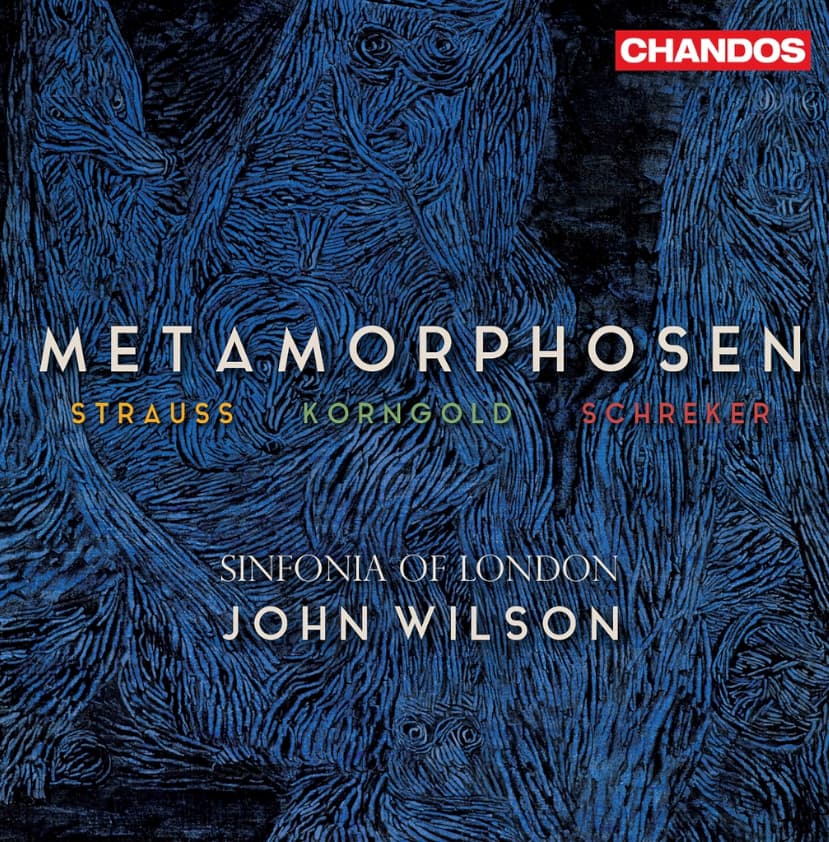
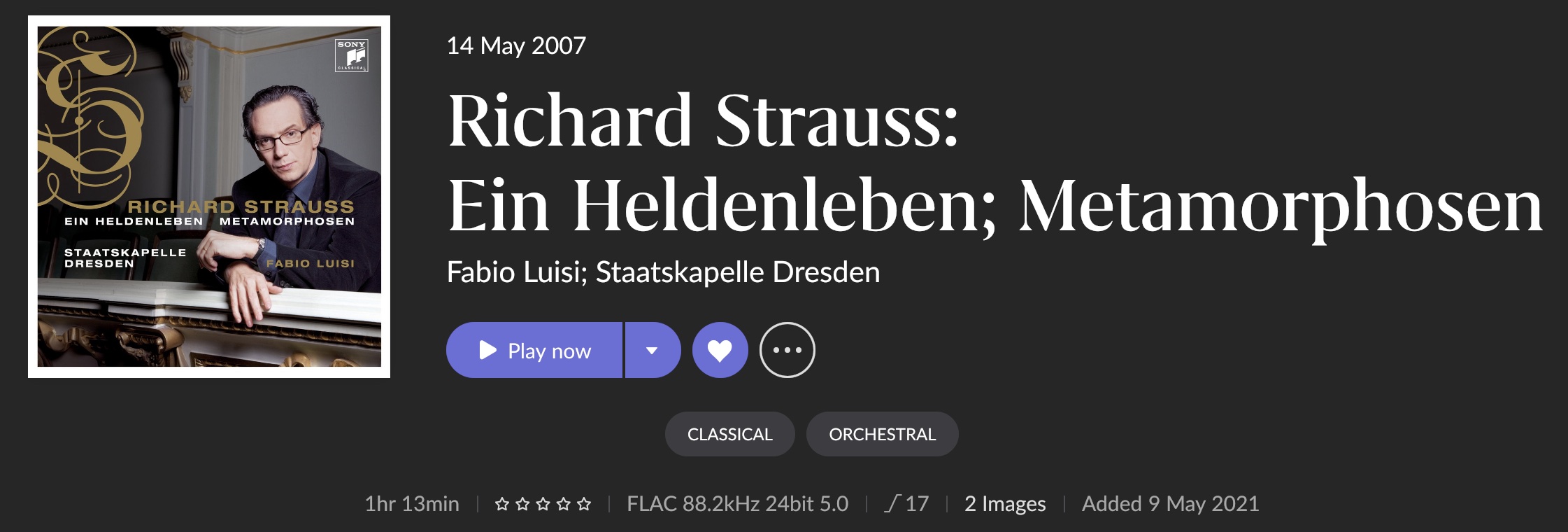
Nothing against the older directors and orchestras which were popular when we were much younger, and which were amply recorded and promoted. But there are many recorded interpretations from more recent times, which are wonderful, stunning at times, innovating or thought-provoking… As examples for the Strauss Metamorphosen from 1944-45, I can think of these worthwhile readings:
Strauss´ Metamorphosen is quite a difficult one as it was meant to be a chamber piece for 23 string soloists with a very homogeneous and homophonic sound. So neither an orchestral nor a solistic take on this piece would do it real justice. My favorite one might sound a bit less spectacular and emotional but exactly matching this approach:
Agree. Been a while since I listened to these and haven’t updated. Sometimes, though, the earlier recordings were and remain great, even superlative performances to be attended to for calibration purposes (performance and sound engineering). An example would be Pablo Casal’s Bach Cello suites recordings.
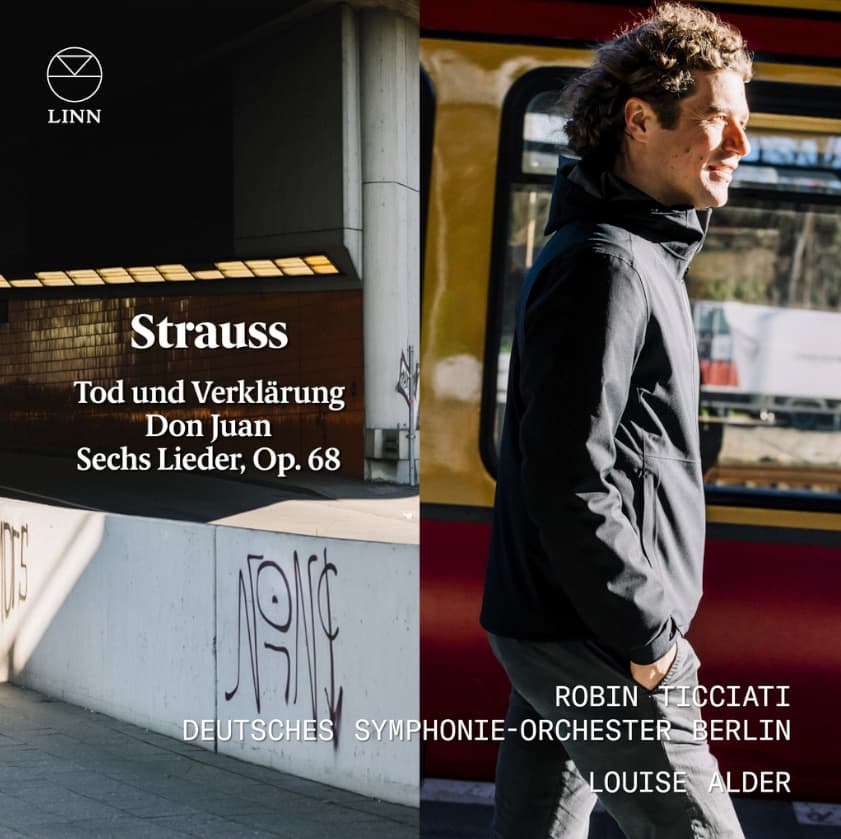
That said, I’ll be very impressed to find a Tod und Verklärung performance superior to Fritz Reiner/MetOpera or VPO. Looking forward to the recommended Metamorphosen recordings. Thank you Andreas and Arindal.
I won’t recommend Ticciati’s recording as superior, but as a very worthwhile interpretation from recent years.
I am following Ticciati’s work since his time with the Scottish Chamber Orchestra, and from this fruitful collaboration have sprung some gorgeous recordings to explore…
I only recently discovered this, and despite the age of the recording, it has an intensity that blows all other versions away. It has been said that the musicians were grief stricken, like Strauss, by the bombing of Dresden, and it shows.
Completely forgot Reiner. I have a Strauss box set, downloaded some years ago, and so will check out the versions.
Look forward to checking this out, as also admire Ticciati’s work, and Linn usually make great recordings. Still, it remains a puzzle as to why Reiner in ‘Living Stereo’ can sound so much better than some modern recordings.
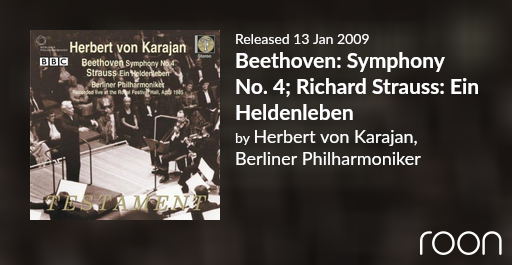
Karajan’s Strauss was stunning as well. ‘‘An Alpine Symphony’’ was given the lavish attention this extended travelogue deserves. Strauss is at his most skillful here, painting - with an extralarge orchestra - a day in the life of a noble Alpian mountain, from night, through a thunderstorm, back to night.
The opening sequence - Night - set the tone for the entire performance. Karajan achieved a quietude on the threshold of silence - at once hushed and noisy, as is any night in a countryside stirred by nocturnal creatures and light breezes. In the progression to the height of the thunderstorm, the orchestra played always for meaning - and for elegant control, rather than the sort of clatter-clatter-crash-bang usually mistaken for Straussian style.
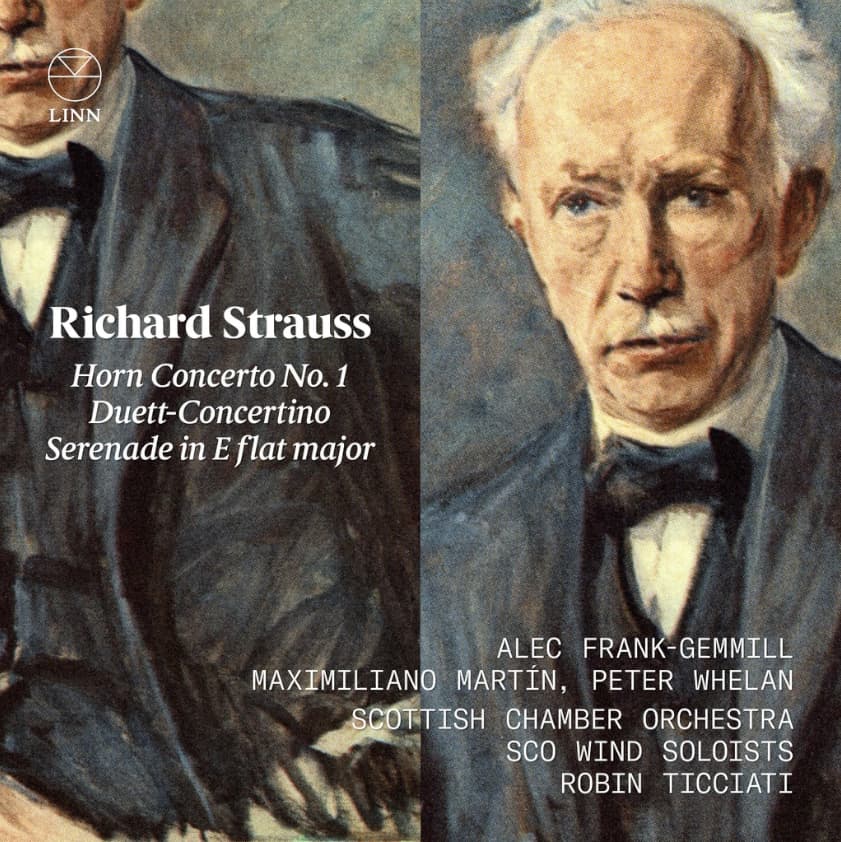
This is Ticciati’s first of two great albums with music by Richard Strauss. I yesterday posted the second album from 2020, with Deutsches Symphonie-Orchester Berlin, the former RIAS Symphony-Orchestra, founded in 1946 (Radio Symphony Orchestra in the American Sector).
Here Ticciani leads the fabulous Scottish Chamber Orchestra, with a particularly beautiful rendition of the Duet-Concertino for clarinet, bassoon, harp and strings. As mentioned by @Richard_Graham, the recording by Linn (2019) couldn’t be any better. This for me has reference quality.
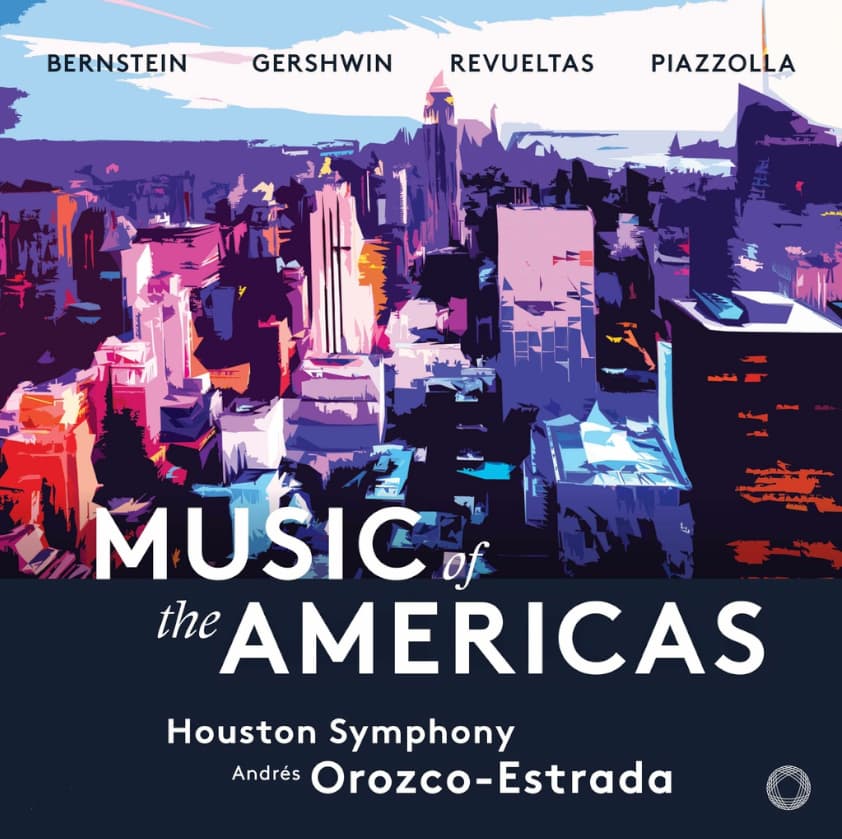
Andrés Orozco-Estrada was born and raised in Medellín (Colombia), and from 2014–2021 he held the position as principal conductor of the Frankfurt Radio Symphony Orchestra. I have close personal ties to both cities, which in part explains why this violinist-director is another artist on my radar.
During the years of his tenure in Frankfurt, Orozco-Estrada also held the position of music director of the Houston Symphony. With both orchestras he recorded and released some very beautiful albums on Pentatone. His 2016 release of Stravinsky’s Rite of Spring is to mention, as is the 2018 release of the R. Strauss Alpensinfonie.
Here we have an album with music from the Americas, also released in 2018, grippingly interpreted and masterfully recorded by Pentatone’s engineering team at the Houston Jesse H. Jones Hall for the Performing Arts. A highly recommended listen…
Hey, classical listening friends; this is just a quick note to let you know that the newest installment of Classical Community arrives tomorrow. Please save a local copy of the current playlist if there are selections you haven’t heard or if you’re archiving our previous lists.
And, as always, thank you for the lively and informative conversation.
Once more back to C.P.E. Bach who for me was a rather recent discovery, but definitely a fascinating one…
In 1742, only one year after his father had published his Goldberg Variations, the 27-years old Carl Philipp Emanuel composed a set of six youthful keyboard sonatas, known as the Württemberg sonatas. They give testimony on how the son of Johann Sebastian, firmly rooted in his father’s musicality, began to develop his own musical language and expression. This set was published in 1744.
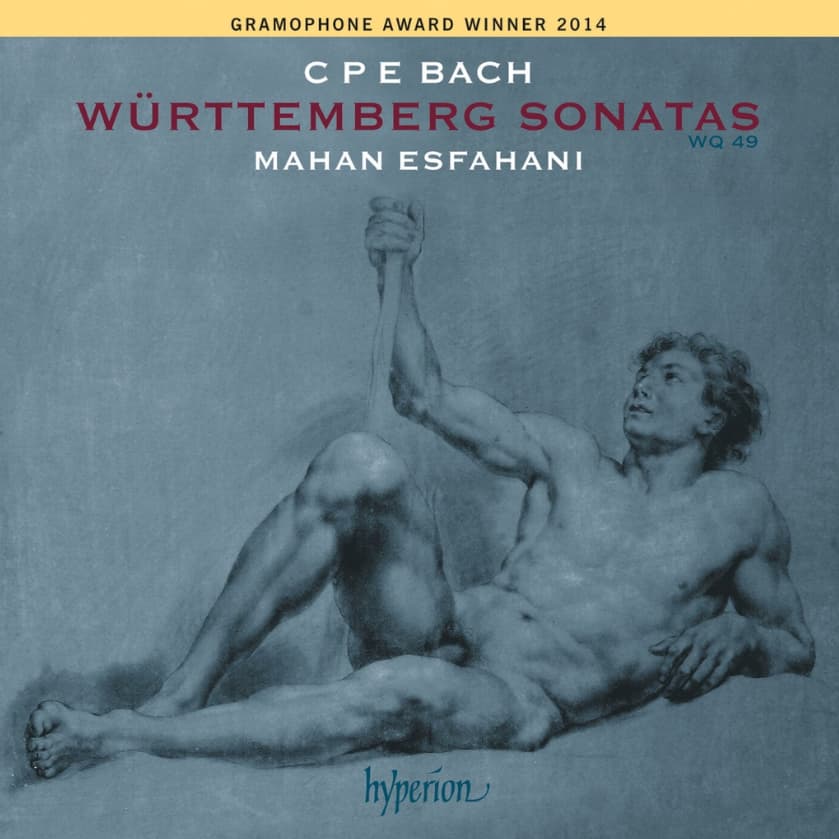
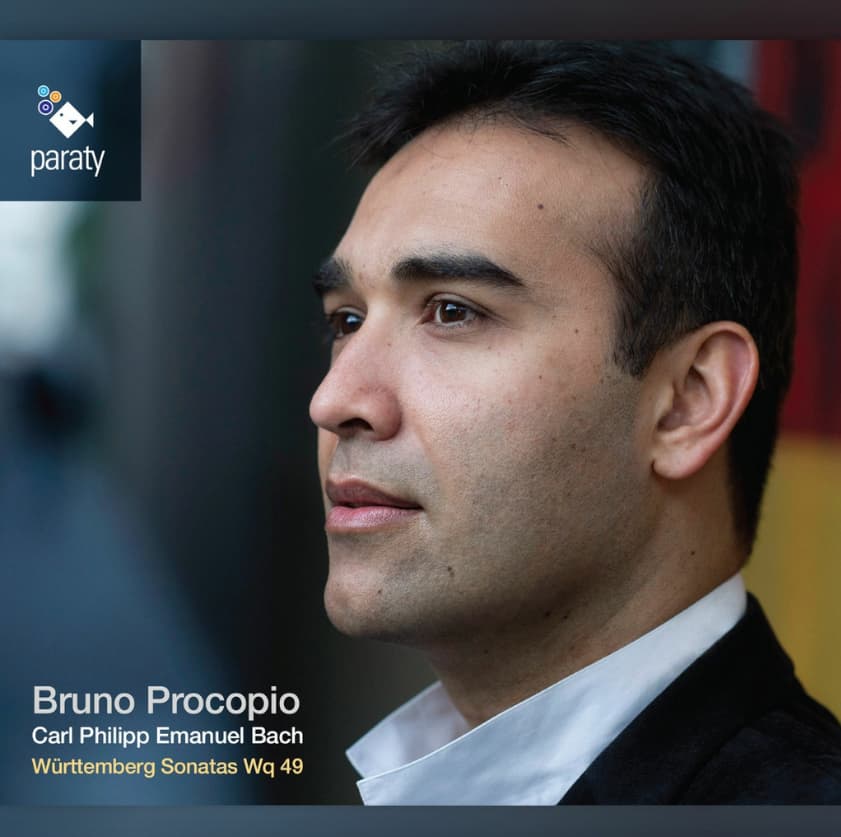
Mahan Esfahani’s 2014 recording on Hyperion is widely acknowledged as the reference interpretation on harpsichord. I would recommend not to pass over the Brazilian Bruno Procopio’s rendition from one year later, which to me is on the same level as Esfahani’s. Both give us beautiful interpretations on harpsichord, which I generally prefer over piano or even clavichord, which may have been the instrument Bach played these pieces on, but which in my mind can’t compete with the richer sonority of a harpsichord.
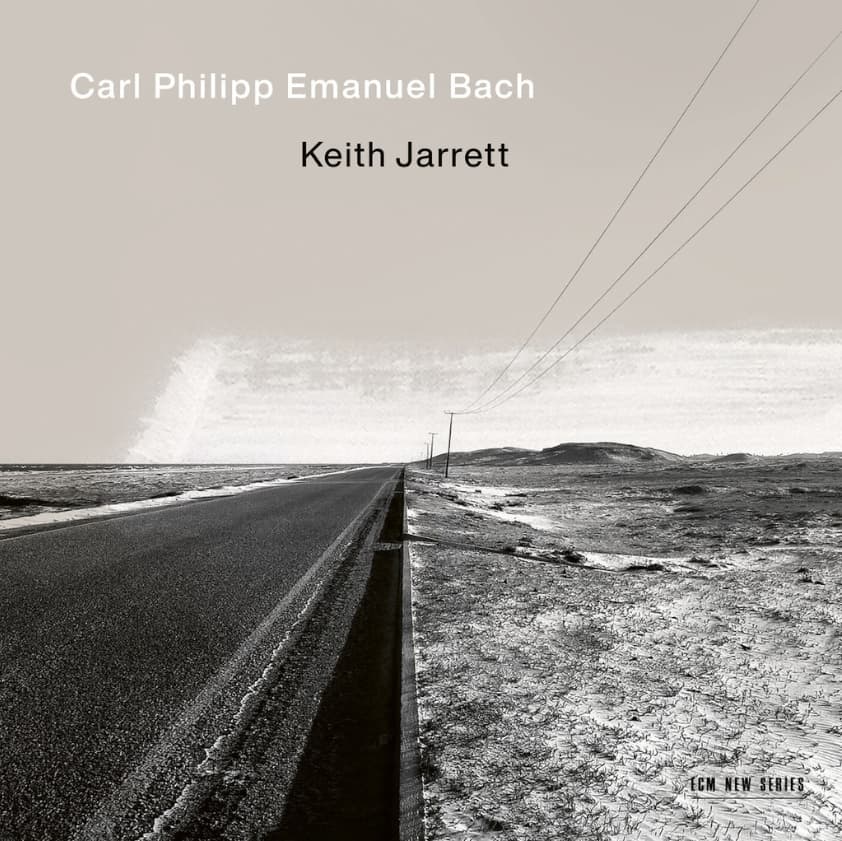
Twenty years earlier, Keith Jarrett had recorded in 1994 the six sonatas on piano for ECM, and the recent release of this album demonstrates how this music seems to suit well his jazzistic inclinations. I find it a very worthwhile listen…
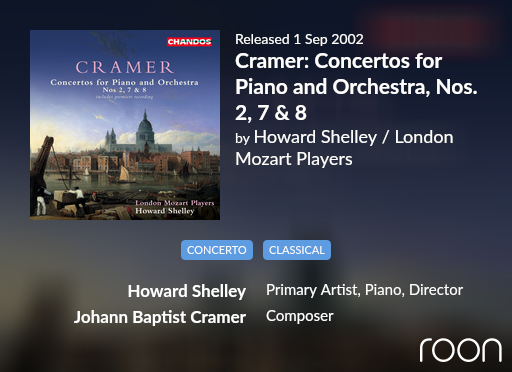
according to Roon, Johann Baptist Cramer was “fashionable enough on the London scene to be mentioned in Jane Austen’s book Emma…”
he was an early19th century piano virtuoso and composers, and these concerti are lovely, somewhere between Mozart and Bach in style, if not quite as inspired as either.
I’m sure there must be Nos 1, 3, 4, 5, & 6 somewhere, but they don’t appear to be on Tidal or Qobuz.
Had to look him up, as his name was new to me. Born in Mannheim (Germany; that’s very near where I have been born), appreciated as pianist by Beethoven and credited as inventing the nickname ‘The Emperor’ for the maestros fifth piano concert when publishing it in London, friends with Haydn, as child taught by Muzio Clementi… quite some interesting bits of trivia in Cramer’s biography…
Now to something very much different…
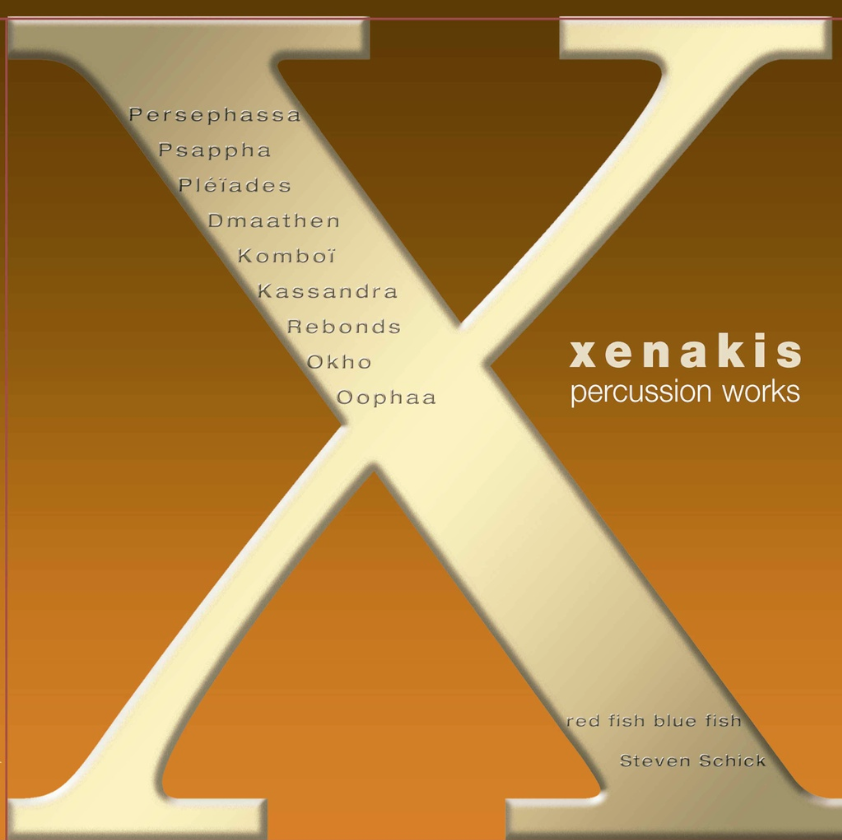
Iannis Xenakis was a Romanian-born Greek-French avant-garde composer, architect and engineer. Of all his many musical works I have only ever listened to his pieces for percussion instruments, as I sometimes quite enjoy listening to the surprising effects, moods, textures and rhythms transported with this kind of music. At the same time, some percussion pieces (and the music designed or engineered by Xenakis falls squarely in this field) allow for a fully new appreciation of what a home music reproduction system is able to do… Recommended listen for when that special mood strikes…
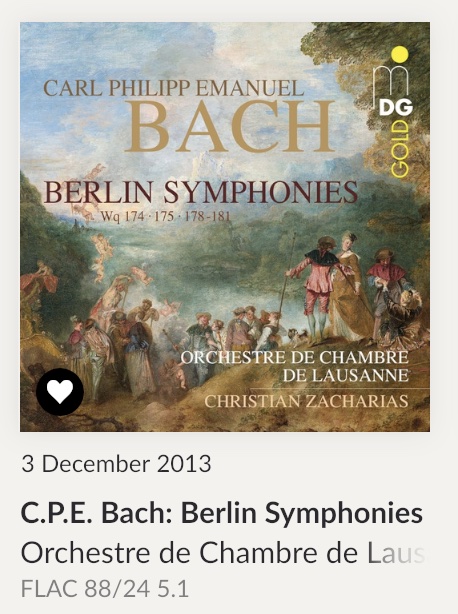
His early, some would say naive, Berlin symphonies recorded by Christian Zacharias and the Lausanne chamber orchestra. That is a match as these are all true chamber pieces, the genre ´symphony´ I find to be rather misleading. In the fast movements Zacharias lets you experience the playfulness of Mozart’s style to come. Some of the slow ones bear a glimpse of Bach´s father’s influence. In a way these might be regarded as a ´missing link´ of musical epochs.
And speaking of epoch, I want to add a selection of exemplarily romantic pieces with lots of ´local colorite´:
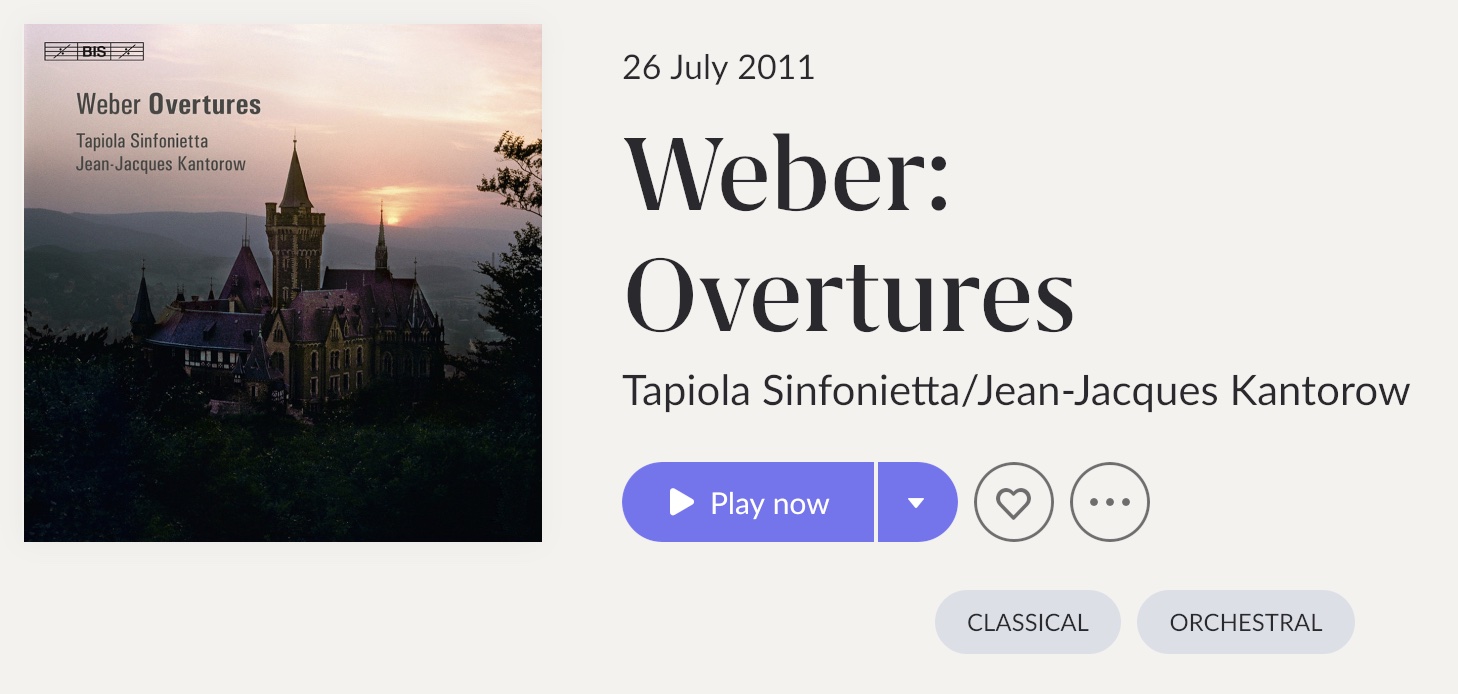
Despite from Weber’s late romantic opera overtures (such as ´Euryanthe´ and ´Der Freischütz´) which are all well-known, I found the ´Jubel-Overture´ (Celebration overture) to be a true discovery. Funny historical side-note: the melody to ´God save the king´ is introduced as some sort of finale which was back then some kind of unofficial Prussian national anthem.
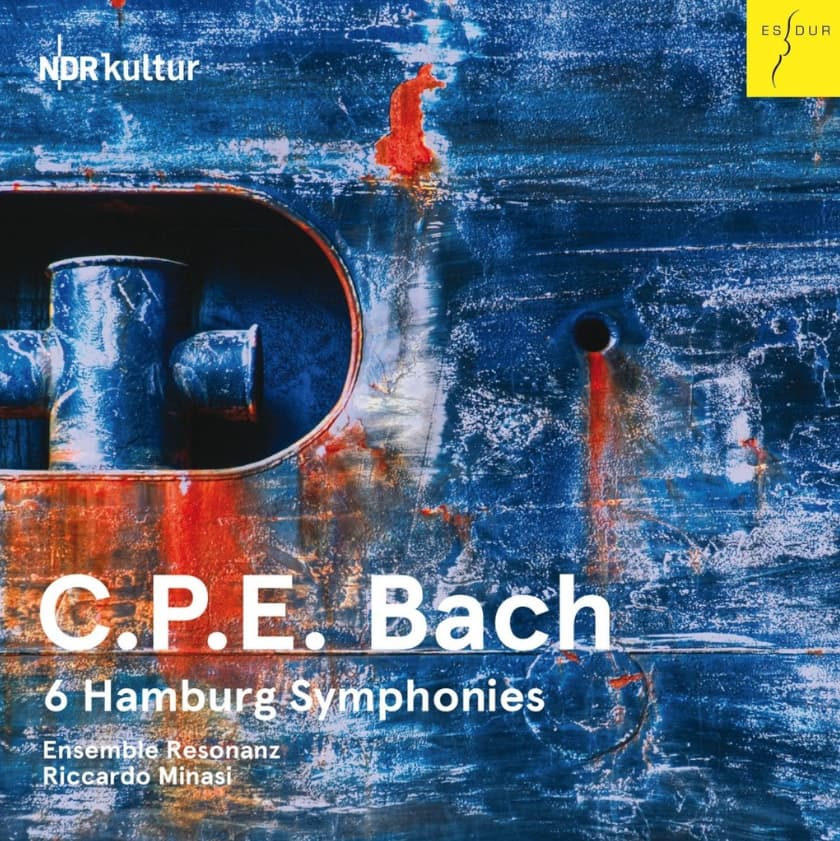
Here then his mature Hamburg symphonies, composed nearly 20 years after the Berlin symphonies. Very appropriately, they are interpreted by Ensemble Resonanz, ensemble in residence at the Hamburg Elbphilharmonie. Both albums go very well together…