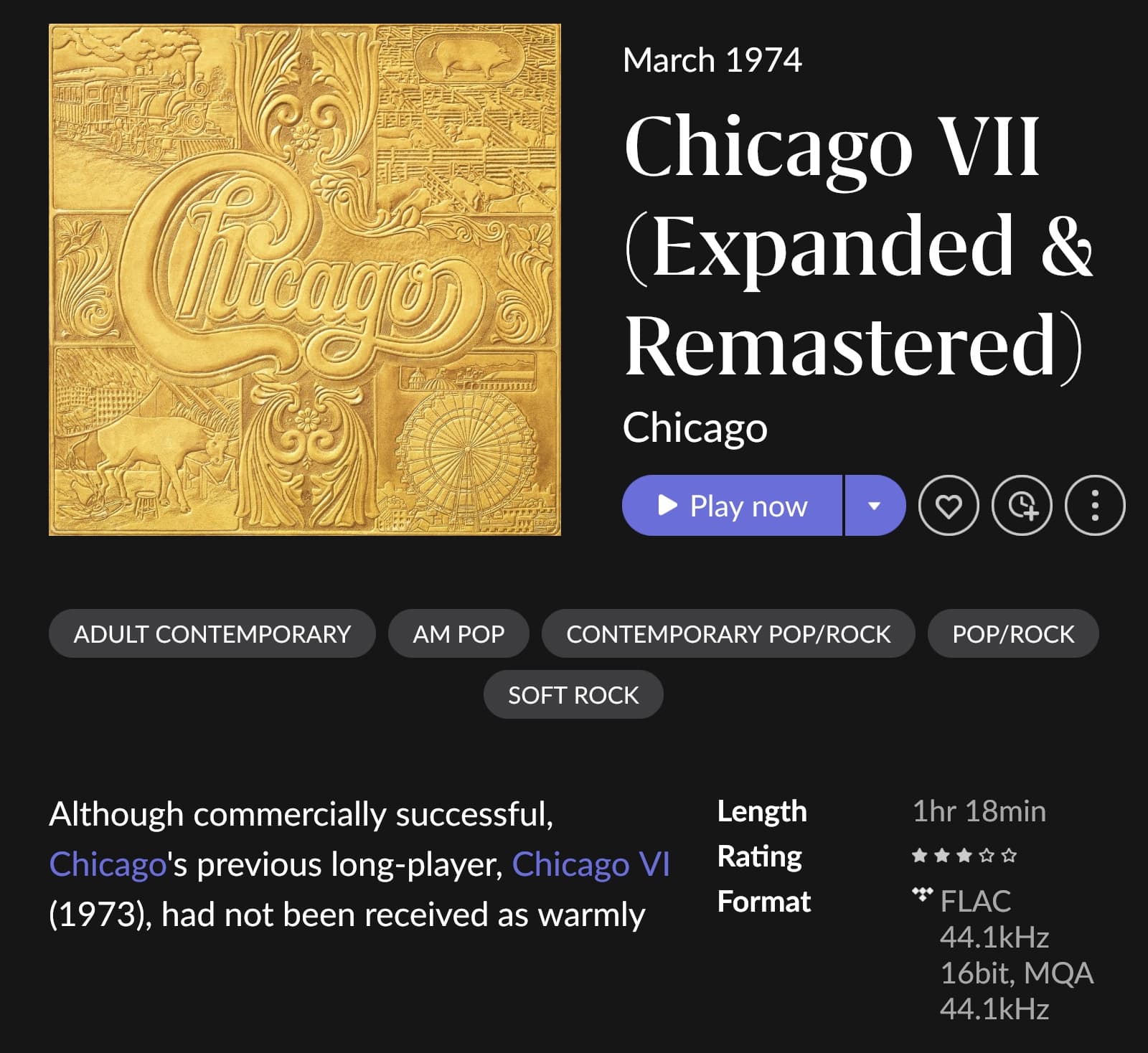
So how come Roon is still showing many, many Tidal albums/tracks as MQA? I thought over a year ago Tidal removed all MQA from its catalogue?
Maybe is there a way to ‘reset’ my Roon database so that it no longer shows MQA for Tidal albums?
Or is the strategy just to ignore it?
thanks,
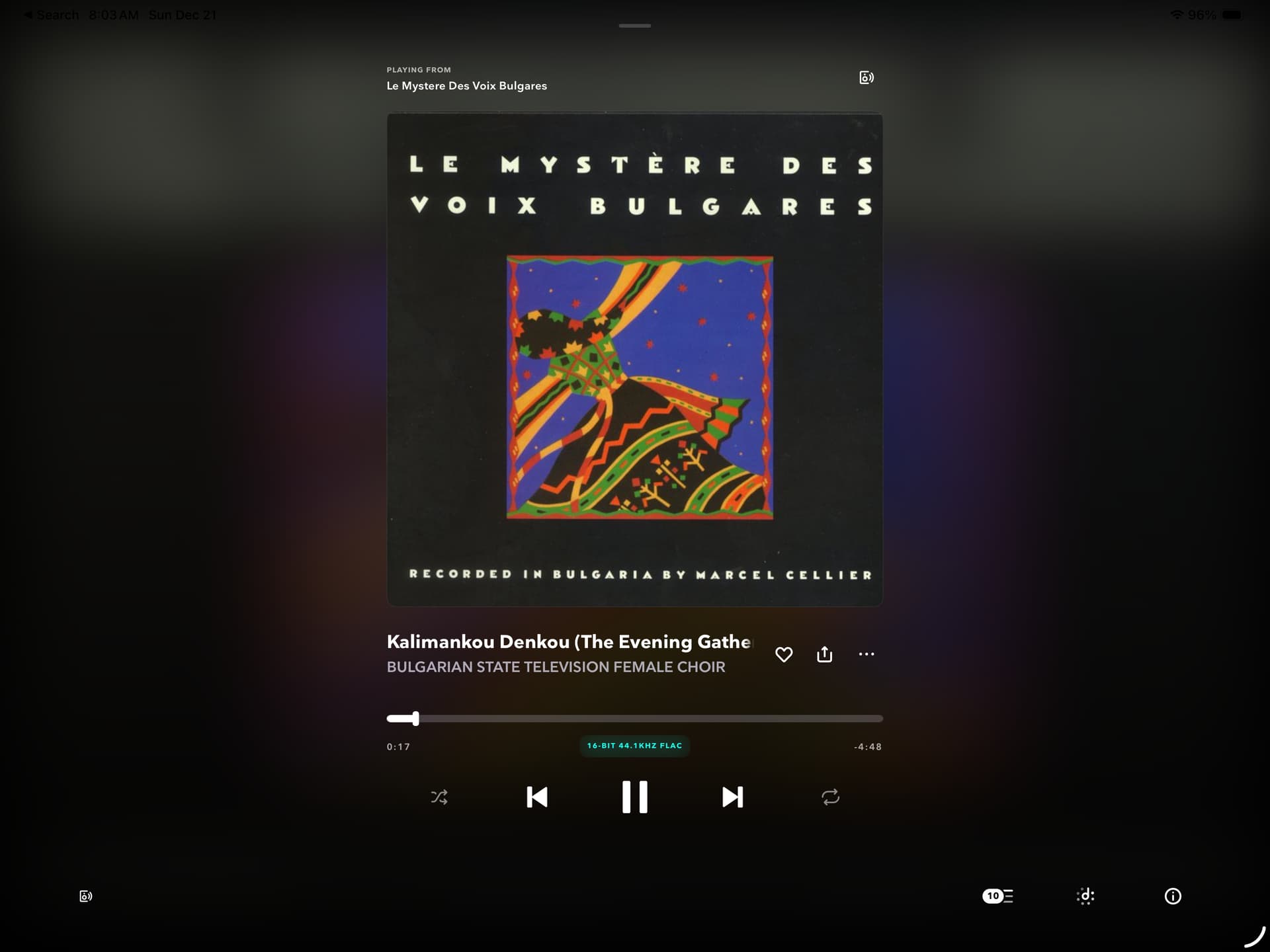
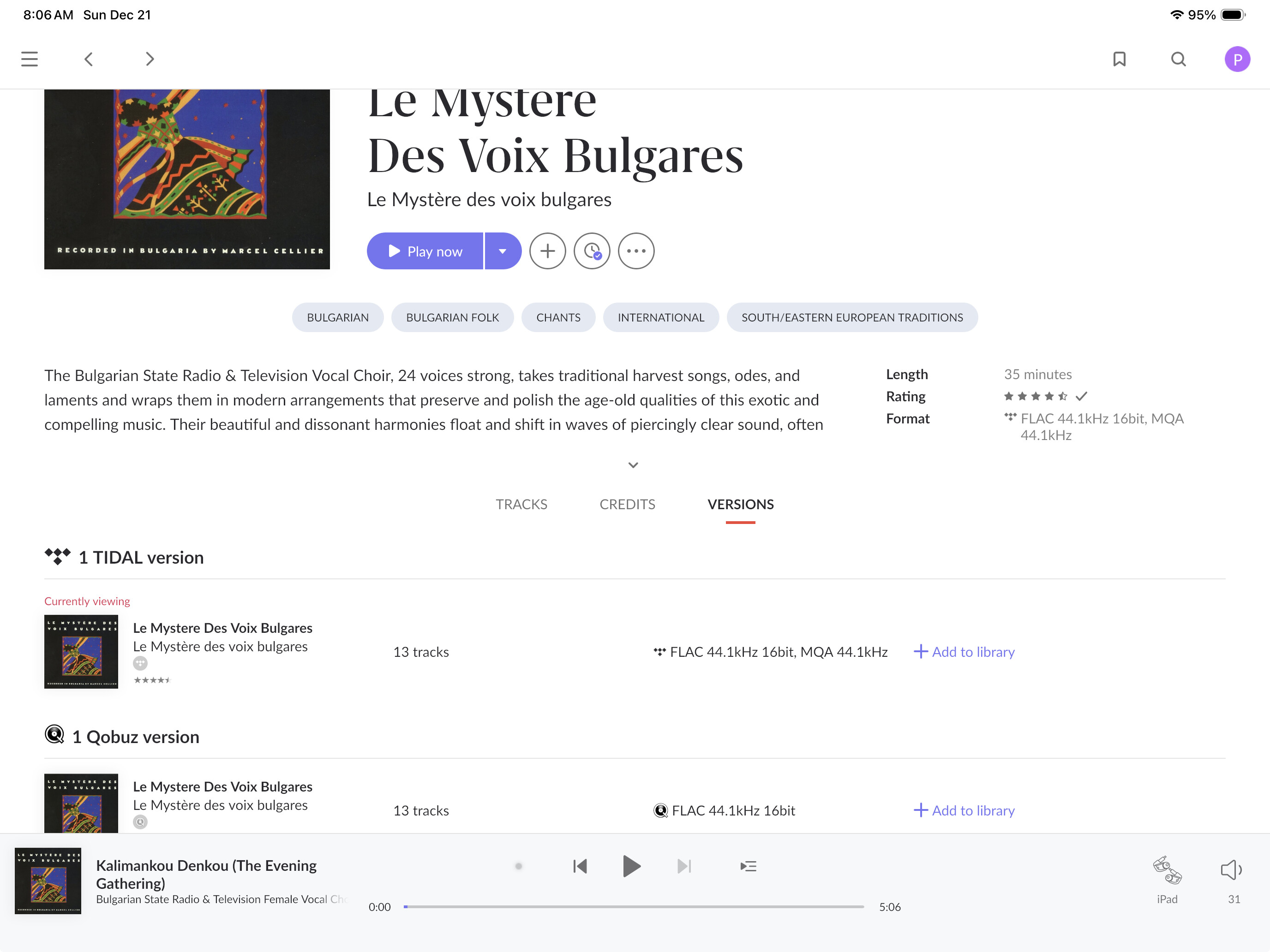
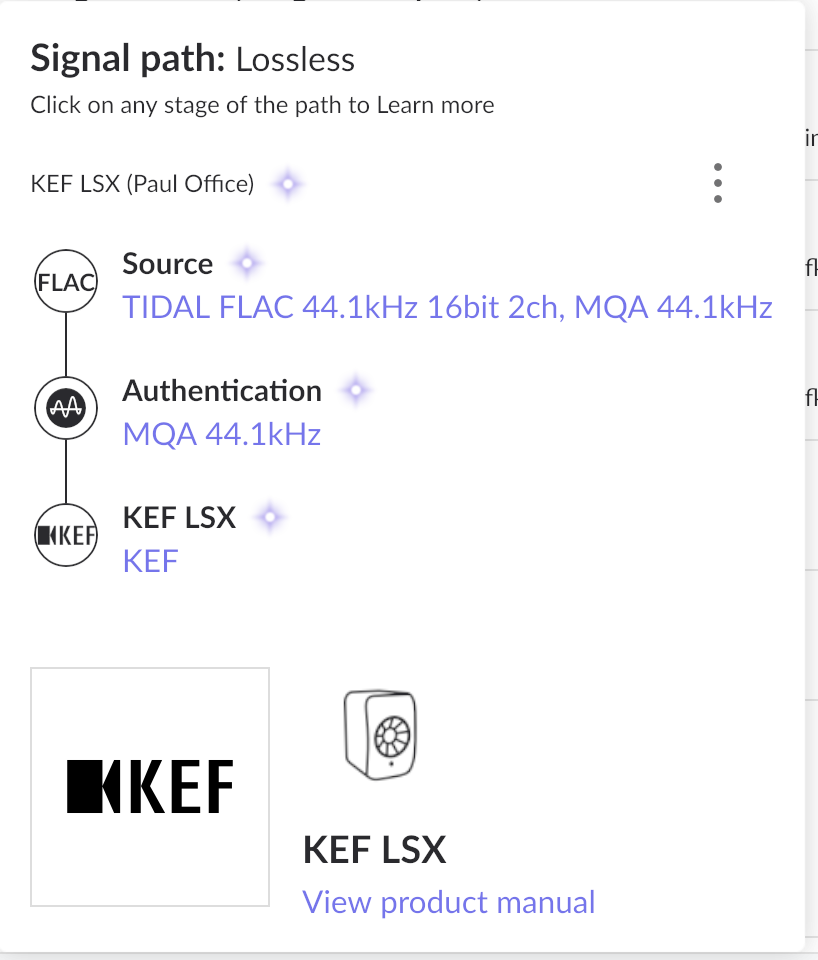
PS for example (from today’s Sunday Review in Pitchfork … a very interesting choice btw!) : in the Tidal app it shows FLAC ; in Roon it still shows MQA
According to roon 1142 of 4323 tidal albums in my library are still mqa, or about 26%.
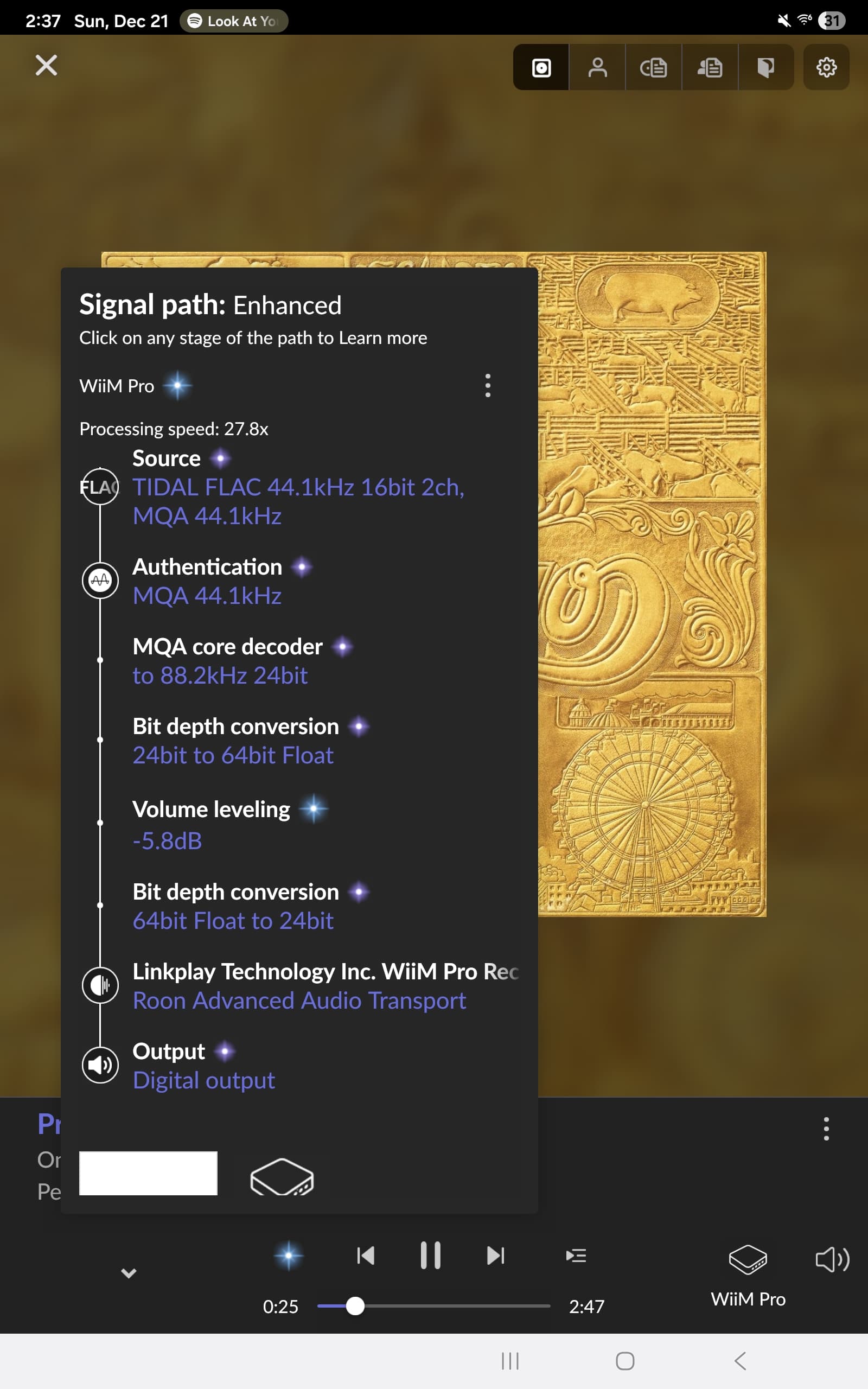
My understanding is that tidal turned off decoding in their app and relabeled remaining mqa titles as 16/44.1. Playing through their app gets you the backward compatible flac layer or whatever it is without any “unfolding” or upsampling. I think I read somewhere that it is about 13/44.1 with reduced dynamic range and some supposedly inaudible high frequency noise. Roon still detects and decodes them.
Tidal says it’s up to the labels to replace their titles with standard flac.
Not defending MQA, just clarifying some misunderstanding.
Most/all of the 16 bit 44.1 kHz MQA presently or ever on Tidal are native 16 bit 44.1 kHz recordings. They are not derived from higher sample rate masters, so there is nothing to fold/unfold. In such cases, MQA encoding is just some preprocessing and decoding is just some upsampling. The supposed 13 bit resolution approximation does not apply because no bits are being used to encode ultrasonic information that never existed in the original sample rate 44.1 kHz recordings in the first place.
This type of 16 bit 44.1 kHz MQA on Tidal frequently gets confused and conflated with MQA-CD, an actual format that has seen some adoption in Japan but little distribution elsewhere. Most/all MQA-CD releases are derived from higher sample rate masters — some of them ridiculously high 352.4/384 kHz original sample rate masters — that MQA converts to Red Book CD compatible 16 bit 44.1 kHz. That form of MQA may have some folded/unfolded ultrasonic information encoded, and if so, the 13 bit resolution approximation may apply.
This story is entitled ´Night of the living dead audio formats´?
Just the possibility that such might be played as usual 16/44 with solid 3 bit noisefloor, made me quit my Tidal subscription instantly. Moved to Qobuz and never looked back for a second, was impressed by better quality of metadata and less confusing album versions/chaotic reissues.
Technically correct, if we are talking about albums once mastered for standard CD resolution, which are supposedly the vast majority. But how does Tidal/roon differentiate between a regular 16/44.1 stream and a 16/44.1 ´worth´ activating MQA upsampling? And how could the user make sure not to listen to any file which is actually based on an MQA-CD mastering even if that case is rare?
IME, about half of the tracks that Roon shows as MQA, now playback as standard 16/44 files.
Pretty much the only reason I keep Tidal is the fact there is still a good bit of MQA available, at least for the music I listen to. there are many wonderfule classical recordings from the 60s, 70s, and '80s that were remastered, encoded for MQA, and thankfully, have never been replaced.
MQA is shipped inside a FLAC container. It takes an MQA decoder to open the container doors and unload the MQA. A non MQA decoder can’t open the doors and sees it as a FLAC.
That’s my logistics background logic explaining it.
“Lossless” in Free Lossless Audio Codec (FLAC) refers only to its own internal compression/decompression scheme, not the actual content of a FLAC container. For an extreme example, anyone could take an MP3 or even a JPEG — both lossy formats — and change the file extension to WAV, then encode/decode losslessly as FLAC.