Been investigating getting a get DAC that is Roon Ready. I have no need for any other streaming. I just want something similar to the Mola Mola Tambaqui. No need for a preamp or separate streamer. Now, I know I will never match the Tambaqui, but in theory, I could get close. Spent a bunch of time on ChatGPT working out parts, and I’m down to:
This is the heart of the build: it breaks timing/noise coupling between the Pi and the DAC.
3) “Best clocks you can buy” (practical endgame)
IanCanada / RFX SC-cut OCXO pair:
45.1584 MHz (44.1k family)
49.1520 MHz (48k family)
Must be ordered/used as a pair; explicitly positioned for audio frequencies and recommended with a very clean 5V supply.
This OCXO pair is the “serious money where it matters” step. It is also the least ambiguous upgrade path because the Q7 III is designed for socketed XO/OCXO use.
4) DAC (dual-mono) + output stage (balanced XLR)
DAC board
IanCanada ES9038Q2M Dual Mono II DAC HAT
Dual-mono ESS implementation with raw balanced current outputs intended for high-quality external I/V/output stages; direct 3.3V power inputs intended for ultracap/battery supplies.
Balanced XLR output stage (pick one)
Option A (recommended for simplicity + “purist” path): IanCanada Transformer I/V (fully assembled)
Provides both XLR and RCA outputs, passive (no power supply), specified 4 Vrms on XLR / 2 Vrms on RCA, and explicitly designed as an output stage for current-output DACs.
Option B (active, very high-performance): IanCanada OPA861 MkII Zero-Feedback Balanced I/V
Zero-feedback current-to-voltage conversion approach using OPA861; intended for balanced current-output DAC configurations (including ESS dual-mono).
If you want the build to be “done and quiet” fast, choose Transformer I/V. If you want maximum tweakability and are comfortable managing analog rails/layout, choose OPA861.
Along with a detailed power plan and a 3-4U box for everything.
Yes, it is easier to just buy, but it’s also fun to build something using available parts.
Item number 2 above is the reclocker. This setup will not be cheap (in the $1200-1500) range, but it is theorized that it would compare to off the shelf systems costing $9k or more. Won’t look as good, but it might be a fun experience.
I’m not sure you understand what I’m saying. I2S to I2S requires PLL, while USB to I2S doesn’t. Both give you an I2S output to play with.
Regardless, I’m buidling a DAC with AK4499, so I can fully control both the up-sampling and the modulator. I’m using an XMOS USB board (at least for now).
I will look into that. I’ve built other electronics but never a DAC. This is what I came up with after a lot of web and ChatGPT. If the USB makes it easier, then I can try that.
BTW, this is exactly the reason I posted. I was looking for other experiences.
Interesting project. Do you feel confident building the circuitry and firmware/software necessary to access the functions such as filters on the DAC chip? I think I could put the components together but managing the chip functions seems quite intimidating.
I’m a software engineer, and I’ve built many a computer. From what I can tell, most of this build is hooking boards together. There isn’t too much firmware to play with.
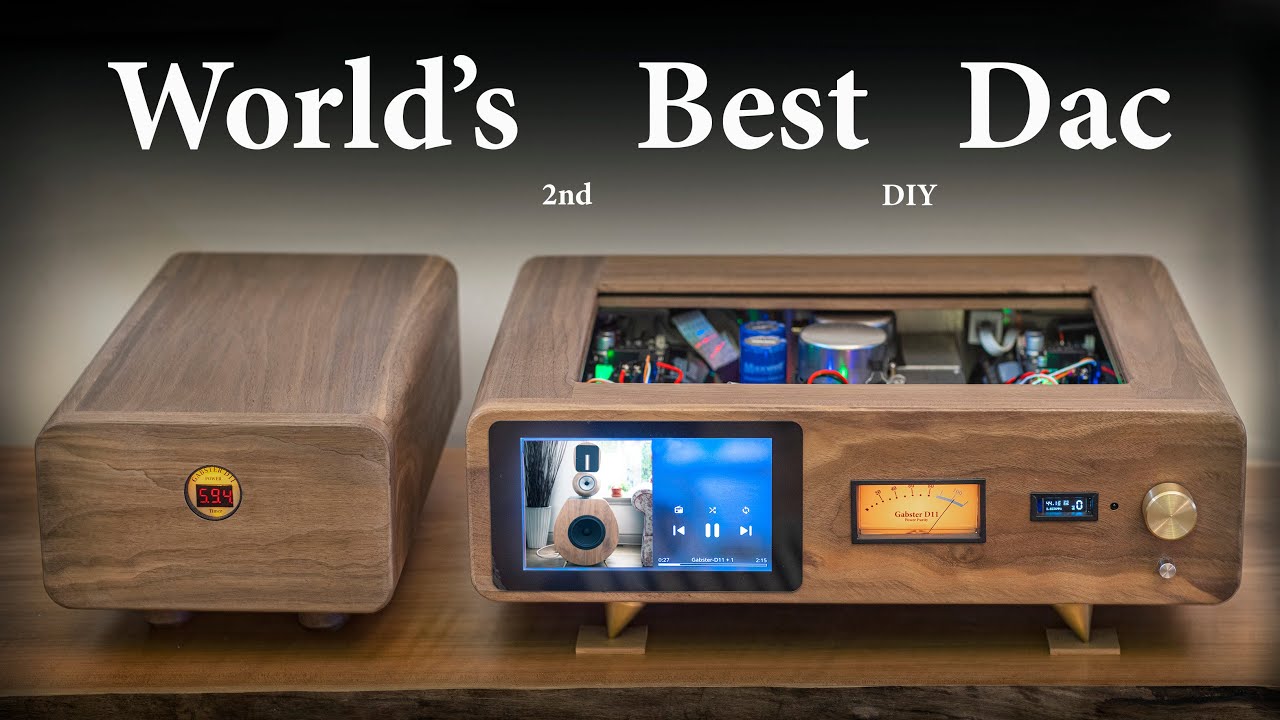
This guy has a bunch of DIY builds that are similar. He builds his cases from wood or leaves everything out and visible. Here is an example:
I have some more research to do, and then I will see about getting started. Getting feedback here is part of the research.
Spent a bunch of time with ChatGPT to finalize a parts list and process. Looks mostly like plugging things except for dealing with that case. That part gives me the most pause. Like I said, the total parts are not cheap ($1200-1400), but it could rival commercial systems that would cost > $10k USD.
Reference Roon Ready DAC
DIY Roon-Ready Reference DAC
Build Packet v1.0
1. Design Intent
This project builds a Roon Ready, Ethernet-only, digital-first DAC using a Raspberry Pi running RoPieee, a FIFO reclocking stage with SC-cut OCXO master clocks, a dual-mono ESS DAC, and a passive transformer I/V output stage.
All clock authority resides at the DAC, not the network endpoint.
Volume control is handled in Roon.
The design prioritizes determinism, electrical isolation, passive thermal stability, and long-term appliance-grade operation.
2. System Architecture
Roon Core (Network)
│
│ Ethernet (RAAT)
▼
┌────────────────────────────┐
│ ZONE 1 – DIRTY DIGITAL │
│ Raspberry Pi 4 │
│ RoPieee (Roon Ready) │
│ Powered by PurePi II │
└──────────────┬─────────────┘
│ I²S (isolated)
▼
┌────────────────────────────┐
│ ZONE 2 – CLEAN DIGITAL │
│ FifoPi Q7 III │
│ • FIFO buffer │
│ • Digital isolator │
│ • OCXO 45.1584 MHz │
│ • OCXO 49.1520 MHz │
│ OCXOs powered by UcPure 5V │
└──────────────┬─────────────┘
│ I²S (clock master)
▼
┌────────────────────────────┐
│ ZONE 3 – ANALOG │
│ ES9038Q2M Dual Mono DAC │
│ Transformer I/V (passive) │
│ Balanced XLR outputs │
└────────────────────────────┘
3. Bill of Materials
Digital / Endpoint
Raspberry Pi 4 Model B (4GB)
Samsung EVO Plus microSD, 32GB
Power
PurePi II (5V ultracap + 3.3V LiFePO4)
UcPure 5V (OCXO supply)
Clocking / FIFO
FifoPi Q7 III
RFX SC-cut OCXO 45.1584 MHz
RFX SC-cut OCXO 49.1520 MHz
DAC / Analog
ES9038Q2M Dual Mono II DAC HAT
Transformer I/V – fully assembled
Neutrik NC3FD-L-1 XLR connectors (2)
Enclosure
ModuShop Dissipante 3U / 400 mm
Internal mounting plates (400 mm) ×2
Rubber feet
Rear Panel Hardware
Schurter 6200.2200 IEC C14 (fused)
Neutrik NE8FDY-C6 Ethernet feedthrough
Wiring / Misc
Short I²S jumpers (≤5 cm)
16–18 AWG ground wire
M3/M4 stainless hardware
Heat-shrink, crimp lugs
Estimated total cost: $1,300–$1,450 USD (excluding shipping/tax)
Hmm, not to be too nit picky, but, this is not a Roon Ready DAC; I would classify the project as a RoonBridge streamer / DAC combination. Roon Ready means very specific things that is different than Roon Bridge.
Ok, maybe I don’t have the semantics 100%, but it is as close as a DIY system built on Ropieee can get me. My Roon ROCK will see it as a valid endpoint. Will it have full Roon Ready certification? No, it won’t, and I’m good with that.
Edited the title to not imply full Roon Ready certification. Not that there was ever any plans to sell it. Just an interesting project to think about and get some input from other enthusiasts.
ChatGPT can be deceitful…
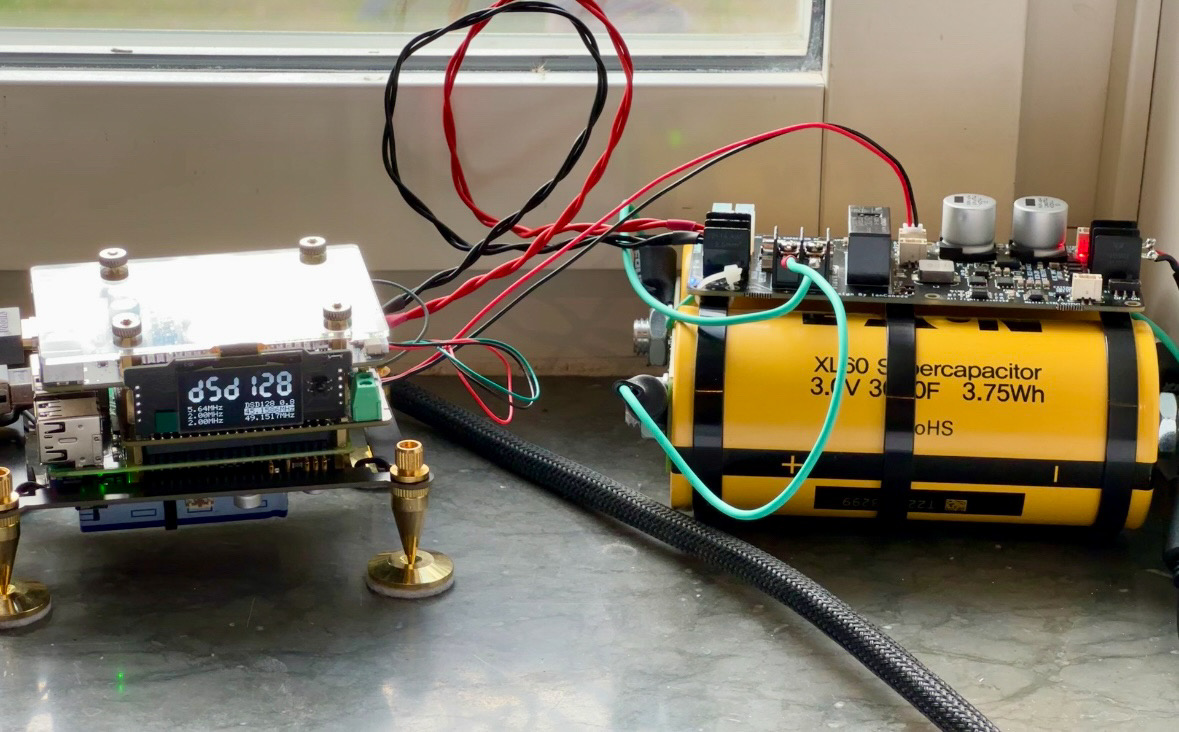
The FifoPi Q7 III takes 3.3V clean power. I am running a similar project, but decided against the DAC-part, so using the HDMI Pi Pro rather:
Nice! Those huge super capacitors make me nervous. I’ve been around capacitors that have blown up. I can’t imagine one of those guys going off.
As far as ChatGPT being deceitful, that is certainly possible. I did my best to steer it towards existing parts from Ian Canada, as well as what Gabster on YouTube has done. As far as I can tell, it’s in the ballpark, but I posted here for a reason. Validate the plan before I start.
I wasn’t aware of the special OCXO crystals you referred to, they DO require 5V to power them, but they are only possible to mount on a special adapter board with 5V MOLEX connectors for power input. Also requires an adapter for the Fifopi Q7.
You do absolutely want to feed the FifoPi Q7 a separate clean 3.3V though!
I see the point of Oven controlled oscillators, but the need to power separately, along with adapter and cables likely shows some loss in precision. I think the net win compared to IAN’s SC Pure crystals might be on the lower part of the spectrum? (Just speculation though).
IAN shows some piccies of the OCXO’s in their adapters: