Expanding on what @Burkhardt_Petermann said. It took me way too long to figure this out (it’s not that hard I just had a mental block that day) with embedded so I’ll spare you the trouble by stating it here.
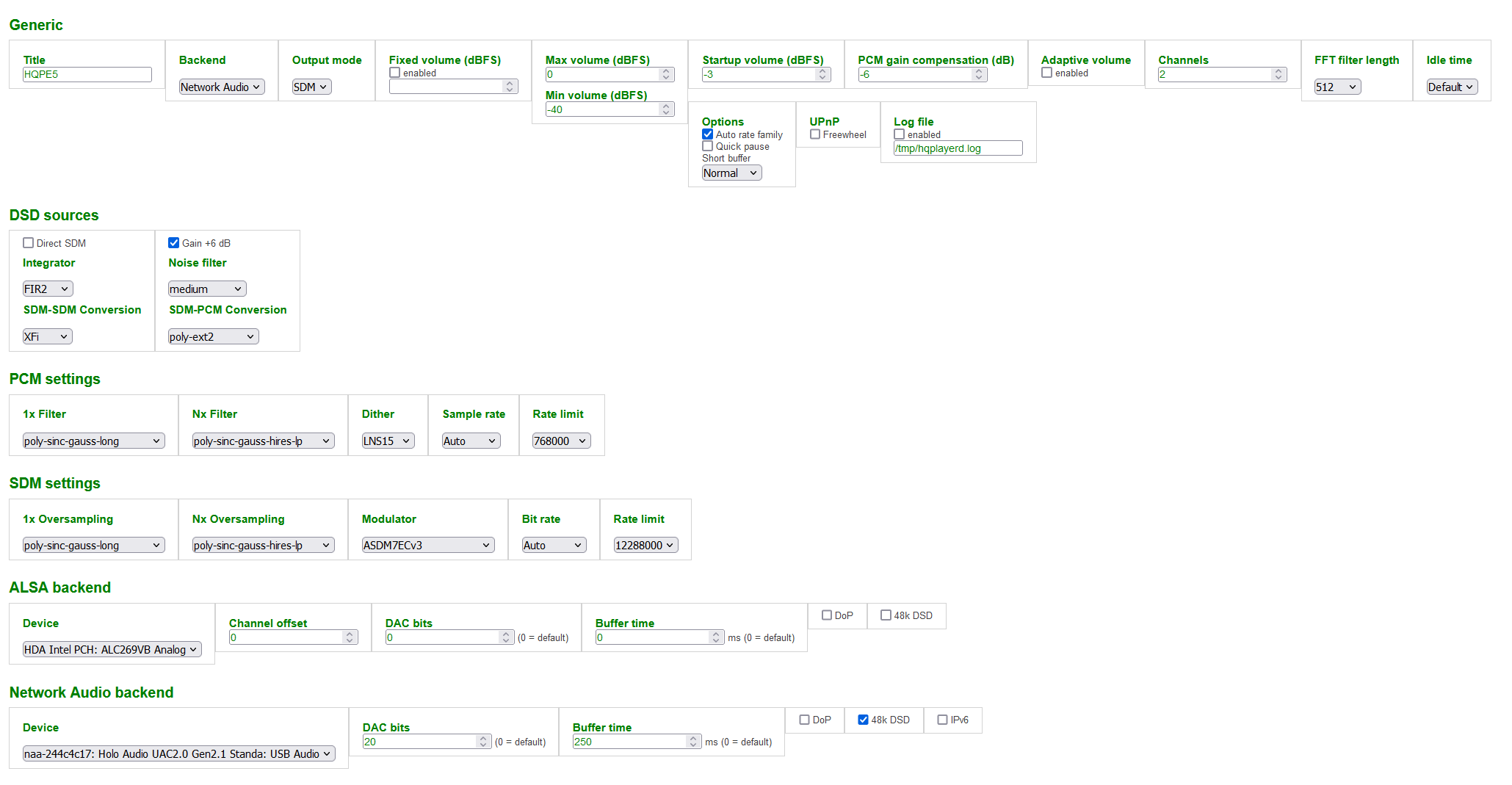
In embedded the “rate limit” for DSD is multiples of 44.1 or 48. If your DAC supports 48kHz clocks and you want to use them then use 48kHz in the following.
DSD64 is “64 times 44.1”. DSD256 is “256 times 44.1”. In embedded, it is this “times 44.1” you need to set. And, of course, if you want to run native 48kHz clocks you multiply by 48. For DSD256 that looks like: 256 (the DSD rate) x 48000 (base clock in Hz) = 12288000
That’s where that number comes from.
Additionally, “auto rate family” adjusts if you keep base clock or swap base clock. That is, 44.1 (and multiples like 88.2) content goes to 11289600 or 1228800. Only some filters support this.
Hope I got that right, as always, happy to be corrected. But how these all related was a small learning curve my dense head took way too long to understand so hope this helps.
For me, there is a world of difference between the two devices. Spring 3 KTE is by far the best DAC I have ever had.
BUT: Of course, this always depends on personal taste.
Thank you for the feedback.
Now, I’m hesitating between the Cyan 2 and the Spring 3 level 2 (KTE too expensive).
The Cyan 2 costs half price, but is it worth the difference in listening between the Cyan 2 and the Spring 3 L2? I have no doubt that the Spring 3 sounds better
L2 is perfectly fine, all my three Spring’s are L2. I could not justify the extra cost of L3/KTE. While the L1 → L2 seemed reasonable.
Spring 3 gives you double the DSD conversion elements, and you can have integrated analog volume control module. If these are important aspects. Cyan 2 of course already performs extremely well. But only you can tell if the extra cost of Spring 3 or May is justifiable for you.
We can see different photos of the Spring 3 with USB2 but also USB3 mechanical socket.
The latest models are USB3 like the Cyan 2 I suppose?
To differentiate the Spring 3 L1 / L2 and KTE models, only the label differentiates them externally, or is there something else?
I think all the ones that I have, have USB3 socket. Although my Spring 1 is in the box in storage, so not 100% sure about that. But my Spring 2 and Spring 3 that are both in active use have USB3 socket.
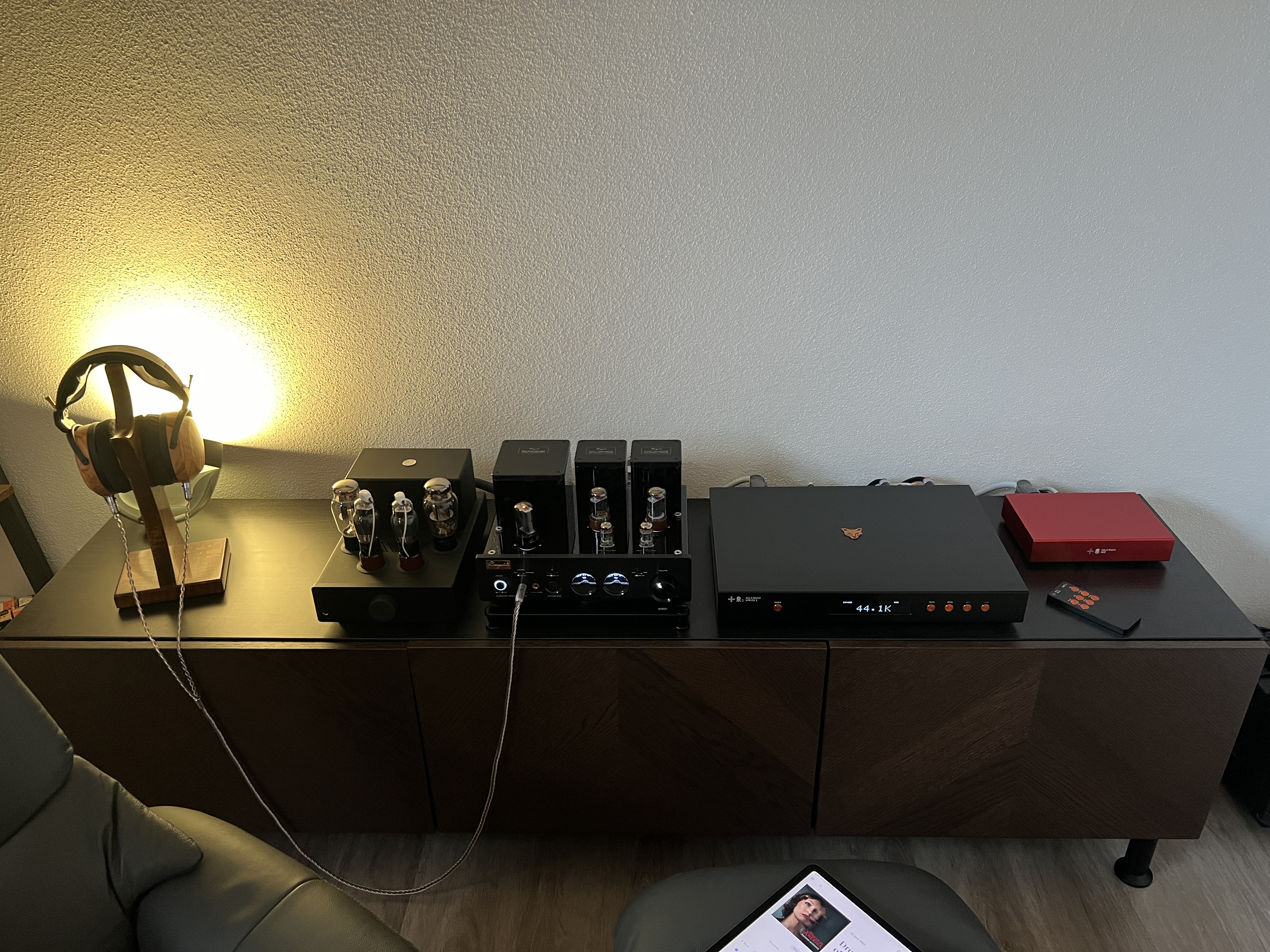
My NUC sits in an internal cupboard (with NAS etc), and is accessible over the local network. I think originally the idea was to have endpoints away from the host roon PC, Roon themselves recommend this I think.
For those that have a Cyan 2, what are you doing about the lack of power button, are you leaving the unit on or are you turning off when finished listening?
Actually the orange USB2 input is the better module, used in the KTE model. This is confusing since it’s easy to think that the blue USB3 connection would be better.
There are certainly differences between Cyan 2 and Spring 3. Spring 3 is slightly better. Is it worth the price difference is something one needs to decide.
And for me (what I’ve compared) the May KTE is really superior to the Spring 3 KTE.
Today I’ve changed in HQPlayer from DSD256 to DSD512 and the sun rises…
For me, the subtil changes in SQ are sometimes essential and worth to invest more money.