None of my discussion with Jussi about the Singxer DAC (which Victor decided to chime in with a story of Linn turntables in the 1970’s) was about sound quality
It was simply, is DSD Direct working correctly or not
None of my discussion with Jussi about the Singxer DAC (which Victor decided to chime in with a story of Linn turntables in the 1970’s) was about sound quality
It was simply, is DSD Direct working correctly or not
Agree. we should probably make it clear that measurements are for eyes. Of course, there should be some correlation to the sounds it produces but it is not as clear cut.
One thing always puzzle me… DSD Direct = sound better? I have no answer?
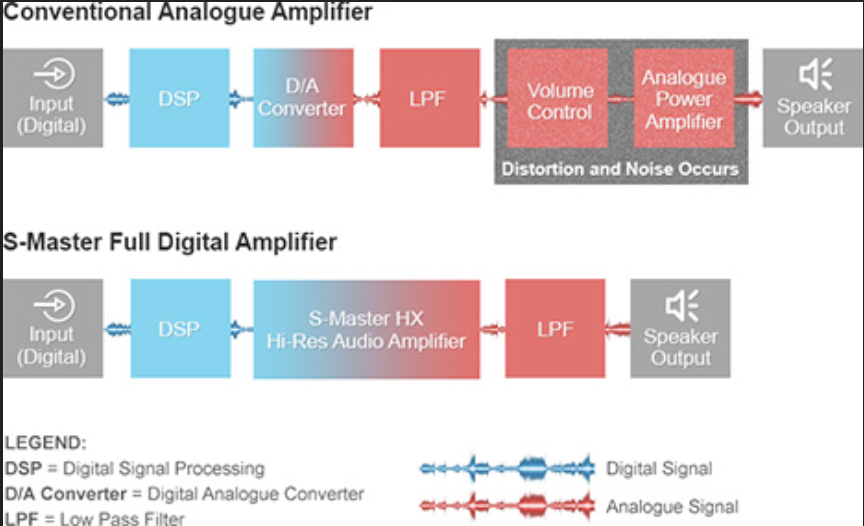
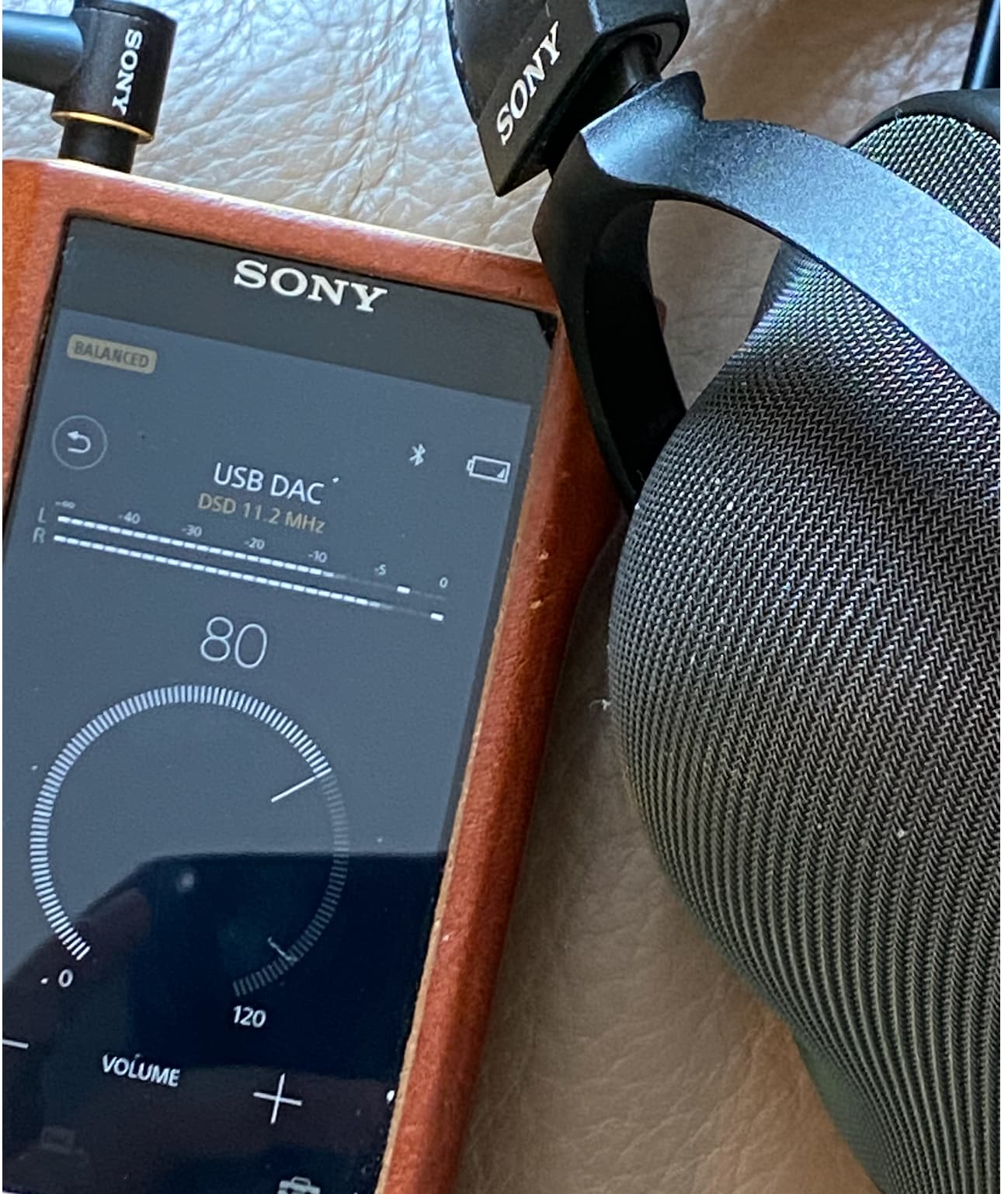
BTW, back to measurements, I would suggest you guys to measure Sony’s walkman if possible. They support “USB DAC” mode and they use Sony’s own S-Master HX chip for the D/A converstion/amplication.
The DSP’s stage can be bypass. Looks like a “DSD Direct” implementation to me. It would be great if you or Jussi can verify it as it may open the door for more low cost DSD Direct DAC for HQPlayer playback. Sony’s walkman is quite easily available at a reasonable price. Cheers.
Great, if you buy it and send to me and cover the return postage, I’ll measure it
I’m very happy with my Cyan2 for my headphones listening
I’m not interested in buying just to help someone else see a measurement- hope you can understand this
Sorry for not being specific.
What I mean easily available should also mean “some of your nearby music lover friends may have one”. If it happens that you cannot find one, just forget it.
I am not ready to be alway from my 1Z as I am using it daily with HQPlayer 
That diagram is incomplete and partially incorrect. It practically omits the DSD handling completely, Only thing about DSD there are the DSD pins marked there. Then rest is very generalized view of the PCM path. They have that same diagram as copy-paste everywhere, on DACs that don’t have DSD support they just omit the DSD pins.
But in TI/BB chips, the only way those are capable of doing DSD is DSD Direct. It is obvious from other parts of the datasheet too.
The DSD1793 supports the DSD format interface operation, which includes out-of-band noise filtering using an internal analog FIR filter.
The DSD mode provides a low-pass filtering function. The filtering is provided using an analog FIR filter structure.
Four FIR responses are available, and are selected via DMF[1:0] of control register 18.
Then if you look at the “Table 3. User-Programmable Function Controls” table, you can see that there is no digital volume control for example available for DSD. And the filter selection registers configure the analog FIR (note at the bottom of the table).
ESS similarly omits DSD support in their earlier diagrams, and now on 9039 the diagram is even more broad and tells even less. You need to actually read into the register descriptions to figure out how it works.
And in the end, doing the broadband measurements like I’ve been doing and combining that with knowledge how these DACs are technically implemented, you can deduct fairly accurately their operation.
I have quite a lot of DACs for HQPlayer development purposes. If I need to spend considerable amount of money, it need fairly good assurances that the device is going to work as expected though… Rolling a dice level assurances are not enough.
Finding best such DACs is topic of this thread…
But it doesn’t mean this:
Because measurements won’t tell you everything. Two well measuring DACs will still sound different. That’s why I always say that getting a demo loaner is best option.
Like when I recently needed a new amplifier for the livingroom setup. Because old one started to fail (it couldn’t keep the bias correct on the other channel and I got tired of readjusting it all the time). I had many amps on demo loan and selected the one that worked best on my setup, to my ears.
This 1Z I can find is 3100 EUR, is not particularly inexpensive for my development budget  , although I have other devices of that price category as well… But such price needs fairly good assurances and not something I buy on a whim.
But looks like similar lower power amplifier as the “power DAC” I’ve been involved designing for loudspeaker use.
Different types of modulation…
Is there any objective measure that can tell modulation type A is the best amongst all the other modulations? Seems not. We were told to pick the modulation that sounds the best to us. It seems to indicate there is no such thing as best modulation based on certain objective measurements.
Here comes the following up question. What is “bit perfect”?
There is a simple answer: no one is touching my music in the signal path, i.e. 0/1 at the source is still 0/1 just right before the final D/A process.
Sounds simple but not easy (at least for DSD).
PCM source ===> NOS R2R D/A can be “bit perfect” but R2R has its own issues
Once DSD is involved, the whole process is changed as there is a modulation process in between PCM and DSD.
PCM source ===> modulation ===> DSD ===> DSD Direct D/A
With DSD Direct, we can ensure the second part is “bit perfect”, i.e.
DSD ===> DSD Direct D/A
However, looks like the first part can never be bit perfect. You pick a different modulation would end up with a different DSD data stream.
So, the whole process (PCM ===> modulation ===> DSD ===> DSD Direct D/A) can never be bit perfect. The modulation selection processing is kind of like tone adjustment using bass, treble knobs on the pre-amp (Of course, it is different from bass/treble adj. It is just an analogy).
There is no best modulation, just like there is no best bass/treble adjustment setting.
As a result, our own input (selection of modulation) would definitely adjust the music and make it not bit perfect. Moreover, this user adjustment is expected and necessary as modulation is a mandatory part for the whole process. So, by design, the whole process is not bit perfect…
Now, comes to my final question. Why we are still so insist on (at least looks like) to have a DSD direct DAC? It will never play our music bit perfectly from the source. Never.
I understand why Jussi would prefer to have a DSD Direct DAC as he is developing different modulations. He has to listen to the different modulations in a bit-perfect sense to fine tune his adjustments in the design of modulation.
As end user, should we just simply get the DAC that simply sounds the best to us? Seems no one can make the conclusion that DSD Direct DAC definitely sounds better than non DSD Direct DAC
Sorry, I didn’t make it clear. Any walkman with S-Master HX would be similar (at least from the point of “DSD Direct” or not)
Sony A306 ($348) has S-Master HX too.
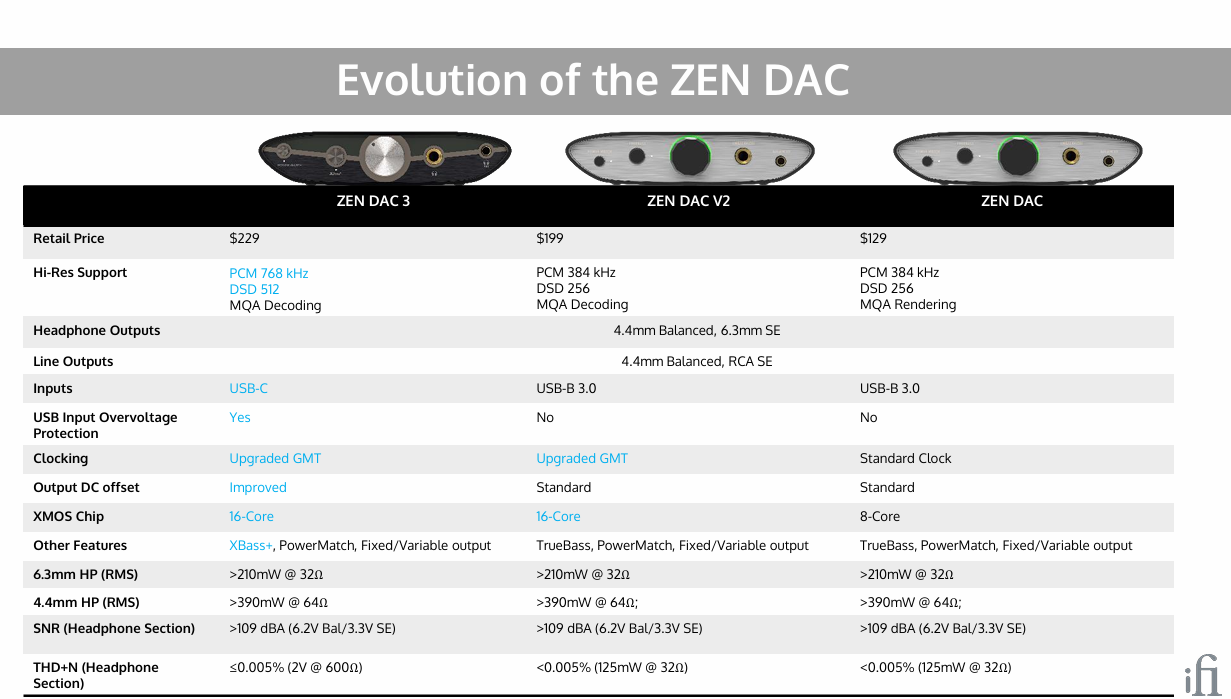
Previous Zen DACs had max DSD256 support
New Zen DAC 3 supports DSD512 according to the user manual:
You need to define “best” first. But there are measurements to see various common problems in modulators.
Yes, because for example ASDM7EC-ul, -light and -super you will be hard pressed to point out the objective differences in the output. Yet they sound distinctly different.
Data passes as a verbatim copy.
That is certainly not desirable, nor intended result if your source is PCM.
For true DSD256 recordings you can actually do that in a sensible way, and to some extent true DSD128 recordings too. From the ADC to the DAC output.
Thus, usually, and the inteded architecture, you would have PCM source ===> oversampling ===> dither/noise-shaper ===> R2R D/A. Of course this is not bit-perfect throughout either, it was never intended to be. That would be the pre-mid-90’s approach.
Since mid-90’s the approach has been:
PCM source ===> oversampling digital filter ===> S/H oversampling ===> SDM modulator ===> SDM D/A.
HQPlayer for example cuts out the super-ugly “S/H oversampling” out of the picture, which is done only because the small chips don’t have computing resources to process proper digital filters to the final rate. Even the first digital filter stage is very constrained.
This involves both oversampling (digital filters) and modulation (SDM conversion).
I personally don’t like to use DSD term, because it is marketing term for certain class of SDM. And originally it applies only to DSD64 anyway. It was never officially used in any other context, it has been later stretched.
That’s the topic of this thread.
Even if you run same PCM source through same HQPlayer settings multiple times, you will get different SDM output stream every time. This is completely intended. And each and very one of these different streams is equally correct.
This is also what you get for example with cryptography. When this text is sent to to Roon forum over HTTPS connection, it’s encrypted representation is totally different from the one that is being sent from Roon forum to your computer. The data traveling over internet is totally different in both cases and even with most powerful computers you cannot find any correlation between the two. Yet they both result in the same text output… Beauty of math. 
No, it doesn’t do tone adjustments in objective sense. Goal is to be good as possible. But the modulator also defines how the hardware conversion section and analog post-filter behaves. And there are many different implementations of both the digital side (digital filters and modualators) and hardware D/A conversion sections and analog post-filters and buffers.
In hardware world, even if you manufacture two “identical” DACs, they will have some unit variation due to component tolerances.
This is by design for PCM formats in general yes.
In addition, it is good to remember that your PCM source is not, or even likely correct. If you keep eye on the HQPlayer’s Apod-counter, especially for RedBook sources, depending on content you can see there can be a lot of errors involved in the source data. Some categories of errors in the source data are correctable, and some are not.
So passing the source errors to the DAC, uncorrected, is not a great goal either.
You can make that choice. But using DSD Direct DAC can potentially give best possibilities for HQPlayer’s algorithms to produce best end results.
You can choose how much constraints you are willing to let DAC place on your path.
Point is to have DAC play the music from HQPlayer bit perfectly.
I’m a bit reluctant to jump into such conclusions…
I understand what you are talking about regarding the cryptograpghy (fyi, my background is physics, cs, and psychology but a bit rusty now. lol  ).
).
Regarding different SDM output stream, I think I miss something here. Given the same PCM source and same HQPlayer settings, the output of the SDM stream could be different? My understanding is that if all input are the same, the output would be the same. (For your cryptography example, not all input are the same.)
Hmm… you are correct, AKM chip does support DSD Direct but not all DACs using the same AKM chip are DSD Direct (even they claim it does). LOL.
Same applies to PCM → PCM too. This because of dither, which adds a random element to the result, which is necessary for the correctness.
So in reference to cryptography, not all input is the same.
So cryptographic analogy is the session key and salt which are different.
I am confused… do you mean in the dithering algo, it involves a random process?
e.g.
PCM source A (768K) ===> dithering algo ===> output A
same PCM source A ===> same dighering algo (same parameters) ===> output A’
You mean A’ can be different from A? 
I believe the the same dithering algo using the same parameters would produce the same output for the same PCM source. There should not be any random element involved. Am I correct? Or I missing something? 
Yes, dithering algorithm always includes (P)RNG (random number generator), if it any reasonably good one.
You need to ensure that the dither noise is purely random without any detectable patterns or repetitions. Otherwise it cannot work properly. Similar way as you generate encryption keys.
Getting same output twice would likely indicate that the dithering algorithm is broken.
Just like analog output from an amplifier is different every time, because the analog noise component is completely random and changing all the time.
Thanks a lot for your information. Looks like my concept of dithering is not correct. It’s been wrong for long time. Random number is so powerful. Time for me to do more studies. LOL.
Heh, @dabassgoesboomboom and @VictorS let’s not be rude please. This is an excellent thread but this kind of back and forth really destroys its value.
My truth is, I wouldn’t trust anyone to hear a difference between DSD unknown and DSD Direct. That means this entire discussion must be objective. If you can’t test then we must rely on the posts from those who can to tell us which DACs are, indeed, DSD Direct capable. And, without ability to counter with testing, we really shouldn’t be arguing with those posts? Right? Can we please agree on that?
If we want to discuss what DSD unknown vs DSD Direct sounds like please start a new thread. That isn’t relevant to “best native DSD DACs for use with HQPlayer”. I say this because “best” and “native DSD DACs” would require first verifying the DAC being called “best” actually is operating as DSD native. Please see my previous paragraph about how that is determined.