Not hearing any difference with HQP upsampling vs direct DAC

I thought I would give HQPlayer (trial) a try, to see what the fuss is all about. But I can’t really convince myself that I can hear any difference.

I’m wondering whether that’s because of my age/hearing (59)? Or perhaps the improvements that HQP can bring decrease as DAC quality improves, and perhaps mine is of reasonable enough quality to make the improvements too small for me to notice?

Here’s what I compared:

• Roon Nucleus One, no MUSE/DSP, RAAT to Ropieee via wired ethernet, to TEAC UD-505 DAC (dual AK4497) via USB. No resampling/filtering on DAC. Sennheiser 660S headphones (no equalisation). Versus:

• Nucleus to HQP on Mac mini M4, NAA to Ropieee, then as above.

The TEAC DAC can do DSD512 and PCM 768kHz, so I set HQP to upsample to those figures, with adaptive rate, default bits.

I used poly-sinc-gauss-long/hires-lp, and modulator ASDM7EC-super, no SDM pack for native DSD.

I compared various material: 16/44.1 and 24/96 PCM, and DSD64 & DSD256 sources. Verified on the DAC display that it was receiving upsampled material.

At no point could I notice any obvious difference when using HQP. It doesn’t help that it takes quite a few seconds to switch over, of course.

Am I missing something obvious in my settings? Or should I just accept that my ears/equipment aren’t up to hearing one, and accept that HQP isn’t for me?

thanks very much for any suggestions, comments.

I’m certainly no expert here, but it might be worth settling on DSD256 for a while and seeing how you find it. Those filter and modulator choices seem a reasonable place to start. From the measurements posted on here, quite a few DACs seem to perform better at DSD256 than DSD512. I’m sure @jussi_laako will give you some more authoritative guidance though.

2 Likes

Only thing that I can think of is that UD-505 could be doing some DSP internally and doesn’t let the HQP-upsampled signal pass through as is.

I’ve compared HQP-upsampled DSD to PCM on various different DACs. The differences are smaller on delta sigma DACs, like UD-505, compared to something like Holo Spring 3 or T+A DAC200, which have dedicated DSD DACs integrated. With Mola Mola Tambaqui, the difference was non existent, probably because it does its own heavy DSP internally and it can’t be bypassed.

1 Like

I think you’re just trying to be conscious regarding your abilities and biases, so you’re fine.

Full disclosure: I’m not a Roon user any more and have never been using HQP, but done my share of upsampling and filter comparisons, as well as many different true ABX tests as to the audibility of MP3 320 kBit vs red book 16 vs hi-res 24/32 bit with speakers and headphones, which educated me to the physiological limits of the human auditory system - and then, I’m prey to age related hearing losses, as witnessed by

I’ve long made peace with FOMO for myself by staying up to date with the advancement of the science behind our hobby, but you will likely receive the full spectrum (pun intended) of opinions and beliefs on this matter, so I’ll fire up my popcorn machine and sit back in my sweet spot …

7 Likes

If a DAC has a list of filters to choose from, usually they are the default filters provided by the DAC chip manufacturer, like ESS or AKM. These filters are very simple and light so that they can be driven by the DAC chips. Differences between these filters are extremely small and it’s usually very difficult to discern any differences between them. HQPlayer filters are way more advanced and can take a modern gaming PC on its knees on higher rates. They’re not comparable in any way. In HQP, for example a short minimum phase filter sounds very different from a long linear phase one, especially at high DSD rates. In HQP, there’s also the modulator choice for DSD or dithering choice for PCM, which also matters, at least as much as the filter itself. For a short list of DACs, there’s a DAC correction option also, which can transform the DACs sound completely.

But the used DAC matters very much. If the DAC does its own internal DSP and it can’t be bypassed then HQP offers little help. It’s best used with NOS DACs.

2 Likes

That’s possible. It’s also possible that there is actually no difference to hear anyway

4 Likes

Could you please provide a reliable source (preferably a link to the manufacturer’s documentation)? Publishing assumptions and suggestions, particularly those intended to influence opinion, without citing sources doesn’t seem quite right, does it?

1 Like

I also can’t say that I hear a real difference with my Teac UD507 :slight_smile: With Redbook material I thought a few times that yeah maybe there is something but most of the time I would have to quess.
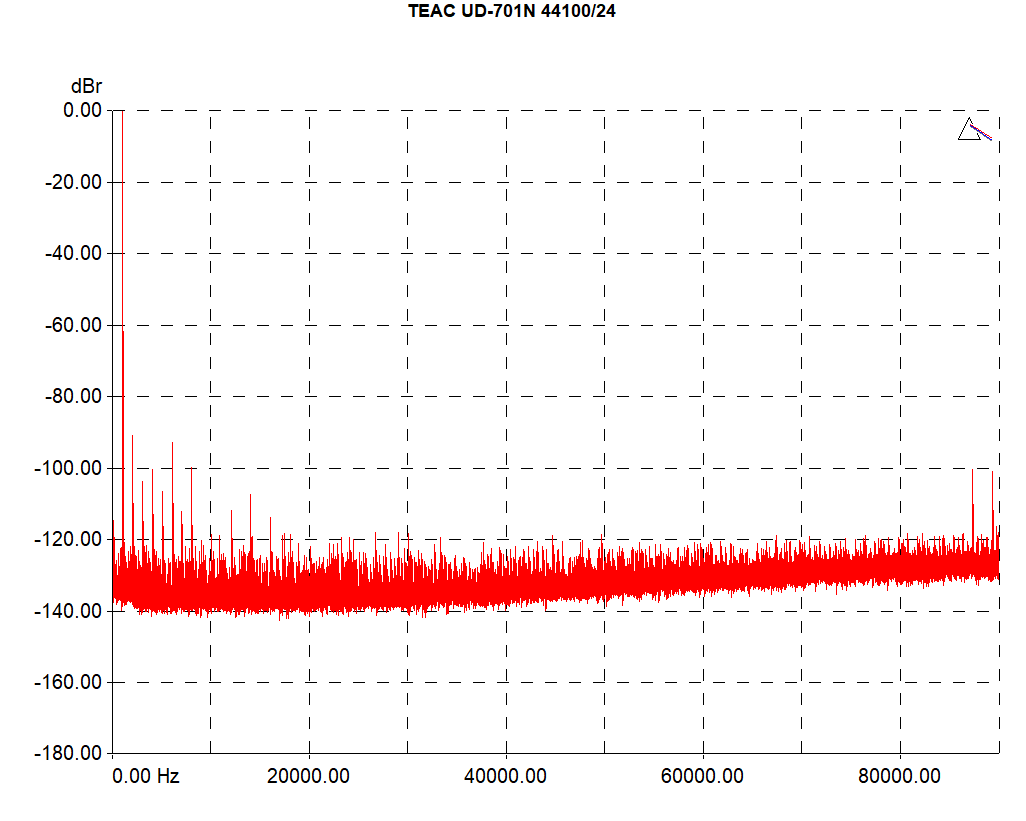
It’s no surprise that HQplayer makes a difference on a non oversampling r2r Dac . But so would roons upsampling make a difference.

2 Likes

OK – so I have a suggestion. Could you please suggest two such HQP settings (upsampling to DSD 256) where the differences in sound are distinct enough to be noticed even by someone who isn’t a seasoned, experienced music listener?

1 Like

Oh sorry, a typo on my end. I meant to write that UD 505 COULD be doing some DSP inside, so I was purely speculating. I’ll fix the original post. The UD-505 would need to be measured to know if it handles DSD signal in the most optimal way for HQPlayer use. I’m not sure if @jussi_laako has measured this specific model, but I do know that UD-701N is on the recommended products list on Signalyst website. But UD-701N’s DAC section is very different from UD-505.

1 Like

You might want to make sure Roon is not doing any DSP before sending to HQPlayer.

2 Likes

I don’t have UD-505, but I have UD-501, NT-503 and UD-701N and for all these HQPlayer makes both measurable and to me audible improvement in the output signal quality. For these, HQPlayer also provides special DAC correction profiles: DAC correction support – Signalyst

As usual with DAC chips, the AK4497 used in UD-505 does perform DSP always when input is PCM data and possibly when input is DSD data. This AKM chip provides also Direct DSD path for DSD data, bypassing the on-chip DSP and passing data directly to the conversion stage. On NT-503, the AKM DAC chip is used in this mode with DSD sources. Since I have not measured UD-505, I don’t know if this is the case there.

You can see these things from the DAC chip datasheet:

Of course whether someone hears a difference or not is entirely personal and system dependent. So I cannot comment on that. It is something everyone needs to evaluate on their own.

2 Likes

UD-507 is similar to UD-701N. But it is important to consider the DAC settings as it makes a huge difference in output quality.

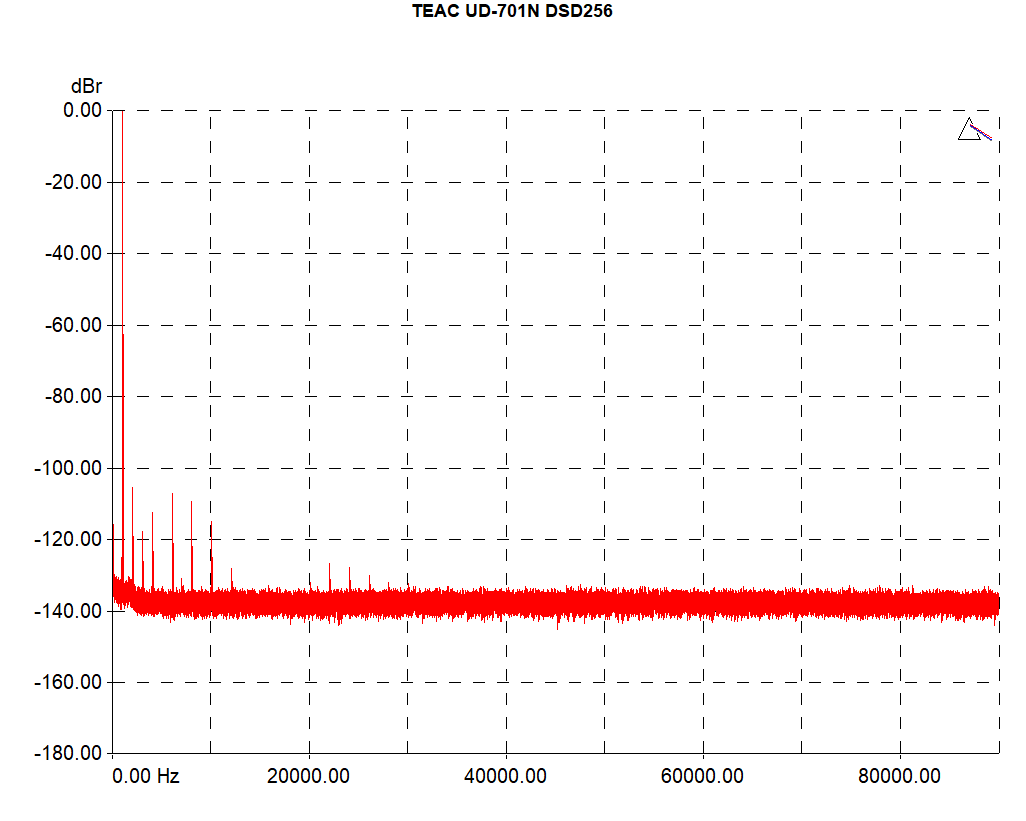
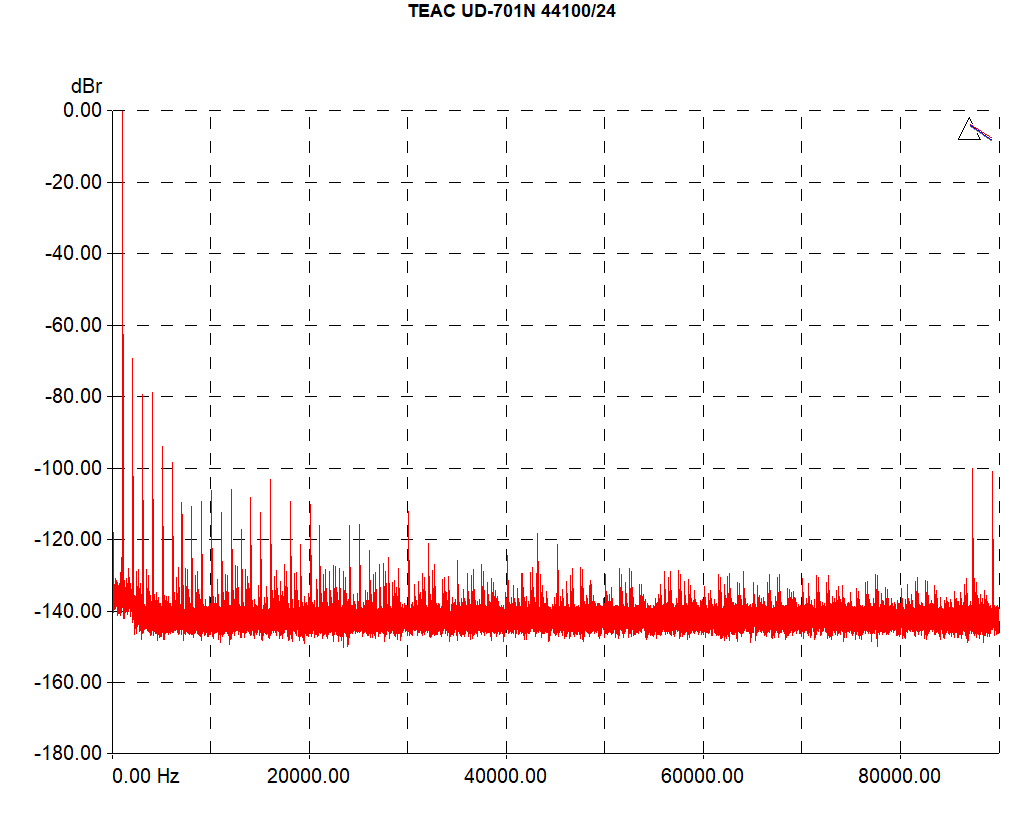
Here are some examples from UD-701N:

With the internal multi-bit modulator and 1 kHz sine THD test with 44.1k input:

With the internal DSD modulator:

And with HQPlayer’s modulator with DSP in the DAC turned off and FIR1 DSD filter:

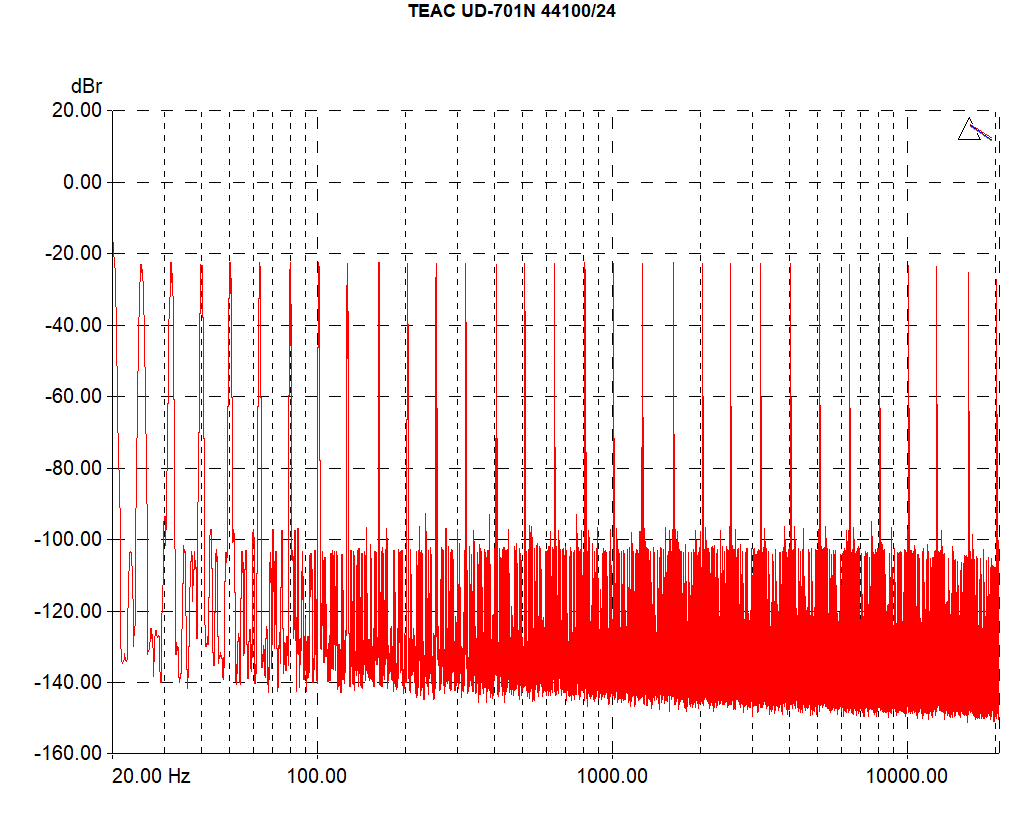
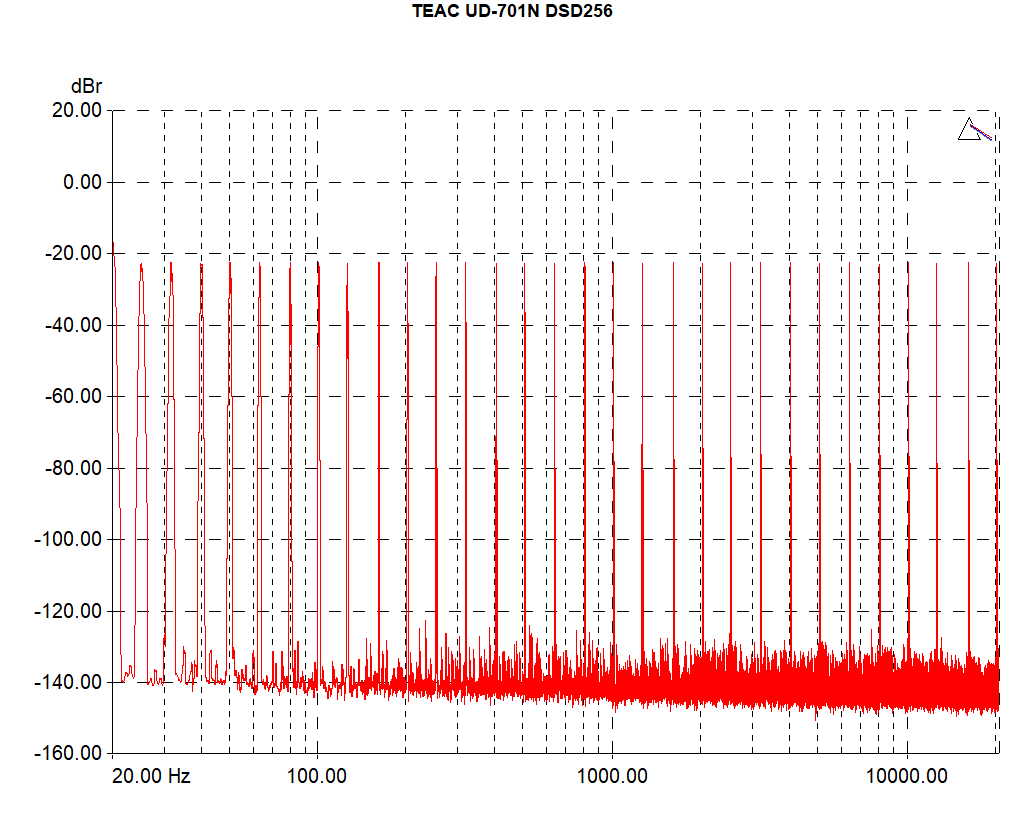
You can also see similar differences in the multitone test:

With internal multi-bit modulator:

And with HQPlayer’s modulator:

3 Likes

I know I asked this in another thread here already and I’m fully aware that you don’t have possibly the time to follow up on every questions in all these different communities but all these screenshots tell me are , HQplayer lowers the noise floor by another 20db from meaningless inaudible to even more inaudible.

but how does this compare to roons own upsampling? Seems like just a numbers game at this point.

4 Likes

It is not of particular interest to me. But probably quite close to the results of built-in DSD modulator.

Of course there are notable differences also in the oversampling filters.

The distortion reduction is quite significant in my opinion (for example second harmonic drops from -70 to -105). But what is inaudible to someone else than me, is something I cannot comment.

2 Likes

Roon upsampling is better than what the DSP chip in my system does and that chip is better than the one in my previous system. HQplayer is even better, although it took me a while to find the filter that works for my system and ears.

My preference in Roon is smooth linear. In HQplayer I use poly-sinc-xtr-short-lp. In my setup this filter gets pretty close to optimal for me. I’m not sure what the difference is with the Gauss filters, but whatever it is, it’s significant for me.

Different people have different hearing abilities and it’s not just age, it’s the way your ear is shaped up to training and what your brain is capable of. Some people can see more colors or color shades, some people can smell certain smells, some people can hear certain things.

For me oversampling distortion makes things sound jagged instead of round and smooth. The distortion has a physical effect akin to nails on a chalkboard and it builds over time and makes my ears sensitive and overstimulated. It took me a year to learn to recognize it by listening, not be waiting for my ears to get sensitive.

If you don’t hear a difference, that’s fine. I’d rather not hear it too. But I’m happy there’s technology that helps me enjoy digital music.

3 Likes

But second harmonic distortion is what many people consider pleasant. Euphoric.. :slight_smile:

so HQplayer is basically turning a tube amp into a solidstate amps. (Oversimplified of course).

But thanks for your explanation. Very much appreciate it

1 Like

Exactly – you’ve hit the nail on the head!
That’s what psychoacoustics is all about. The realisation that you have top-of-the-range expensive equipment and cutting-edge software takes the sound quality to new heights. It’s just like a watch – same time, supposedly… but with an ‘Omega’ watch, you’ll never be late again… :wink:

5 Likes

Yup — that’s exactly how many people approach it: clean up the digital chain first (less noise, less HF junk, less unintended harmonic distortion), and then let your tube gear add the intentional coloration you actually want.

HQPlayer isn’t “removing tube magic”; it’s removing digital domain distortion that gives your downstream tube stage a cleaner canvas to work from.

Of course, there are folks who prefer distortion everywhere all the way down the chain — digital, analog, tubes, transformers, everything. Nothing wrong with that either. It just depends on whether someone wants their distortion to be controlled and predictable.

3 Likes

I don’t do any upsampling in Roon, because of my device’s capabilities. Think Roon Upsampling is worthwhile for particular scenarios. Depends on the toys one wishes to play with.

1 Like