Ungroup Automatically Grouped Album Versions

Hi All,

I’ve seen a few discussions on this topic, but not really any solutions e.g., Ungroup albums that shouldn't be grouped together | Profound Mysteries by Röyksopp)

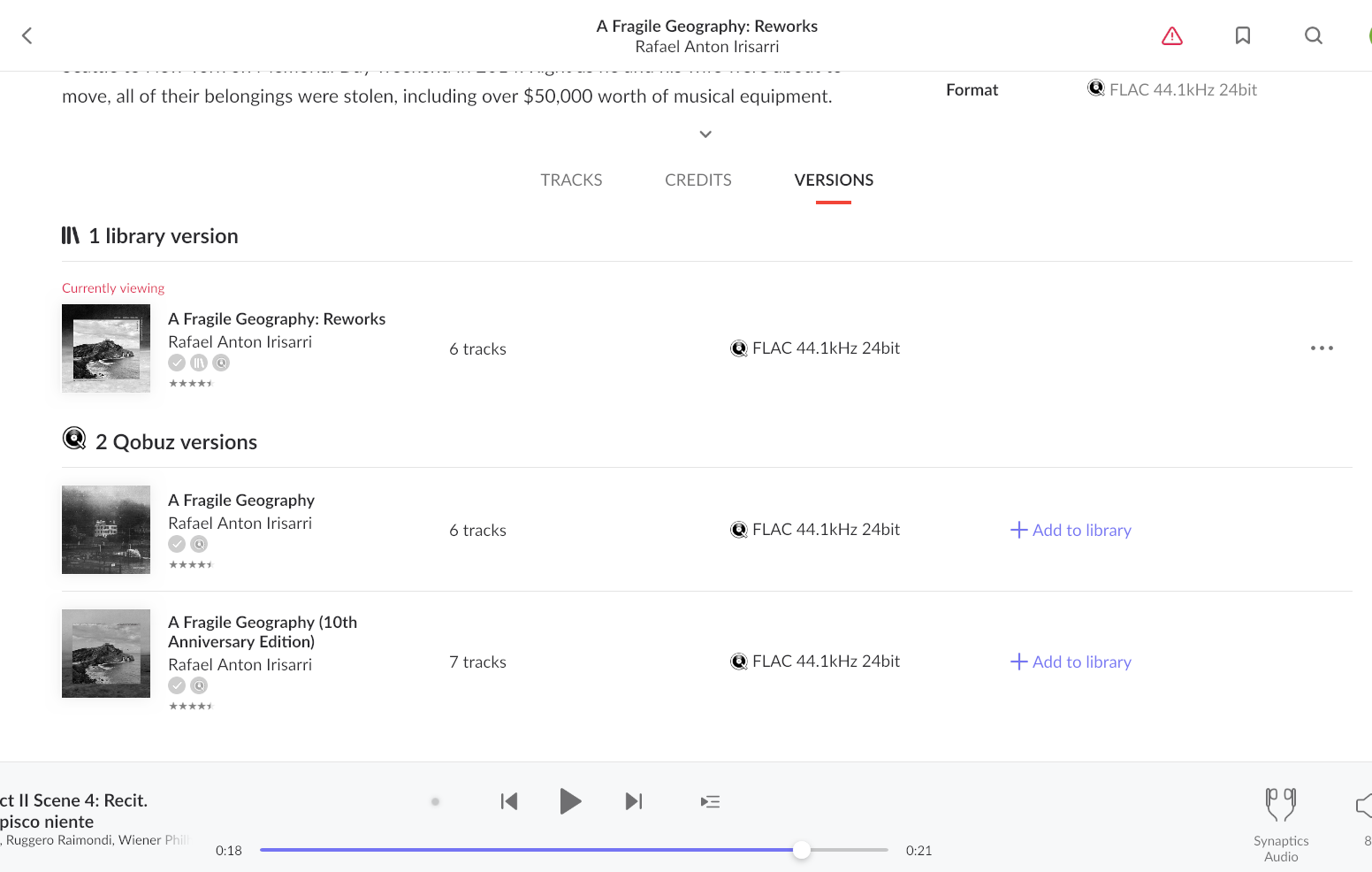
A reworks of an album with different artists, is being grouped automatically with the main album as a version. So when I view the album artist, under discography I do not see both albums, which in my mind should be separate, only the original one.

Is there a way of ungrouping re-worked, re-mixed, etc. albums yet? Or does this just need to be highlighted for resolution at the back-end, by Roon or TiVo, or whoever.

The album I currently refer to is ‘A Fragile Geography’ by Rafael Anton Irisarri, the re-works is ‘A Fragile Geography: Reworks’, and my streaming service is provided by Tidal.

Help appreciated.

Thanks.

Martin

Try the following which works for local files. Not sure if this will work for albums from streaming services as I keep Roon and Qobuz totally separate.

Go to the album, select Versions. Click on the 3 dots next to the relevant version and select “remove from group”.
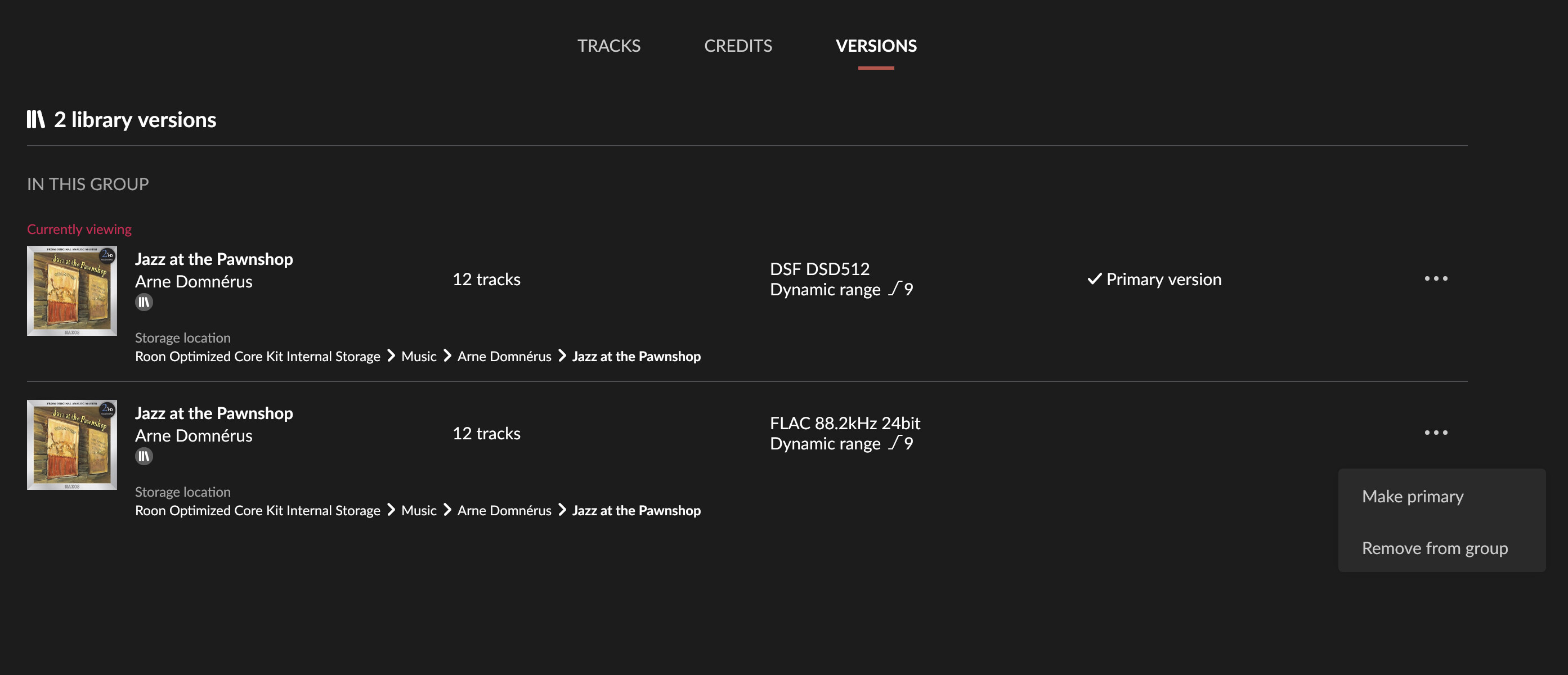
To do on a global basis, under Settings - General, toggle “Show hidden tracks and albums” to Yes

Hi Michael,

Thanks for the attempt, unfortunately, this option is not available, perhaps because it’s a streaming version?

I have been alble to do what you show with locally held albums. Maybe I should just buy the re-worked album….

FYI, I also have the album you display. :slight_smile:

Cheers,

Martin

I would put on a support request selecting metadata and then describe the issue. The grouping is happening upstream and Roon should fix it.

I don’t see any difference in this behaviour with local or streamed content. Makes no difference.

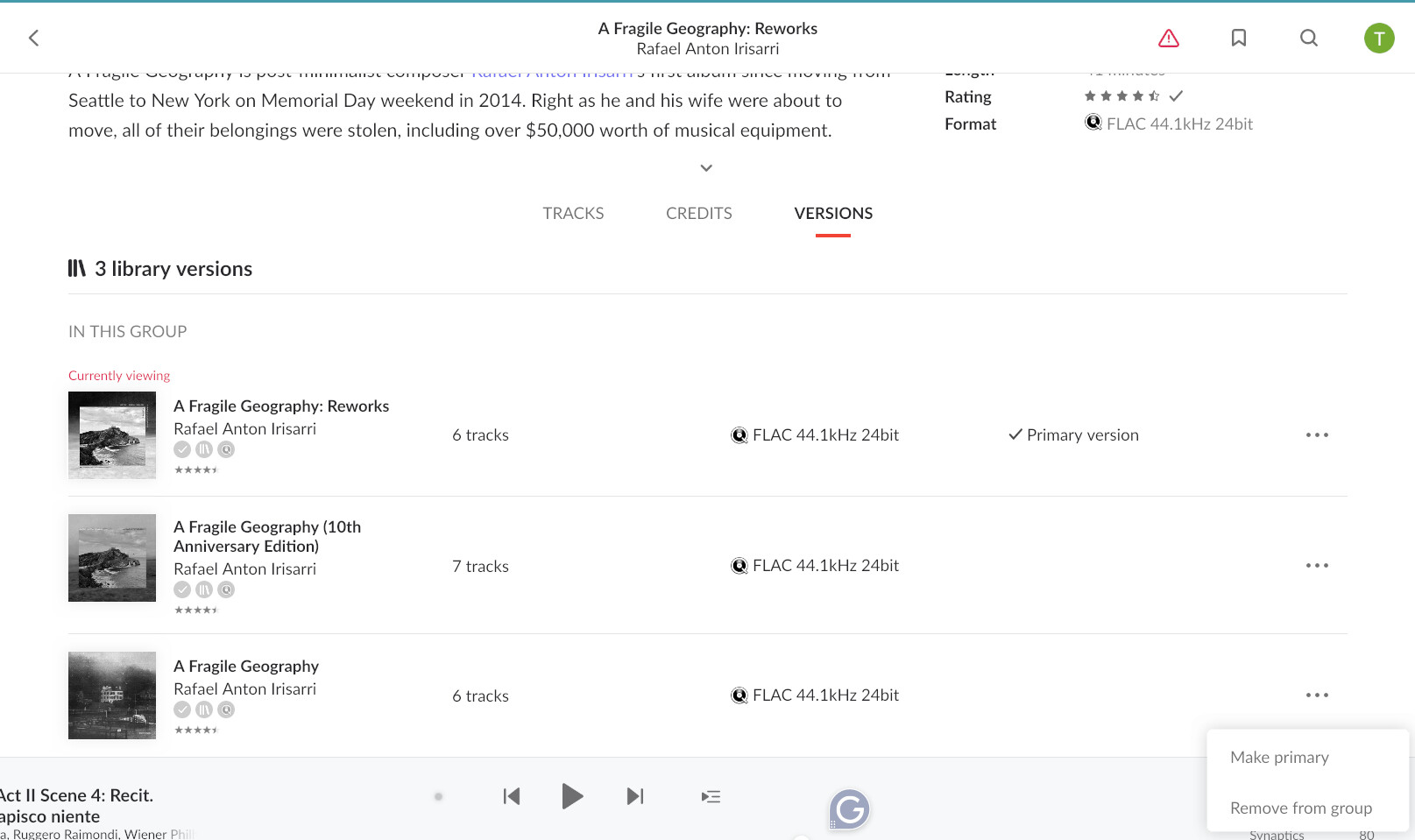
I don’t have Tidal but it should work the same. One possibility is that Irisarri album has 3 versions on Qobuz and roon does indeed auto-group them:

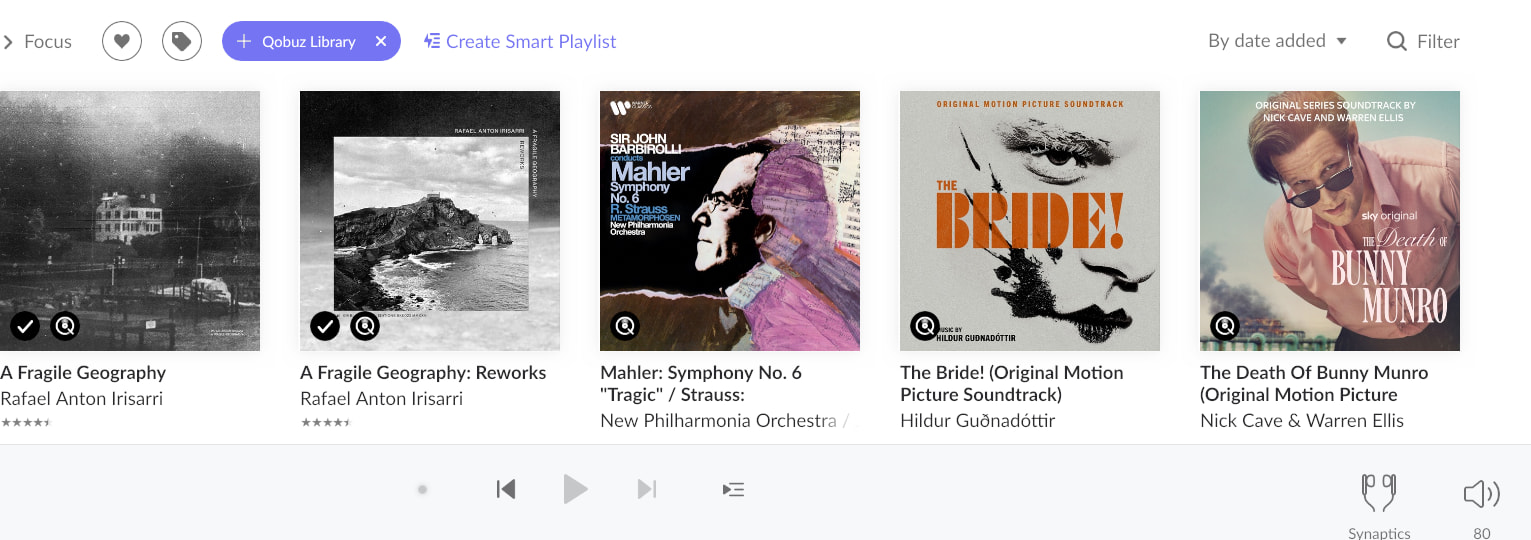
If you want to ungroup them, counterintuitively, you have to first add them to your library, then you can ungroup:

I hadn’t noticed that before. No doubt all libraries are working that way.