I played a cassette tape the other day and I was surprised by the quality compared to conventional streaming today. It seems to me that we should get away from the two channel recording process. For example the recording of a solo violinist. You are just processing a recording in two channels at one specific point in space. You need a system that can create the violinist in your space eg living room without the sound of the environment of the room where the sound of the violinist was recorded. This would give you the sound in two listening environments. The recording also needs to be 360 degrees around the violinist in an anechoic chamber….
So what’s this got to do with your threads title?
3 Likes
“Tape vs High Res”
No need for either really.
Cassette tape, assuming this is what you meant, is an obsolete media. Despite a small amount of artists/labels releasing material on cassette tape, it certainly has its limitations and own issues. I’ll never revisit the cassette tape while I still have space for CD’s and space on my SSD’s for digital files.
High Res, assuming you mean 24/48 and higher, there is only a need at the recording/mastering stage. For playback, personally I’m happy with 16/44.1. I have a few Hi-Res albums in DSD that do sound really good compared to the 16/44.1 version (different masters though  )
)
For 360 audio to place a violinist all around us, why?
A violinist would be naturally in front of us during a concert performance. You don’t have multiple violinists dotted around the stage, usually grouped.
We have Dolby Atmos amongst other multichannel playback methods. Whilst some releases sound very good in DA or MC, a decent pair of speakers, positioned well should present a decent soundstage.
Concert halls use reverb, reflections to engulf us in sound. Some audio purists treat their listening rooms to minimise reverb and reflections.
My main room has no room treatment. It’s RT60 still surprises me as it’s very low. I have a smallest amount of reverb and reflection. I need this for my TVs Dolby Atmos soundbar. For music, I’m very happy with the stereo image.
No music should ever be recorded in an anechoic chamber. The instruments resonances would never be recorded for a start.
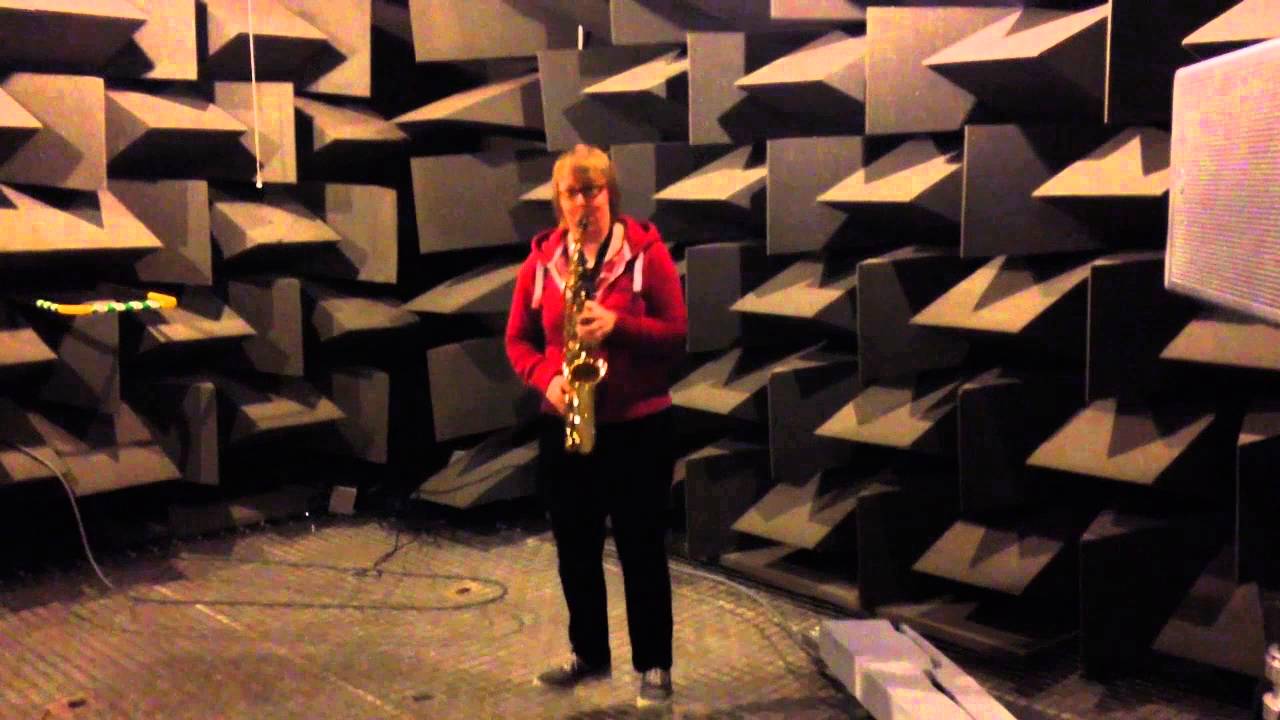
Or are we going to get artists to record music like this?
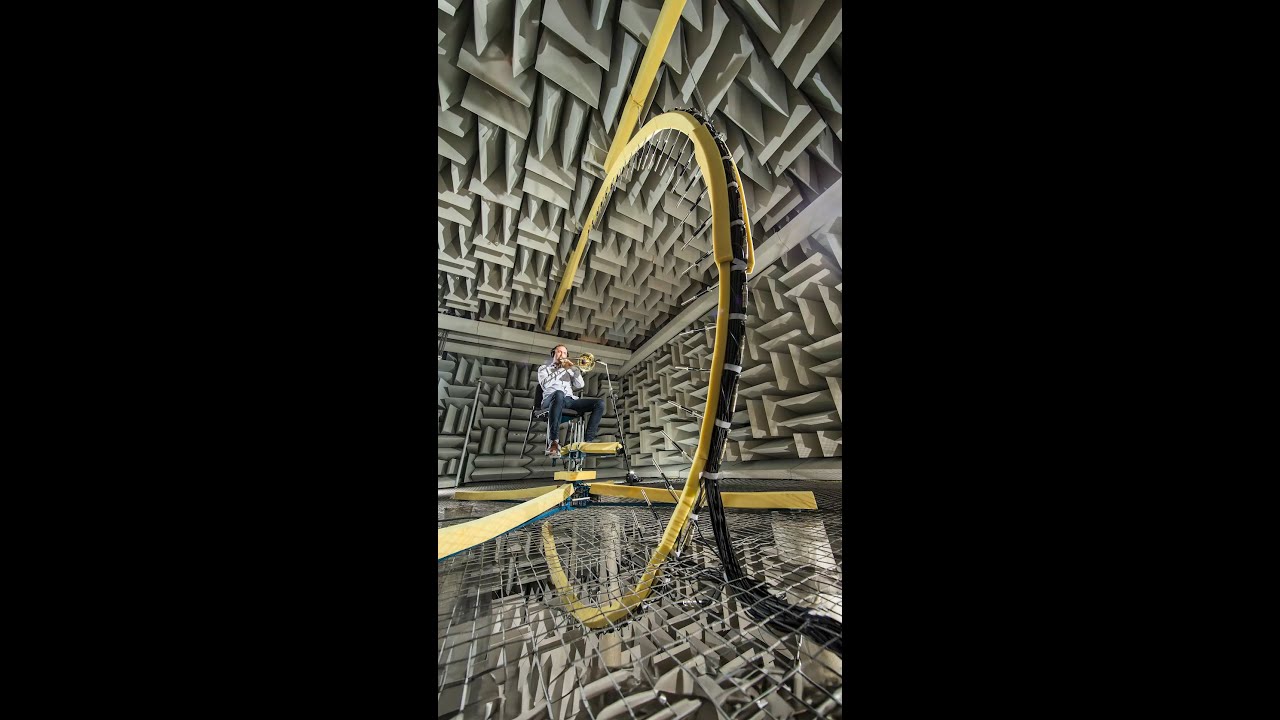
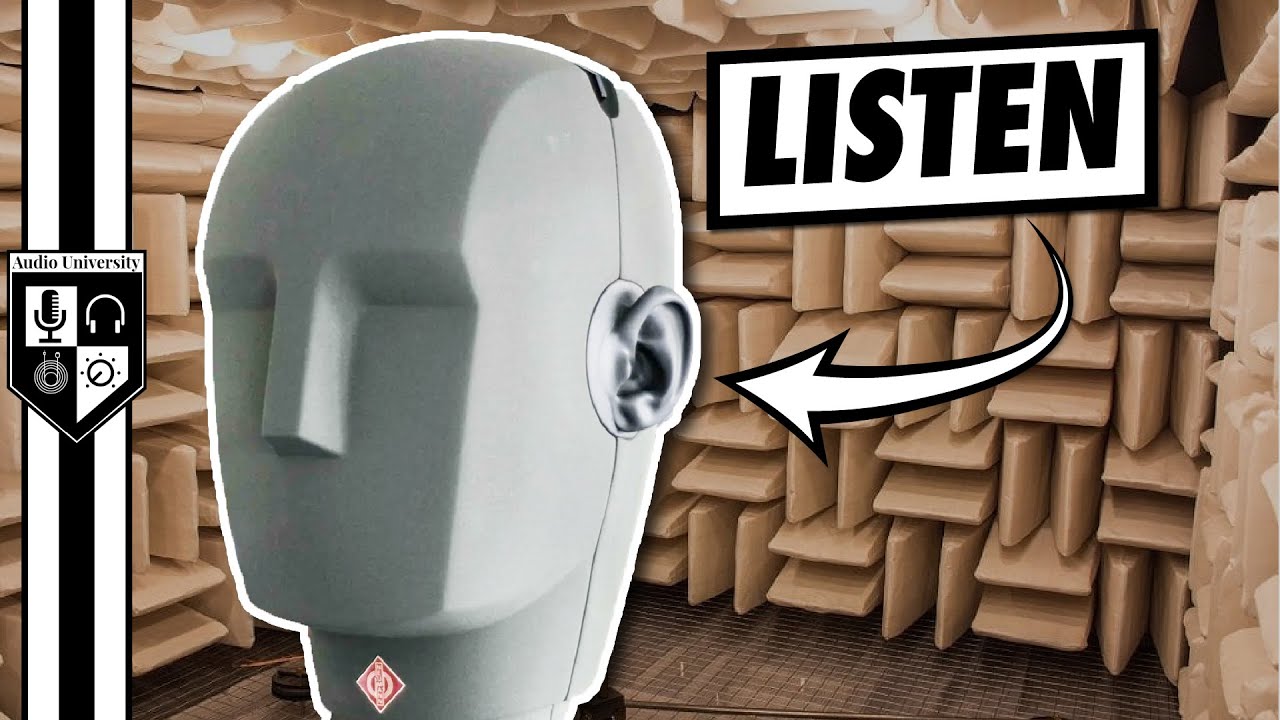
I think you missed the point, I was using an anechoic chamber as a starting point to bring a musicians performance into your own living room without the reverberation of a second room. This would allow the user to experience their favorite artist as if they were in their living room. If one was given the opportunity to have their popular modern Artist to play in their living room it would be worth 10s of thousands or hundreds of thousands of pounds. The dispersion affects of say a violin are variable around the violin, a static microphone or group of microphones cannot pick that up leading to time domain, phase alignment, and dispersion characteristics to be incorrectly played, and can be measured as distortion. You are not going to achieve this with conventional technology. 360 degree audio is merely an approximation of what is being played…
Yep, I think I have
1 Like
Frankly, I don’t think this would sound good, at least in my living room. I very much prefer it sound more like I’m sitting in a nice venue with better acoustics.
1 Like
But it’s still an approximation of the actual sound field…
It’s an observation of the limited technological advance of two channel stereo or mono at the turn of the last century.
I use Atmos recordings for this in my living (home theater) room. I have a 7.2.2 setup and for me it is the only thing that matches Roon in quality. For the dynamic range it out performs anything else that I have ever heard.
I go back and forth because I grew up with and really enjoy 2 channel stereo. In the end it is stereo for me but the Atmos recordings is breath taking. There is just so much content in stereo to ignore.
–MD
Out of the 8.124 billion people who live on earth what proportion of them would enjoy having live music in their abode. Quite a large proportion I should think looking at the number of intimate performances that are uploaded every day to YouTube and other social media accounts… these performances are not always in the best acoustic environment yet they receive Billions of hits…
It is just not possible to create an exact replica of the sound field created by an orchestra in your own living room. This is compounded by the fact that the orchestra is playing in a concert hall with its own acoustic signature. When played back this mixes with the listening rooms acoustic signature. Furthermore an orchestra does not emanate its sound field from two static single point source speakers. So the effect is purely an illusion. You only need to read about wave dynamics to understand that this is not possible.
While that will apply to a Live Performance it does not apply with studio recording even if it is a live performance recording.
In Atmos it is a object base presentation that is produced by what the artist intent is.
When Atmos music fully takes off you are going to again see how creative a musician can be with their music.
I have Live concert recordings in Atmos and it is just like I’m in the audiance at the live event.
–MD
1 Like
So sound quality is now determined by number of hits/likes on YouTube?
I simply expressed my preference. I don’t claim to represent the other 8 billion people. 
1 Like
Atmos has been around a long time now and it is still not used on all the major streaming platforms, I think it will be a lost format like the mini disc.
It’s not the sound quality that is being determined. It is the popularity of musicians playing in intimate social gatherings. Just like if you could have the artist stand in your lounge and play.
Dolby has been around for around 50 years now give or take and Atmos is the evolution of their journey. It is not going anywhere.
Are we being trolled here?
This has nothing to do with the title of the thread.
–MD
1 Like
Thanks for clarifying. Yeah, I’ve never been one to go along with something just because it’s popular.
1 Like
Despite the OP’s explanation of the thread title, its relation to the contents of this thread makes no sense to me.
1 Like
Are you taking about an old cassette or one you have recorded recently?
A while back I got an old Nakamichi RX-505E serviced. I had over 200 cassettes, many from the 1980’s I hadn’t thrown out. I was really looking forward to playing them but after all these years many had basic replay problems. Those that had survived I found I needed quite a bit of DSP to get them similar to the CD and streaming versions I had. Maybe my ears had aged but I don’t remember the cassettes rolling off so sharply in the day.
Once the novelty wore off I stopped playing them which surprised me. I found I actually preferred a modern more compressed digital sound. I don’t know if that is because the studios have trained me to prefer that sound or it is just my aging ears prefer it.
I had a Nackamchi CR7e , the domestic version of the Dragon, I used all sorts of tape media including Metal and CrO2 . The CR7e has individual azimuth adjustment and bias adjustment you put a tape in and recorded a test tone which the machine used to “calibrate” THAT individual tape and housing.
When I did A B comparisons of CD (directly as it was a 3 head machine) there was no doubt as to which I preferred . The cassette tape was an inferior media despite being so convenient , high end performance was poor (I was much younger then so my frequency response was better) and tape noise was quite noticeable no matter which Dolby you used.
TBH what would you expect from a tiny and very vulnerable medium
Ironically the CR7e gave my Revox A77 a run for its money they were very close at 7 in/sec. You could only tell them apart by noise and tough at that
Pre CD I used cassettes extensively but as bigger and better formats appeared I change. At that stage I still had a large vinyl collection and an LP12/Ittock/Troika running . Today I am all digital.
It all ran through Quad 44/405 II and ESL 63’s
Sorry Nostalgia 
2 Likes