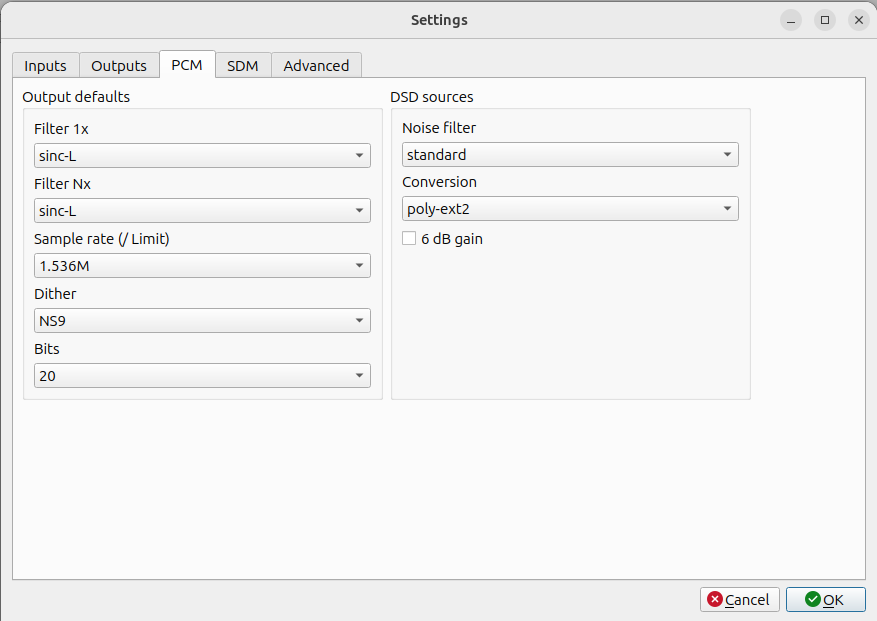
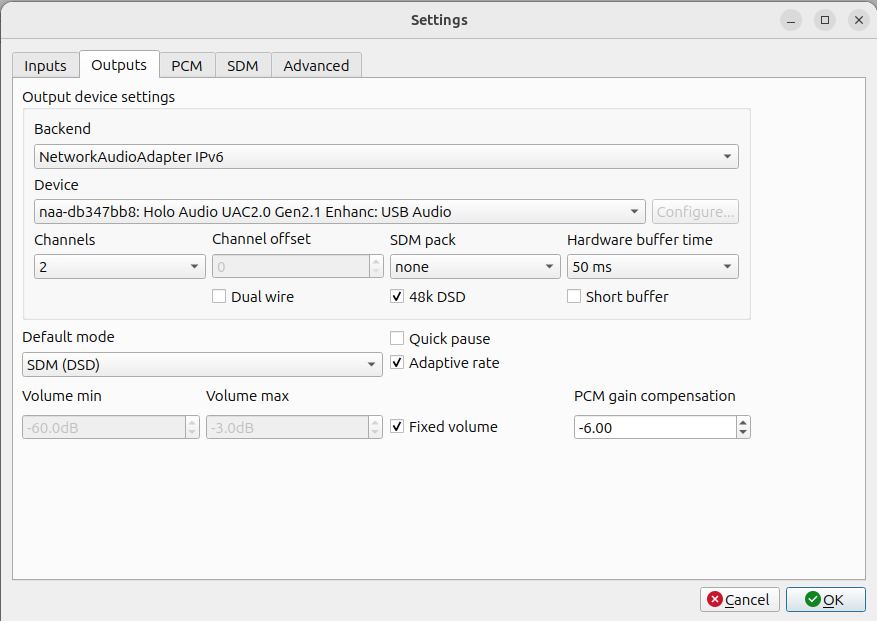
I don’t know, but I don’t encounter such issues with Red and NAA OS, and I never switch input away from USB.
You seem to have a hardware issue somewhere. Either related to he USB cable or the USB interface module.
I don’t know, but I don’t encounter such issues with Red and NAA OS, and I never switch input away from USB.
You seem to have a hardware issue somewhere. Either related to he USB cable or the USB interface module.
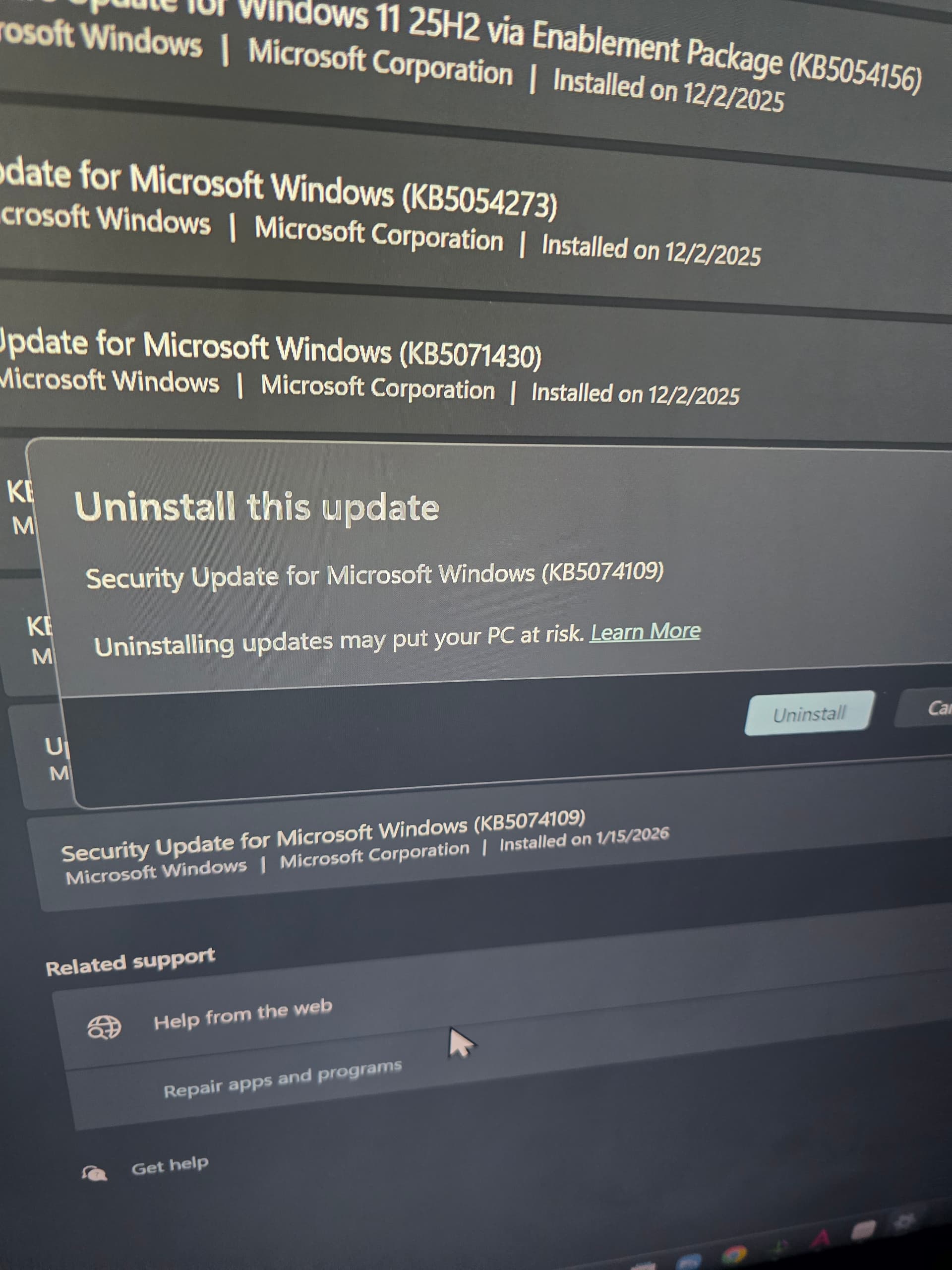
@jussi_laako Windows just did a security update and ever since I’m getting noticable clicks on anything above DSD 256. (Less noticeable below DSD 256 but still there) I’ve uninstalled and reinstalled everything. After I rolled back the update everything is back to normal. Is there a patch or something available?
does it sound like the static I describe with anything above PCM 16 fs or DSD 256 I describe ?
wonder if the issue did not come back after a OS update (Mac though)
Yessir it’s clicky static
Thank you Jussi, we can rule out the USB cable, tested 4 including the new Supra, certified.
I was about to contact Magna to whom I purchased the Red and May with suspicion of Holo USB interface issue but now curious about @Darthspader
Nothing obvious in the update description:
Most important generally with Windows is to have the Defender disabled. As it has tendency attempting to scan the audio content streaming for “viruses” or whatever. And obviously that is a futile exercise, it will just choke the machine and the connection, as the amount of data it is trying to deal with is naturally ever growing.
So using a third party security software is recommended. I have tested that F-Secure and Avast at least work without any issues. Both offer free trial period as well. F-Secure is more straightforward to deal with, Avast needs some setting adjustments, otherwise it will aggressively block all network activity.
I reinstalled the security update and the clicks came back so I added roon, HQPlayer and my music library as exclusions in Windows defender… and voila fixed.
My issue seems to have been windows defender, not sure if that will help you for MAC.
Jussi, did you upgrade your RED with CM5 ? If you did, does it boot from microsd okay ?
No, I have not seen a reason to do it. I don’t really want to mess with the Red hardware…
Hello, I am a new HQP tester, but I have a problem to set the filter that everyone writes about, namely AHM7EC8B, my equipment does not want to play on it, the last one on which the play is ASDM7EC super 512 fs. Can someone explain to me how to set the settings for this filter to play? My hardware is Mac mini m4 16gb ram → HoloAudio Cyan2 all connected by usb cable . Thanks for help
AHMxEC8B modulators require minimum DSD1024 output rate.
Since on macOS you need to use DoP, you cannot reach DSD1024 due to the associated 50% transfer overhead. The way to work around this limitation is to use a Linux-based NAA (network endpoint) between Mac and the DAC. One of the most cost effective ways to do it, is to use Raspberry Pi4 with my NAA OS. It is also pretty much plug-and-play. This way CoreAudio gets bypassed.
OK, I take it all back. I reverted (regressed?) back to DSD256 into the TT2 and, by god, I like it–tech specs be damned!
Despite the PCM conversion (i.e. decimation to 705k) there is something in the authority and slam that still translate while PCM output sounds thinner and weaker. I don’t think its ringing or noise (from poor conversion), I really think its more available information that is being articulated well.
It’s not all rainbows and sunshine as I find myself continuously hunting for the “right” modulator/filter combo. I have found a lot of success with sinc-L, sinc-m(x), and xtr- and gauss-family filters paired with the DSD7 256+fs and AMSDM7 512+fs modulators. Right now sinc-m(x) and closed-form-16m with the DSD7 256+fs is working with the alternative rock I like, e.g. Big Black/Atomizer, Slint/Tweez, PJ Harvey/Dry and Breeders/Pod.
This is me postulating but the Chord dacs (at least the TT2) and the EC modulators don’t play well together, and the music gets altered in subtle ways that can make it fatiguing or just shouty. DSD7 256+fs and AMSDM7 512+fs are usually on point.
I didn’t want to re-open the Chord/HQP discussion and just wanted to share so other Chord users could also emerge from the shadows (haha).
(and maybe I just need to get a NOS/R2R dac that can natively process DSD since I like it so much…)
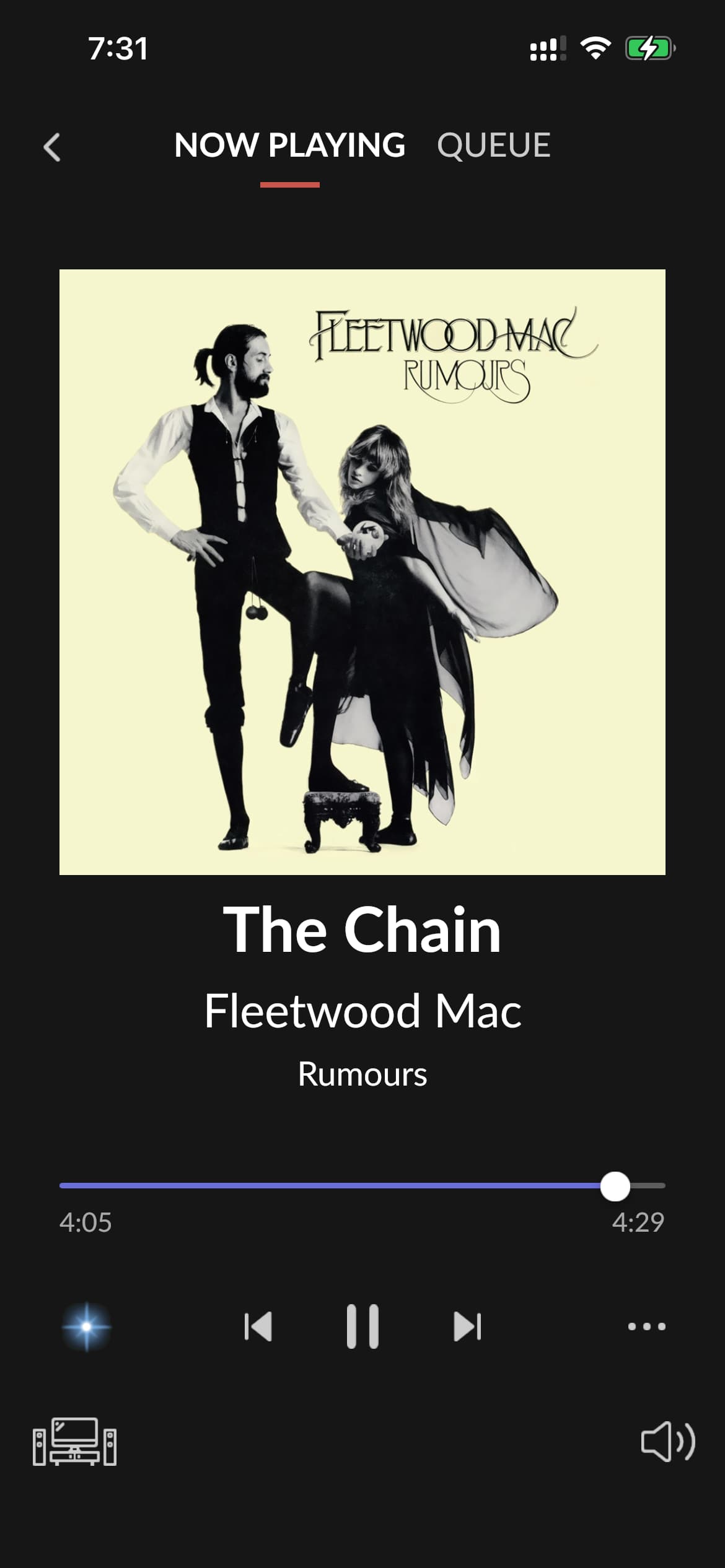
Really enjoying the crispy guitar  melodies of Fleetwood Mac’s Rumor’s album
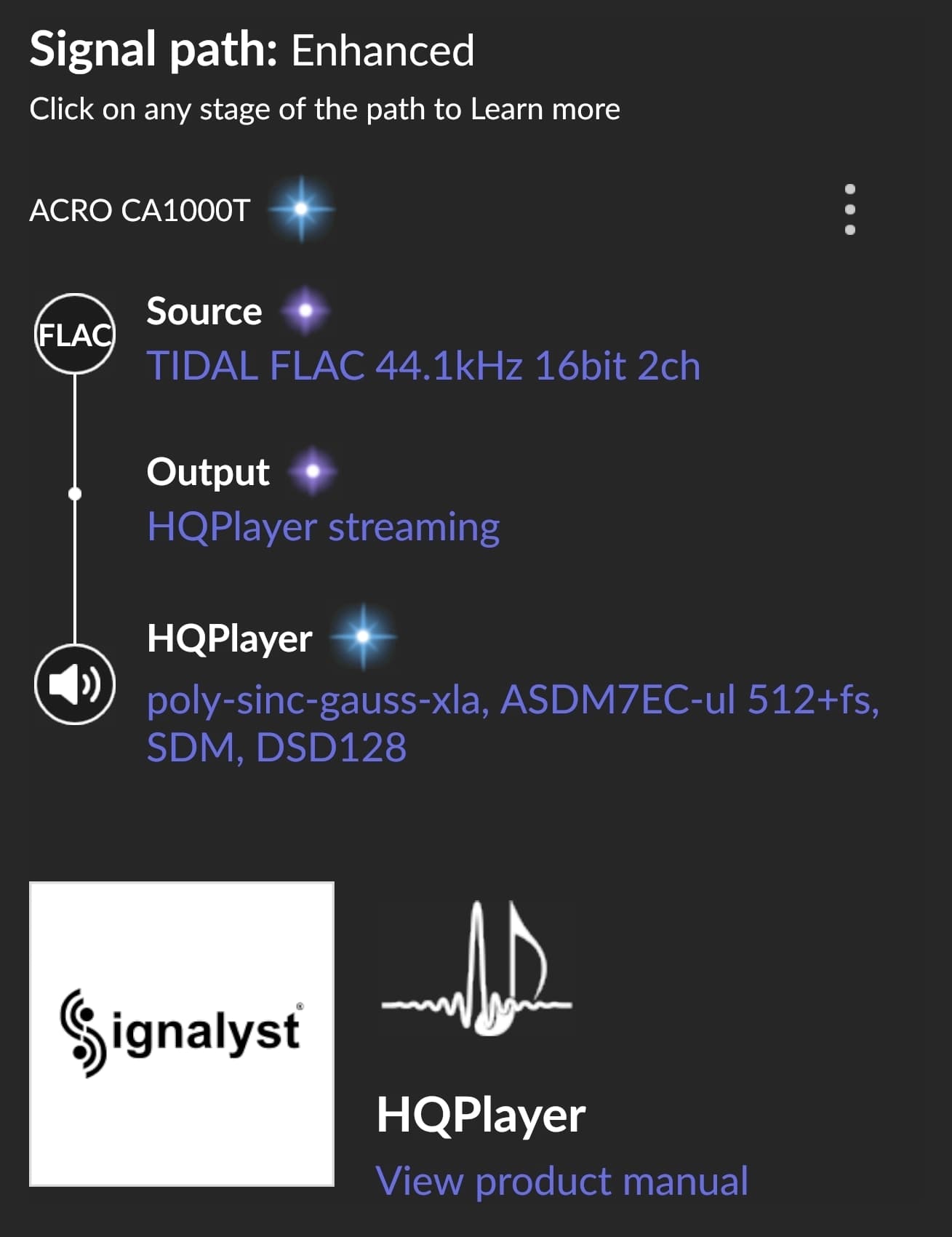
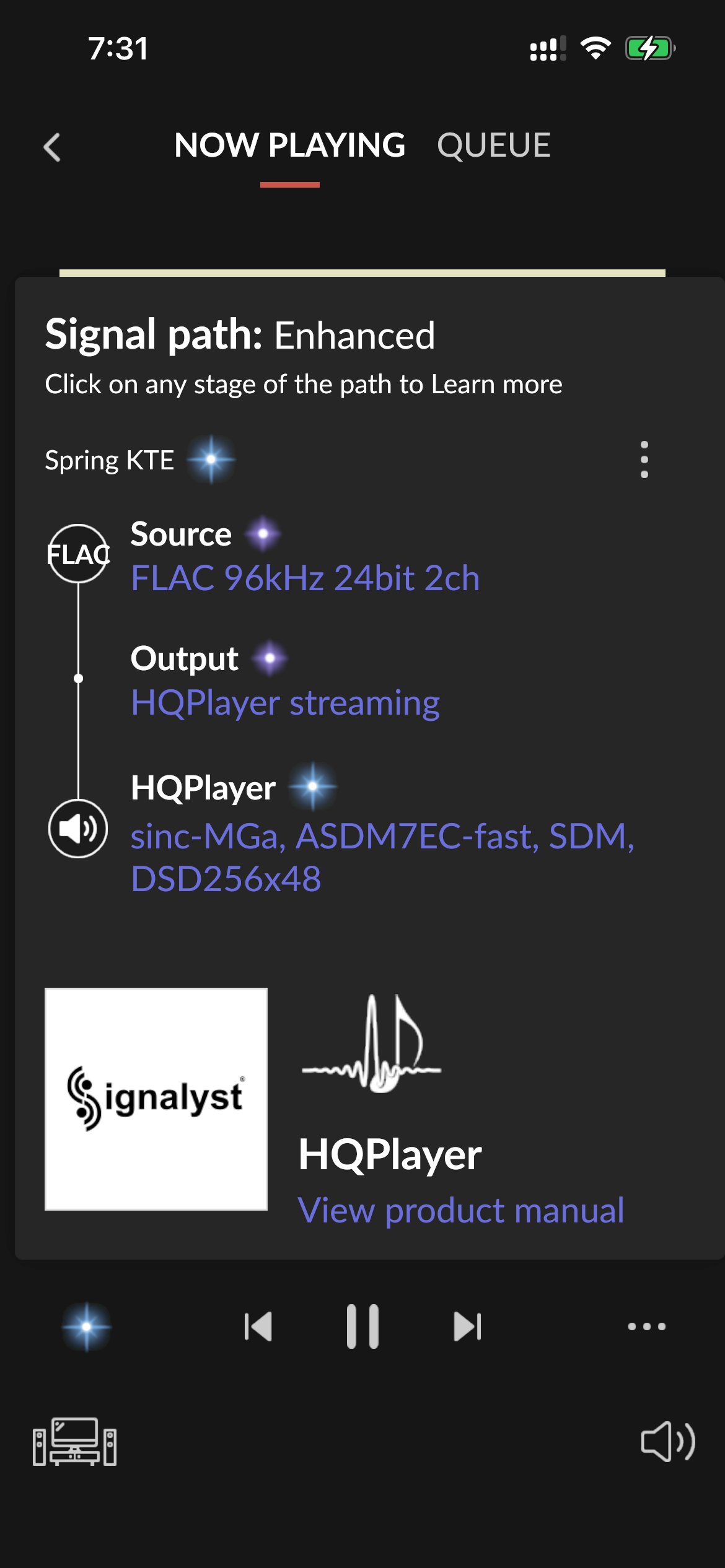
sinc-MGa, ASDM7EC-fast, SDM,
DSD256x48
I have been using this same combo for the past week and I love it
Hello, I’m new and I’m testing HQP. My hardware is a Mac mini M4 16GB running over Wi-Fi with my NAA Ropiee connected via USB to HoloAudio Cyan 2. My problem is that the sound is interrupted. If I set the modulator to AHM7EC8B, I’ve noticed that a bit rate higher than 256 causes interruptions. Can I get instructions on how to set HQP to work on the highest modulator with my hardware?
I am a Chord dac and mscaler user (TT, TT2, Mojo, Mojo2. All advice in Chord forums is to NOT feed dsd into Chord dacs. I have used HQPlayer desktop and embedded for many years but mainly to bypass the raat protocol in bit perfect mode. Well my mscaler is going to be out of service for a month. I saw on a head-fi forum where a user recommended sdm, poly-sinc-guass-xl and 7ec-light. I scaled it to 256x48k. I am using a mac mini m4>Anttipodes EX(naa)>TT2(usb). I certainly will not miss my mscaler. Thanks @jussi_laako for such a flexible product. BTW I am using Jplay to switch between 7 different profiles for different dacs and upsampling.
Thank you for your help, I used exactly the settings you provided. The sound is nice, but it cuts out every 2-3 seconds. I don’t understand what could be causing this. Unfortunately, it’s impossible to listen like that.
I have roughly the same setup:
HQPdesktop on a Mac Mini M4
NAA RPi4 with Ropieee
and USB connection to a NAA with Holo Spring 3 KTE
SDM 1024 / AHM7EC8B
All wired with no Wi-Fi connection, and everything works perfectly…
In general, it’s best to avoid using Wi-Fi between HQP and NAA.