My collection of works in Roon (2.0 build 1259 on macOS 13.3) is almost exclusively western Classical.
Having been brought up on hifi and stereo equipment which shies away from adjusting the sound with equalizers and filters (Quad’s ‘closest approach to the original sound’… my first pre-amp deliberately lacked bass and treble controls), I’ve been wary of trying to use any of these tools with Roon possesses.
I have one cycle (the Wigglesworth Shostakovich symphonies) where the variation in dynamic extremes seems to invite me to look into what I can do in Roon to ‘flatten’ the extremes… the sound is at times almost inaudible (I have good ears); and at others very loud.
Appreciating that this is intentional - BIS is of course well-known for its attention to audio detail; Wigglesworth, too, is making musical points by having such extremes of dynamic in these performances - I would like to strike a musically authentic compromise between being able to enhance the music while retaining its integrity.
Where and how should I start, please, to find ways of experimenting with Roon’s ability to - say - temporarily and selectively attenuate the high volume passages and ‘strengthen’ those which play (through a good stereo system [pdf] with Martin Logan Aeon loudspeakers) at pianissimo?
Thanks in advance to anyone who can point me in the right direction!
Hi Mark
I have looked around but did not find too much. I hope the users experienced in using DSP are going to give you a more clear answer.
I also have this problem and intuitively avoid symphonies. I’m not on any super hifi setup but I suspect that not the system is the problem but the room. Somehow the dynamic range gets amplified. The the low parts get almost silent and the loud ones are too loud. And remote controlling the volume ruins the listening. What I can hope is in the future to purchase a set of headphones for cases like this. Until that chamber music.
Anyway…
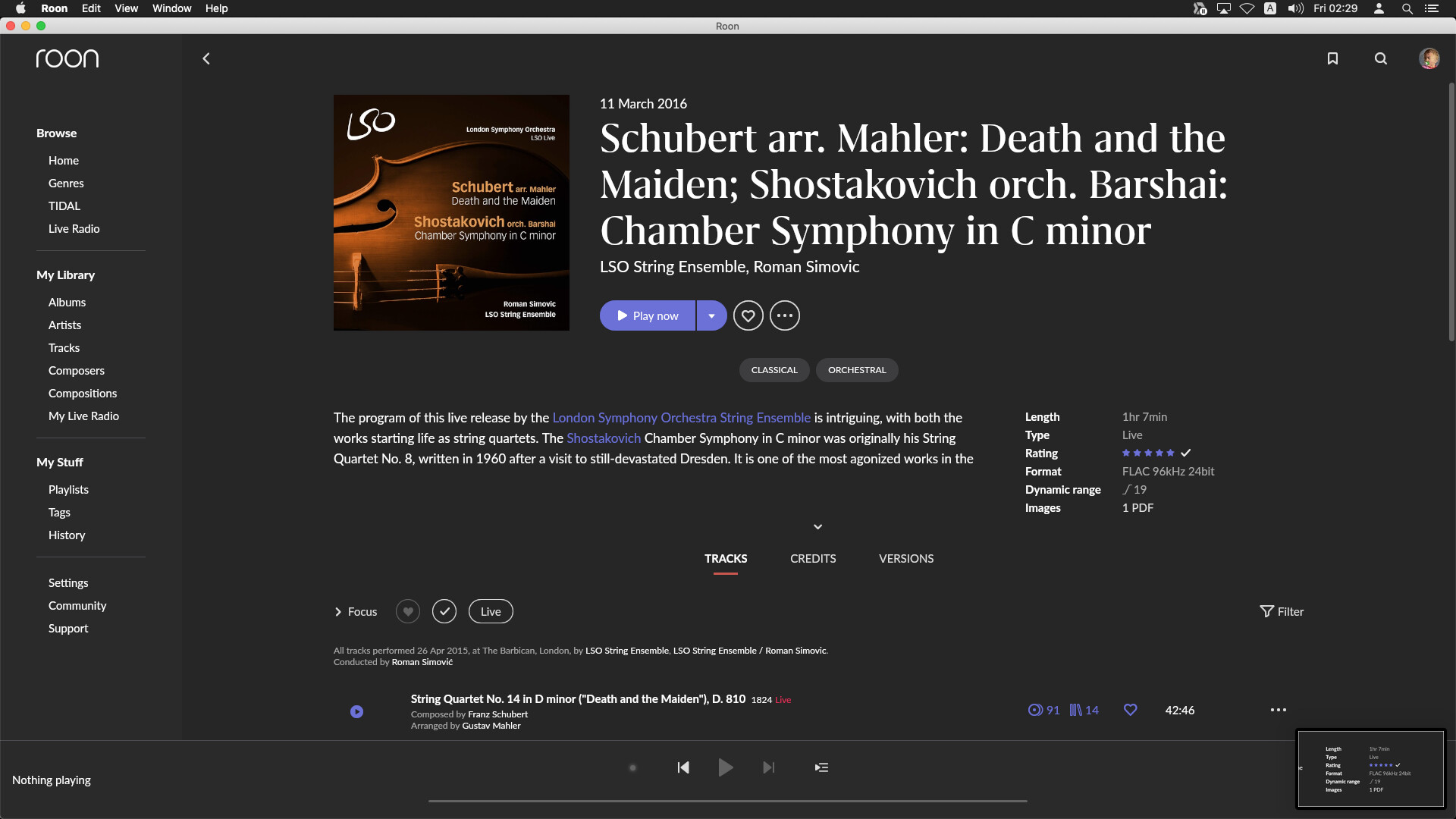
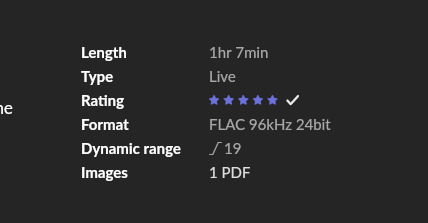
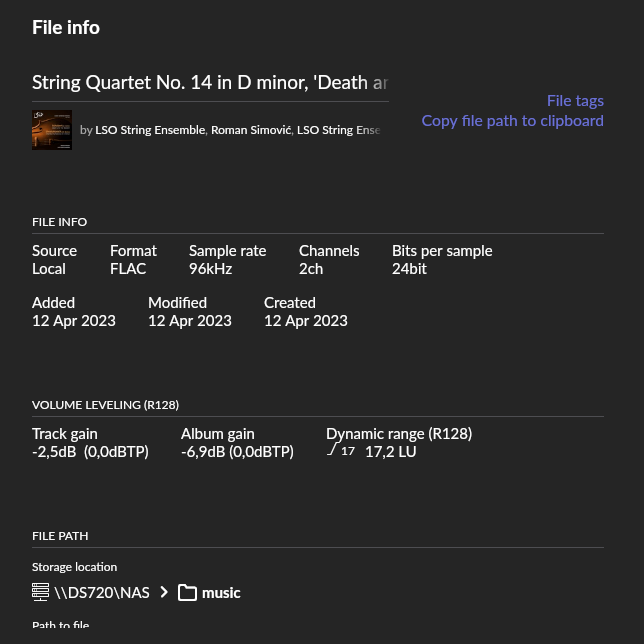
I assume that you have the CDs ripped or you have the digital files purchased. If so what is the dynamic range displayed? I was thinking that streaming services might have different files with more compression applied to the dynamics. I did try to add to my library one of the Wigglesworth Shostakovich from tidal but I get no info on the dynamic range.
Another option would be to have an app that does that to your files and saves copies with less dynamic range.
If you’ll find your answer please post, I’ll watch the thred with interest
All the best
Traian
Yes, I wondered about that; and shall be grateful for any input.
I’d have thought so too. But there is definitely greater range with some works and not others. That’s also why I’m looking for a way to apply filters/equalizers etc temporarily and selectively.
There are 60+ tracks on the 15 symphonies. But most seem to be between 22 and 27. Thanks for that link, @Traian_Boldea; I shall read that page and see if it also gives me some ideas
Ok, but just out of my curiosity (as I’m not sure that lower dynamic range would make symphonies more listenable from my point of view) there is no setting in Roon app that can do this? And if I want to try without any “defraud” finding the album on a streaming service were it has smaller dynamic range is one workaround?
Thanks
Edit: Roon does or it does not display dynamic range for tidal/qobuz?
From my point of view (as a sound engineer mainly hired for classical and jazz productions), reducing the dynamic range of recorded music doesn’t seem like a particularly good idea. IMHO, it makes more sense to just use the volume knob, if need be…
No, Roon actually can’t because that content is not local and thus not analyzed by it’s code - streaming services don’t embed DR in their metadata, either.
Apologies for the hijack question.
I don’t listen to a lot of classical music at home, I’m not very knowledgeable so trying to go to concerts.
Are the recordings quieter than one would hear in the concert hall and so the need to increase the quietest sections or would it be as heard live?
Thank you
I know about the roon dynamic range metering bridge and the only thing that I would like there is a bigger screen. Supposedly I do not understand the graphs they still look better than most of album covers.
Ideally I would match the volume levels to be as heard live but even if I would have the perfect speakers and the perfect room I’m sure that my neighbours do not like Shostakovich. So in my logic that leads to lowering the overall volume and that leads to the the recording being “quieter”
With classical I can go listen to some chamber music but with live indie/rock/etc it is harder.
Hope @HWZ would know what process is applied after record something in a large hall and you want that to be played in an “usual” room
I think that Roon is missing a useful feature here, not so much for home listening but for use with ARC and in the car. If Roon DSP included a compressor and enabled it to be used for ARC, listening in noisy environments and to high DR music would be a lot easier. Use of the feature would be selectable in the ARC app and as a normal DSP plug-in.
Yes always an option but takes work and storage space and not as easy as selecting a DSP preset or throwing a switch in ARC. So easy to do, there must be loads of open-source DSP compressor code available that could be integrated into Roon.
The absolute max or min volume of course depends on the position of your volume knob. That can be set to real levels in principle.
The dynamic range between lowest and highest volume in a work, however, is typically already compressed somewhat for recordings, compared to the live event. The full real range between a single flute or triangle compared to 100 people in an orchestra at full volume is probably too much for the home and most systems. It definitely was that way for vinyl because that couldn’t represent the real range at all. Maybe it changed somewhat with digital but I think some compression is still used, typically.
However, in some cases more compression may be desired for home or in particular car. There’s a difficult balance here because many hifi people want as little as possible. So, doing this on the fly with DSP would be ideal to satisfy both preferences