Either Roon or @jussi_laako needs to update the “View Product Manual” URL on Roon’s client link
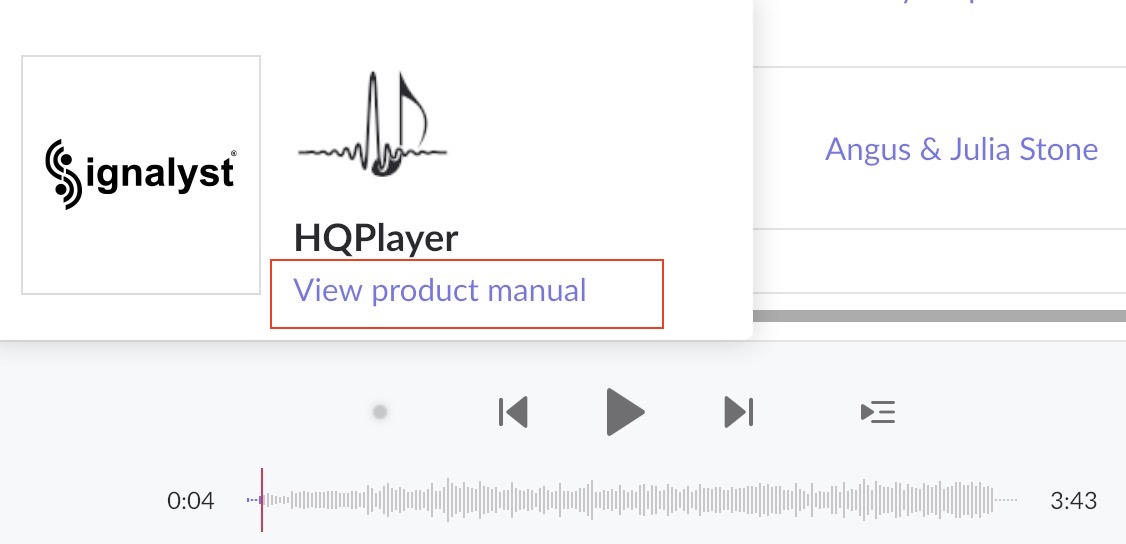
I suggest:
Redirect https://signalyst.com/quickstart.html
To:
https://signalyst.com/quickstart-guide/
To keep our community informed
Either Roon or @jussi_laako needs to update the “View Product Manual” URL on Roon’s client link
I suggest:
Redirect https://signalyst.com/quickstart.html
To:
https://signalyst.com/quickstart-guide/
To keep our community informed
I think Roon should update it. Although that is not a “product manual” in first place.
On Desktop, product manual comes as a PDF and on Windows/Linux can be found from the Start-menu. And on macOS it is straight in the DMG where one can drag it to a suitable place.
On Embedded, product manual is as Help pages in the web interface. So linking to the quick start guide as product manual is misleading…
Add then the download PDF at bottom? Just trying to help the “Page Not Found” issue
The PDF is version and product specific…
But I have now “fixed” it.
Question about nVidia Cuda; nvidia offer a card specially designed for math/mining/etc. Called Nvidia CMP ??HX. Are they suitable for HQP or do they have some limitations as some say make it insufficient as a graphics adapter due to locket memory, or whatever it may be?
The question is that we don’t use the graphics performance as such either, but the algorithm capacity?
I really don’t know. Do you have any link to such, as I’m not even aware of such models? I have missed something.
But hopefully someone tries it out against something else and reports the results.
If you know the specific GPU chip model number, you can check how it fares against the other of same generation.
Those were standard graphics cards that Nvidia disabled the video outputs and modified the bios and drivers. Crypto miners used them but, found that there was little to no secondary market so they can be had cheaper than the graphic enabled version.
For example, the CMP 40HX is really a RTX 2070. Here is the Nvidia page: A Crypto Mining GPU for Professionals | NVIDIA
Questions about remote control. I am not quite sure, but I think I have read somewhere about using a Mocrosoft tablet as remote control and on the tablet install HQPlayer?
Does that mean the entire HQP desktop package, or is it possible just to install the Client part?
I have got hold of an old Tablet (Microsoft Surface RT) running on Windows 8.1 v3 (final). Will that be sufficient to work as a remote control? It is a matter of (again) scrutizing the Client playback compared to Roon playback, but also if it is supposed to run with the full HQP package also be able to change filter from the listening room, instead of having to run nextdoor storage where the noisy PC works.
So I guess I have to leave you crackpots with your over sophisticated calculations of 1+1. 
Yes, you can run HQPlayer Client on Intel based Microsoft Surface tablets. And in addition on Apple iPadOS.
On Microsoft Surface, you can run either the Client, the server part (HQPlayer Desktop), or both.
On iPad, you can run just Client (available from Apple AppStore).
I don’t think that would work, Windows 10 is minimum, and Windows 11 recommended. Surface Go and Surface Pro products based on Intel CPUs should work though and have Windows 11 available.
HQPlayer Client can change the filter etc on the fly from anywhere within the same network without having to run the full package.
A lot of noise from someone who doesn’t understand what he’s talking about. Or not even bothering to show some measurements from analog outputs of a DAC.
Just as an example, by choosing suitable output format, even low frequency accuracy of latest ESS generation (ES9039 series) can be improved. There are naturally many other aspects too, and different types of oversampling filters have different properties on such things as transient performance.
Just as there are for example Butterworth and Bessel type analog filters, which are both used in DAC analog output stages, there are digital equivalents. Plus digital filters allow even wider range of different filter types with unique properties.
In addition to the digital oversampling filter, the modulator plays just as big role in properties and performance of the digital side of the conversion. (Or dither/noise-shaper in case of R2R conversion stage)
Then rest of the performance relies the actual D/A conversion stage and the following analog post-filter stages, which on the other hand depends on how these are driven by the preceding digital stages.
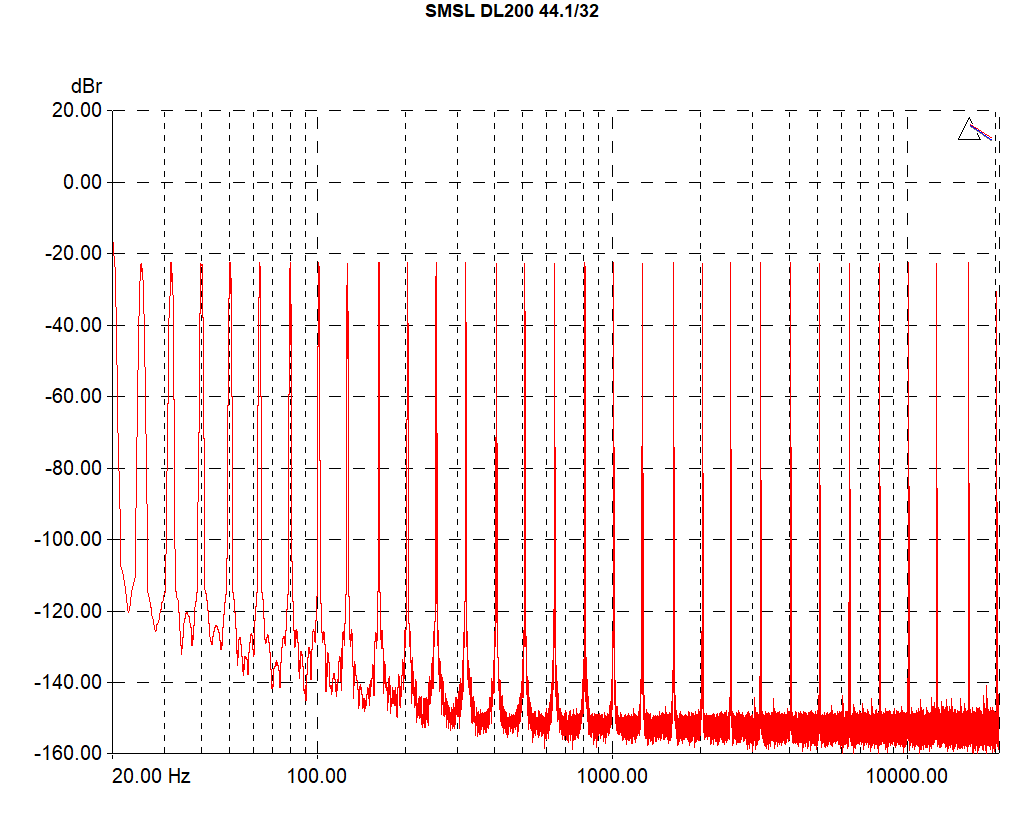
Here’s with non-upsampled 44.1/32 input data:
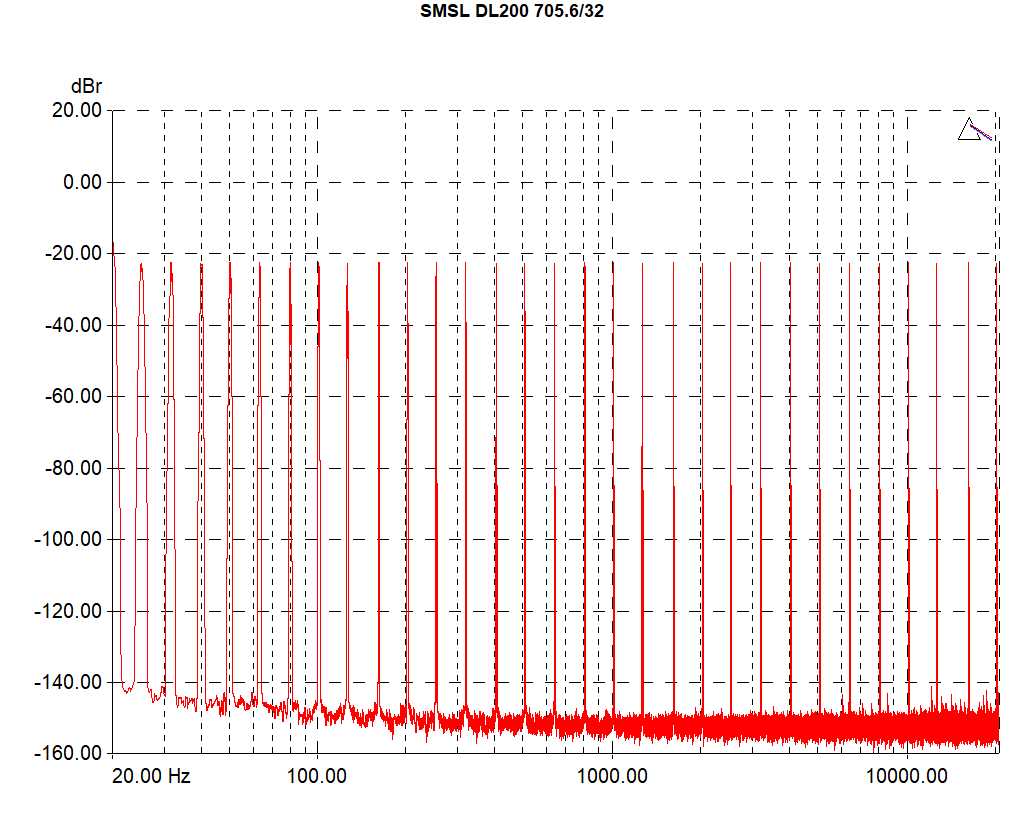
And here when same upsampled to 705.6/32 before sending to the DAC:
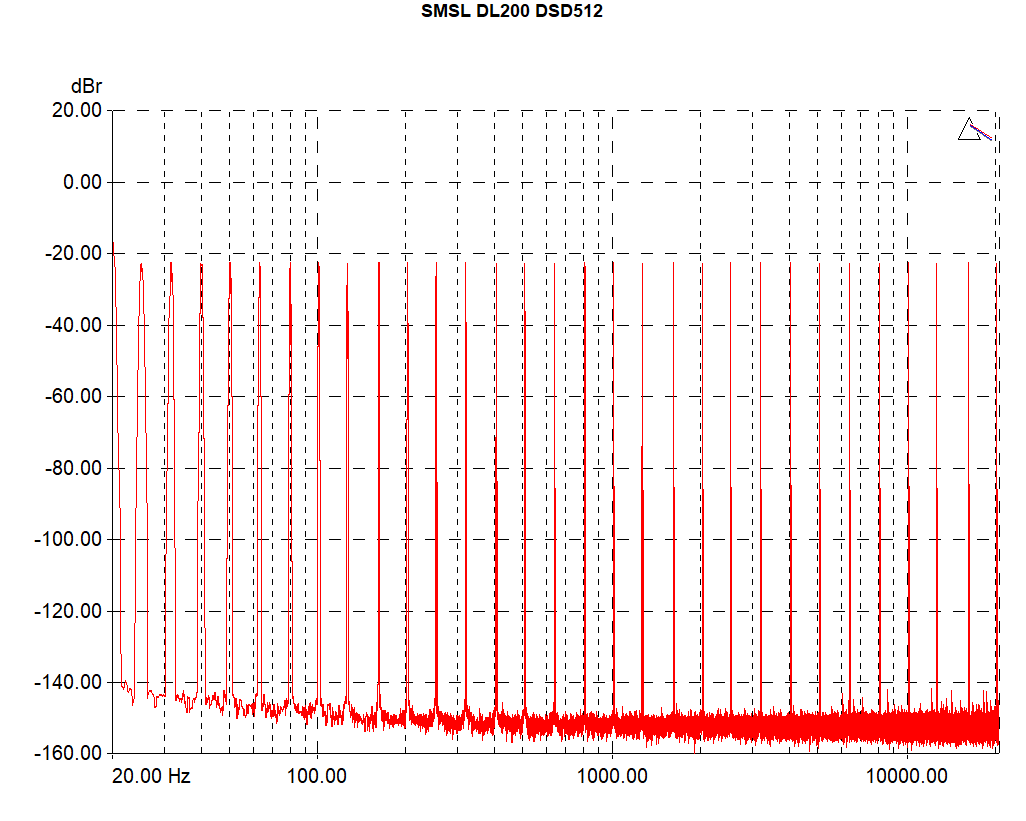
And here when same upsampled to DSD512 before sending to the DAC:
Thanks Jussi.
My guess is that the sceptics of these measurements will most likely say that this is all happening in an inaudible range. Is it?
P.S. Would love to see you discussing this with this headfi guy. Your are probably happy not to, because your are banned from headfi and because you have already done this over and over again. 
The warranty thing went really well and quickly. Through in five days and was offered an Asus RTX4090 OG OC model instead. However, I already managed to buy a replacement 4070 Ti Super and it seems to take care of my needs well… I have to see if I can sell it for at least €2000, so I’ll keep the 4070. Otherwise, I’ll return it and install the 4090 back…
No it isn’t. But you cannot change their beliefs, so it is futile exercise to get involved in such discussion.
Yes, I’ve gone through such discussions quite many times over the past 25 years.
PCM 768 VS DSD512 almost looks identical to me.?
Yes, in this test with the ES9039 the result is very similar. There are other cases where there are differences between these two (obviously), so as usual it depends on from which angle you are looking at things.
Roon OPRA project:
Introducing OPRA, a powerful new headphone toolkit for Roon and ARC 
Jussi, do you think you can integrate this into HQP?
I kinda wish there was a „mini“ version of HQplayer that could be integrated into roon… even with only some basic pcm filters to be able to bypass the HQplayer app .
Would improve roon and would be great advertising for HQplayer
For that purpose you can get a rpi5, run HQP embedded OS … that’s all